For technical evaluators, understanding stainless steel square tube specifications is essential to ensuring structural reliability, corrosion resistance, fabrication compatibility, and cost efficiency. Dimensions, wall thickness, material grade, tolerance, surface finish, and applicable standards all influence whether a tube is suitable for construction, industrial equipment, or custom manufacturing. This guide explains the key specification factors buyers should review before sourcing stainless steel square tubes, helping project teams reduce procurement risks and select products that meet both performance requirements and international quality expectations.
What stainless steel square tube specifications actually control in a project
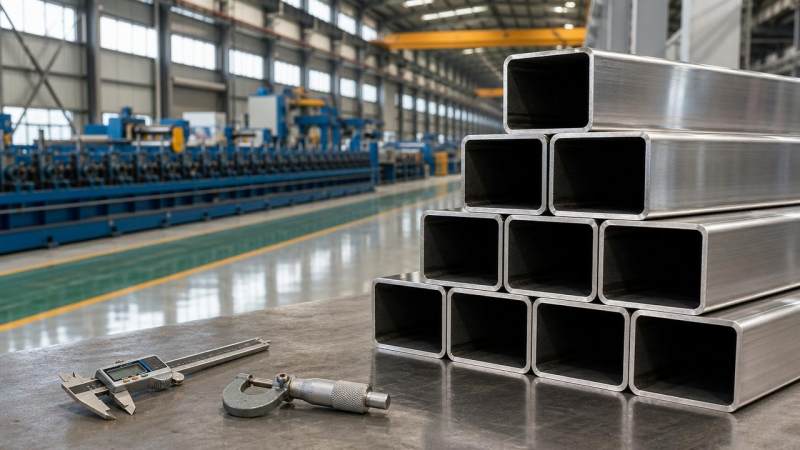
Stainless steel square tube specifications are not only purchasing descriptions. They define load behavior, weldability, installation fit, corrosion life, inspection requirements, and downstream processing efficiency.
For technical evaluators, the challenge is rarely choosing one isolated size. The real task is matching geometry, grade, standard, and finish to working conditions.
- Dimensional specifications determine whether the tube can fit connection plates, frame openings, brackets, and modular assemblies without rework.
- Material grade affects corrosion resistance, temperature stability, forming response, and long-term maintenance cost in different environments.
- Wall thickness and tolerance influence section capacity, welding heat input, weight calculation, and final project budget.
- Surface finish requirements affect appearance, cleanability, coating compatibility, and suitability for food, chemical, or architectural applications.
A practical review of stainless steel square tube specifications should start with service conditions, not catalog size. This prevents under-specification and unnecessary overspending.
Which dimensions and tolerances should evaluators confirm first?
Dimensions are usually the first visible part of stainless steel square tube specifications, but the key issue is how those dimensions behave in fabrication.
A nominal square tube size can still create assembly problems if outside dimension tolerance, corner radius, straightness, or squareness is not controlled.
The table below summarizes dimension-related checkpoints that technical teams often review before releasing purchase orders or approving alternative suppliers.
When stainless steel square tube specifications are evaluated this way, buyers can reduce hidden fitting risks. This is especially important for welded modules and repeat production.
How material grade changes corrosion resistance and service life
Material grade is one of the most decisive parts of stainless steel square tube specifications. A correct grade reduces corrosion failures and avoids unnecessary alloy cost.
For indoor frames, general industrial supports, or decorative structures, 304 may be sufficient. For chloride exposure, chemicals, or marine environments, 316 is often reviewed.
Hongteng Fengda supplies structural steel products and customized solutions for global projects, helping evaluators compare grade, size, standard, and fabrication requirements together.
When 316 stainless steel becomes relevant
For projects requiring improved corrosion resistance, high-temperature stability, and mechanical performance, buyers may review 316 Stainless steel pipe as part of their material comparison.
This product is available in 316 stainless steel, with wall thickness from 1mm to 150mm, outer diameter from 6mm to 2500mm, and customized lengths.
Its common applications include petroleum, foodstuff, chemical industry, construction, electric power, energy, machinery, biotechnology, paper making, shipbuilding, boilers, and nuclear-related fields.
- Choose 316 when stainless steel square tube specifications must address chloride, chemical splash, or frequent cleaning exposure.
- Specify surface conditions such as polishing, annealing, pickling, or bright finish according to appearance and hygiene needs.
- Confirm applicable standards such as ASTM A312, ASTM A269, ASTM A778, JIS G3459, EN10216, or GB13296 where required.
Although round pipe data does not replace square tube design verification, it helps evaluators understand alloy capability when comparing stainless material options.
Which standards and certificates reduce procurement risk?
Standards clarify how stainless steel square tube specifications are produced, measured, tested, and documented. Without standards, identical descriptions may hide very different quality levels.
Technical evaluators should confirm whether the project requires ASTM, EN, JIS, GB, or customer-specific acceptance criteria before comparing quotations.
The following table helps organize compliance questions during supplier evaluation, especially for international construction, equipment, and manufacturing projects.
For global sourcing, documentation consistency is often as important as price. Clear stainless steel square tube specifications simplify inspection, claims handling, and project traceability.
How should specifications change by application scenario?
Stainless steel square tube specifications should reflect the working environment. A tube for architectural trim differs from one used in industrial platforms or equipment frames.
Evaluators should define exposure, load, cleaning method, fabrication route, and expected appearance before finalizing grade and wall thickness.
Application-based selection logic
Use the following scenario table to connect stainless steel square tube specifications with practical project requirements and approval priorities.
A scenario-based approach prevents overspecifying every project. It also helps procurement teams defend technical decisions when budgets are tight.
What procurement checks help control cost without weakening performance?
Cost control does not mean selecting the thinnest wall or lowest quotation. Reliable stainless steel square tube specifications balance performance, processing, logistics, and inspection cost.
A cheaper tube may become expensive if it requires additional straightening, surface repair, replacement, or delayed installation after arrival.
- Confirm required grade first, because corrosion failure usually costs more than the initial difference between stainless steel options.
- Define minimum wall thickness clearly, especially when structural calculation or welding procedure depends on actual section capacity.
- Review standard lengths and cutting plans to reduce scrap, joint quantity, container loading issues, and site handling time.
- Ask for inspection documents matching project standards, rather than accepting generic certificates that cannot support final acceptance.
- Discuss packaging requirements for polished or exposed tubes to reduce scratching during sea freight and inland transportation.
Specification changes that often reduce unnecessary cost
- Use standard lengths where possible, then request precise cutting only for critical assemblies or high-volume repeated components.
- Separate visible architectural surfaces from concealed structural members, because finish requirements can significantly affect processing cost.
- Avoid selecting 316 where the environment is mild and 304 can meet verified corrosion and maintenance requirements.
- Provide tolerance classes based on actual assembly needs, not the strictest tolerance for every part in the bill of materials.
Hongteng Fengda supports standard specifications and OEM solutions, helping buyers align stainless steel square tube specifications with realistic project budgets.
Common FAQ about stainless steel square tube specifications
How do I decide the correct wall thickness?
Wall thickness should be selected from load calculation, welding method, connection design, and corrosion allowance. Do not rely only on previous projects.
For technical evaluation, compare nominal wall and minimum measured wall. This prevents hidden risk in stainless steel square tube specifications.
Are polished square tubes always better?
Polished surfaces improve appearance and cleanability, but they are not necessary for every structural use. Concealed frames may only require pickled or standard finish.
The best choice depends on visible exposure, hygiene requirements, handling risk, and whether further fabrication will damage the surface.
What documents should accompany an export order?
Typical documents include mill test certificates, packing lists, dimensional inspection records, standard references, and agreed surface or packaging confirmations.
For regulated projects, confirm documentation before production. This is safer than requesting missing data after shipment or site inspection.
Can square tube specifications be customized?
Yes, customization may include cut length, grade, wall thickness, surface finish, packaging, tolerance focus, and fabricated component requirements.
The earlier drawings and usage conditions are shared, the easier it is to verify manufacturability, cost, lead time, and inspection points.
Why choose Hongteng Fengda for technical specification support?
Hongteng Fengda is a structural steel manufacturer and exporter from China, serving construction, industrial, and manufacturing projects across international markets.
Our product scope includes angle steel, channel steel, steel beams, cold formed profiles, and customized structural steel components for standard and OEM demand.
For stainless steel square tube specifications, our team can help technical evaluators review grade selection, dimensional requirements, tolerance expectations, standards, surface finish, and packing needs.
- Consult us when you need parameter confirmation for wall thickness, length, outside dimension, and application-specific tolerances.
- Send drawings or bills of materials for product selection, feasibility review, and quotation communication.
- Discuss required standards such as ASTM, EN, JIS, or GB before production to align documents with project acceptance.
- Ask about lead time, sample support, export packing, and customized solutions for regional project schedules.
If your team is comparing stainless steel square tube specifications for a current project, contact Hongteng Fengda with drawings, standards, quantity, and delivery destination.
We will help clarify technical requirements, reduce sourcing uncertainty, and provide a practical supply proposal based on quality, reliability, and project timing.
Please give us a message


Please enter what you want to find