For after-sales maintenance teams, knowing when a galvanized steel conduit pipe needs replacing is essential to keeping electrical and structural systems safe, compliant, and reliable. Although galvanizing provides strong corrosion resistance, conduit pipes can still deteriorate due to harsh environments, mechanical damage, improper installation, or long-term exposure. This guide explains the key warning signs, inspection points, and practical replacement considerations to help maintenance personnel reduce risks, avoid downtime, and make informed decisions.
How to judge whether a galvanized steel conduit pipe is still serviceable
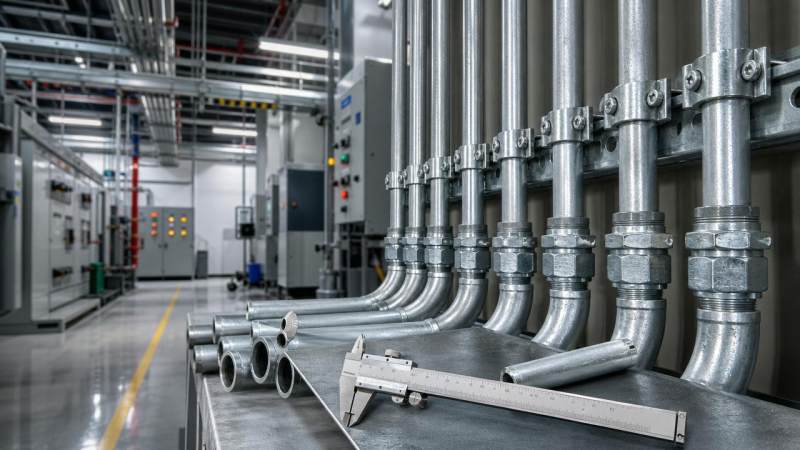
A galvanized steel conduit pipe protects wiring from impact, moisture, dust, and chemical exposure. Replacement becomes necessary when protection is no longer reliable.
Maintenance teams should avoid judging only by surface appearance. A shiny area may still hide thread damage, wall thinning, or internal corrosion.
The practical question is not whether the pipe looks old. It is whether the conduit can still support safe routing, grounding, and enclosure continuity.
- Replace the conduit when corrosion has reduced wall thickness, exposed base steel, or created pitting around threads, bends, couplings, or supports.
- Replace sections that are crushed, sharply dented, split, misaligned, or unable to accept fittings without forcing the connection.
- Plan replacement when repeated repairs are needed in the same route, especially in outdoor, coastal, industrial, or chemical environments.
For after-sales work, consistent criteria matter. They help technicians justify replacement, control maintenance budgets, and reduce disputes with site operators.
Visible warning signs maintenance teams should not ignore
The first inspection usually starts with surface condition. A galvanized steel conduit pipe may show early, moderate, or critical deterioration.
White rust alone does not always mean immediate replacement. Red rust, flaking zinc, or deep pits are stronger indicators of failure risk.
The table below helps maintenance teams separate monitoring conditions from replacement conditions during routine electrical or structural inspections.
A single defect may be repairable. Multiple defects on one run often mean the galvanized steel conduit pipe has reached replacement condition.
Photographs, location tags, and measurements help maintenance managers approve replacement without relying on subjective descriptions from different technicians.
Which environments shorten galvanized steel conduit pipe service life?
Service life depends heavily on location. The same galvanized steel conduit pipe may perform for years indoors but fail early outdoors.
Maintenance teams should classify exposure before deciding whether cleaning, coating repair, partial replacement, or full route replacement is appropriate.
High-risk operating conditions
- Coastal areas expose conduit to salt spray, which accelerates zinc consumption and attacks cut ends, threads, clamps, and fasteners.
- Chemical plants may create acidic or alkaline deposits that damage galvanizing faster than ordinary rainwater exposure.
- Underground or embedded routes face moisture accumulation, soil chemicals, and inspection difficulty, making preventive replacement more important.
- Outdoor equipment yards create combined risks from ultraviolet exposure, impact, standing water, vibration, and temperature cycling.
A galvanized steel conduit pipe in these environments should be inspected more frequently than conduit in dry warehouses or protected production areas.
Where corrosion resistance and appearance are important for building envelopes, maintenance teams may also evaluate coated steel materials. For related construction applications, Color Coated Galvalume Steel Coil PPGL offers corrosion resistance, heat reflectivity, weather resistance, and a finished surface for roofing, wall panels, ceilings, doors, partitions, appliances, furniture, signage, and transportation uses.
Its common specification range includes 0.13mm-0.8mm thickness, 600mm-1250mm width, customizable length, RAL colors, and PE, SMP, HDP, or PVDF paint systems.
Inspection points before approving replacement
A replacement decision should combine visual inspection, mechanical assessment, route condition, and compliance requirements. This reduces unnecessary material spending.
For after-sales maintenance personnel, a structured checklist is useful when several sites report similar conduit failures at the same time.
- Inspect threaded joints, because exposed steel at threads is often the first location where corrosion becomes severe.
- Check supports and clamps, since trapped moisture between dissimilar metals may cause localized corrosion or loosened conduit runs.
- Open selected pull points safely and confirm whether moisture, rust dust, or damaged cable jackets are present.
- Measure deformation at impact areas and confirm whether cable fill, pulling space, or bend radius remains acceptable.
- Review drawings and actual site routing, because hidden deviations may increase replacement difficulty and shutdown time.
If the galvanized steel conduit pipe protects critical power, emergency systems, or production control cables, replacement thresholds should be more conservative.
When in doubt, isolate the section, document the condition, and compare the risk of replacement downtime against the risk of unexpected failure.
Repair, partial replacement, or full replacement: how to decide
Not every damaged galvanized steel conduit pipe needs a full system replacement. The correct action depends on defect severity and accessibility.
The following comparison supports field decisions when maintenance teams must balance safety, budget, downtime, and procurement lead time.
The best choice is rarely the cheapest single part. It is the option that reduces repeat visits, cable damage, and unplanned downtime.
If several galvanized steel conduit pipe sections fail near supports, investigate drainage and fastening design before ordering identical replacement material.
Procurement checklist for replacement galvanized steel conduit pipe
After confirming replacement, maintenance teams need clear procurement data. Vague orders can cause fitting mismatch, delayed installation, or compliance problems.
The table below shows practical purchasing information that should be confirmed before sourcing replacement galvanized steel conduit pipe for a project.
A good purchase request should include site photos, original drawings, replacement quantity, exposure environment, and any certification expectations.
This helps suppliers recommend practical options rather than only quoting the lowest visible unit price.
Common mistakes that lead to premature conduit replacement
Many galvanized steel conduit pipe failures begin during installation, not during service. Maintenance records often reveal repeated avoidable patterns.
Mistake 1: ignoring cut ends and damaged zinc layers
Cutting, threading, and field bending can expose base steel. If these areas are not protected, corrosion can start quickly.
Mistake 2: mixing incompatible components
Different metals, unsuitable clamps, or low-grade fasteners may create localized corrosion. The conduit may fail even when the main pipe material is acceptable.
Mistake 3: replacing only what is visible
A visible rust spot may be the result of drainage problems above or condensation inside. The root cause must be checked.
- Confirm whether water can enter from junction boxes, upward-facing fittings, or poorly sealed transitions.
- Check whether conduit supports allow water to remain trapped around the pipe surface.
- Review whether vibration from equipment is loosening fittings and damaging protective coatings.
Replacing a galvanized steel conduit pipe without solving the cause may only reset the failure clock.
Compliance and documentation for after-sales replacement work
Replacement decisions should align with project specifications, electrical safety requirements, and local installation rules. Documentation protects both operator and supplier.
For international projects, buyers may reference ASTM, EN, JIS, GB, or local code requirements depending on market and application.
- Record the reason for replacement, including corrosion depth, deformation, fitting failure, or route safety concern.
- Keep material traceability documents, packing information, purchase specifications, and inspection photos together.
- Verify that replacement accessories meet the same environmental and installation requirements as the conduit pipe.
Hongteng Fengda supplies structural steel products and customized steel components for global construction, industrial, and manufacturing projects.
With manufacturing capability and quality control aligned with major international standards, we help buyers reduce sourcing risk and maintain stable lead times.
FAQ: practical questions about galvanized steel conduit pipe replacement
Can a rusty galvanized steel conduit pipe be cleaned instead of replaced?
Yes, but only when corrosion is superficial and the pipe wall, threads, fittings, and grounding path remain reliable. Red rust and pitting need stricter judgment.
How often should conduit routes be inspected?
Indoor dry areas may follow normal preventive maintenance cycles. Coastal, chemical, outdoor, and underground routes should be inspected more frequently.
Is partial replacement acceptable for a damaged conduit run?
Partial replacement is acceptable when damage is localized and adjacent sections are sound. If corrosion appears across the route, full replacement is safer.
What information should be sent before requesting a quote?
Send size, quantity, exposure environment, drawings, photos, expected standards, packing needs, and required delivery date. This improves quotation accuracy.
Why choose Hongteng Fengda for replacement steel sourcing?
Maintenance teams need more than material availability. They need clear specifications, stable quality, reasonable lead times, and export support.
Hongteng Fengda is a structural steel manufacturer and exporter from China, serving buyers across North America, Europe, the Middle East, and Southeast Asia.
We specialize in angle steel, channel steel, steel beams, cold formed steel profiles, and customized structural steel components for project-based supply.
- Consult us for parameter confirmation when replacing galvanized steel conduit pipe routes or related structural steel supports.
- Discuss product selection when your site faces corrosion, tight installation space, budget limits, or mixed standard requirements.
- Ask about delivery planning, OEM requirements, export packing, sample support, certification expectations, and quotation details.
If your maintenance team is unsure whether a galvanized steel conduit pipe should be repaired or replaced, share the site conditions with us.
Our team can help review specifications, compare practical sourcing options, and support a replacement plan that balances safety, cost, and schedule.
Please give us a message


Please enter what you want to find