If you are searching for a reliable schedule 40 stainless steel pipe dimensions PDF, it is important to use accurate size charts and standards before sourcing materials for industrial or construction projects. This guide will help you understand where to find trustworthy PDF references, what key dimensions to check, and how to compare specifications for better purchasing decisions.
What most buyers really need from a schedule 40 stainless steel pipe dimensions PDF
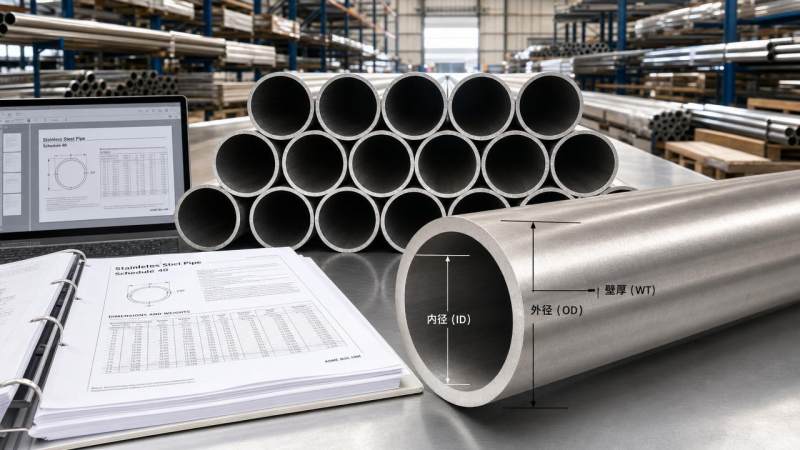
The core search intent behind “schedule 40 stainless steel pipe dimensions PDF” is practical, not academic. Most readers want a downloadable size chart they can trust for specification checks, quotation comparison, and procurement planning.
In most cases, the user is trying to confirm outside diameter, wall thickness, inside diameter, and weight before ordering stainless steel pipe for a project, tender, fabrication drawing, or supplier discussion.
That means the best article should not only mention PDFs. It should explain where reliable dimension tables come from, how to verify them against standards, and what mistakes to avoid before buying.
Where to find reliable PDF references for schedule 40 stainless steel pipe dimensions
The most trustworthy PDF references usually come from recognized industry standards bodies, established pipe manufacturers, stainless steel mills, and technical distributors with full dimensional data sheets.
For stainless steel pipe, buyers commonly look at standards related to ASTM pipe specifications, ASME dimensional references, and international equivalents used in regional markets. A reputable PDF should clearly cite the standard source.
Good sources often include manufacturer catalogs, stainless steel pipe handbooks, engineering supply manuals, and official technical sheets. These documents usually provide NPS size, schedule, wall thickness, outer diameter, and mass data.
When reviewing a PDF, check whether it distinguishes stainless steel pipe from carbon steel tube, hollow sections, or decorative tubing. Many online charts look similar, but they may refer to different product categories.
If the document does not mention the standard, material grade, or dimensional basis, treat it carefully. An unnamed chart may still be useful for reference, but it should not be your final basis for procurement.
Which dimensions matter most when reading a schedule 40 pipe chart
Many buyers focus only on nominal size, but that is not enough. A proper schedule 40 stainless steel pipe dimensions PDF should help you evaluate the actual measurements that affect installation, pressure, and fabrication.
The first key figure is outside diameter. For pipe, outside diameter is standardized and usually remains the same across different schedules for the same nominal pipe size. This dimension matters for fittings and connection compatibility.
The second critical figure is wall thickness. Schedule 40 defines a specific wall thickness for each nominal size. This directly affects strength, pressure performance, weight, and cost.
The third figure is inside diameter. It changes when wall thickness changes, so it matters for flow rate, media capacity, and pressure drop. Engineers often need this value for system calculations.
The fourth useful value is weight per meter or weight per foot. This helps buyers estimate logistics costs, structural loads, container planning, and total material budgets.
Some PDFs also list plain end dimensions, tolerances, test standards, and available manufacturing lengths. These details become important when you move from information gathering to formal purchasing.
How to tell whether the PDF is accurate enough for purchasing decisions
A reliable PDF should include more than a simple size table. It should show clear standard references, measurement units, and consistent data formatting across all listed pipe sizes.
First, verify whether the chart matches known standard dimensions for NPS and schedule 40. If one size appears inconsistent, the whole document should be cross-checked with another technical source.
Second, confirm whether the PDF is specifically for stainless steel pipe. In many cases, dimensional values are similar across materials, but procurement still requires correct product classification and specification naming.
Third, review whether the document uses imperial units, metric units, or both. International sourcing often creates confusion when a supplier quotes in millimeters while the project drawing is based on inches.
Fourth, check publication quality. Trusted PDFs usually include company name, issue date, revision control, standard number, and contact information. Anonymous documents carry higher sourcing risk.
Finally, compare at least two references before placing orders. Even if dimensions match, differences in tolerances, available lengths, finish, and testing requirements can affect the final product delivered.
Common mistakes buyers make when using schedule 40 pipe dimension charts
One common mistake is assuming “schedule 40” alone is a complete specification. It is not. You still need to confirm material grade, manufacturing standard, end type, surface finish, and inspection requirements.
Another mistake is confusing nominal pipe size with actual measured diameter. For example, pipe naming conventions do not always reflect the exact outside diameter, so relying on the nominal label can cause ordering errors.
Some buyers also download a chart intended for carbon steel and use it for stainless steel procurement without checking the standard context. This may not always cause dimensional issues, but it can create documentation problems.
A further risk is using a sales table that omits tolerances. In fabrication and assembly work, tolerance range can matter just as much as the listed nominal dimension.
It is also common to ignore regional standard differences. A supplier serving North America may structure data differently from one supplying Europe, the Middle East, or Southeast Asia. Clear cross-checking is essential.
How global buyers can compare suppliers more effectively
If your goal is supplier evaluation, a schedule 40 stainless steel pipe dimensions PDF should be used as a comparison tool, not just a download for record keeping. It helps you ask better technical questions.
Start by checking whether each supplier provides the same dimensional basis. If one quote lists only nominal size and another includes full wall thickness and weight, the second quote is easier to verify accurately.
Next, ask for supporting mill test certificates, standard compliance statements, and tolerance details. A serious supplier should be able to connect quoted products to recognized ASTM, EN, JIS, or GB requirements where relevant.
Lead time and production capability also matter. A supplier may provide a correct chart but still struggle with stable output, consistent quality, or export packaging for international projects.
For companies sourcing broader steel materials, it is often useful to work with manufacturers that understand multiple product categories. For example, some projects combine pipe sourcing with bars, profiles, and reinforcing materials.
In such cases, related products like Wire Rod may also be part of procurement planning, especially for building material, machinery, or industrial manufacturing applications.
This product category is typically offered in carbon steel grades such as ASTM, GB, EN, DIN, and JIS standards, with uses ranging from auto manufacturing to shipbuilding and petrochemical plants.
What to look for beyond dimensions when selecting stainless steel pipe
Dimensions are only the starting point. Once a PDF confirms the right schedule and size, buyers should move on to material grade, corrosion resistance, application environment, and fabrication needs.
For stainless steel pipe, grade selection can strongly influence lifecycle cost. Even if two pipes share the same schedule 40 dimensions, they may perform very differently in marine, chemical, or high-humidity environments.
Surface finish can also matter, especially in food processing, architectural, and visible industrial installations. A dimensional chart alone will not tell you whether the finish meets project expectations.
Weldability, bending performance, and availability of matching fittings should also be checked early. Buyers sometimes confirm pipe size first, then discover compatibility issues later in fabrication.
For export projects, packaging, traceability, and shipping protection are equally important. Stainless steel products can be damaged by poor handling even when the dimensions are fully correct on paper.
How manufacturers and exporters can support better technical sourcing
For buyers researching technical PDFs, the ideal supplier is one that can provide not only a chart, but also interpretation support. This is especially helpful when procurement teams and engineering teams use different terminology.
Hongteng Fengda, as a structural steel manufacturer and exporter from China, serves international buyers who need stable production, quality control, and standard-based steel product supply for global projects.
Although the company is best known for angle steel, channels, beams, cold formed profiles, and customized structural steel components, the same sourcing discipline applies to technical data evaluation across steel categories.
Professional exporters help reduce sourcing risk by aligning dimensions, standards, documentation, and production capability before orders are finalized. That is often more valuable than a simple downloadable chart alone.
When buyers compare suppliers, responsiveness to technical questions is a strong signal. A dependable partner should be able to explain standards clearly, confirm specifications quickly, and support project efficiency.
Best practice for using a schedule 40 stainless steel pipe dimensions PDF
The best way to use a PDF is to treat it as a verified reference in a broader purchasing workflow. Download it, save the source, and compare it with your project specification and supplier quotation.
Create a simple check sheet including nominal size, outside diameter, wall thickness, inside diameter, weight, material grade, standard, length, and tolerance. This prevents confusion during quotation review.
If the project is high value or technically sensitive, ask the supplier to confirm dimensions in writing on the proforma invoice, technical datasheet, or drawing approval stage.
Also keep in mind that dimension charts help standardize communication across teams. Purchasing, engineering, quality, and logistics all benefit when everyone is using the same reference.
For information researchers, this approach turns a basic search for “schedule 40 stainless steel pipe dimensions PDF” into a more confident sourcing process with fewer downstream errors.
Conclusion
If you need a dependable schedule 40 stainless steel pipe dimensions PDF, the best source is a standard-based technical document from a reputable manufacturer, distributor, or recognized engineering reference.
The most important dimensions to verify are outside diameter, wall thickness, inside diameter, and weight, but smart buyers also check standards, tolerances, grade, and application fit before making decisions.
In short, the right PDF should do more than provide numbers. It should help you compare options, avoid specification mistakes, and move toward a safer and more efficient purchasing decision.
When used correctly, a reliable dimension chart becomes a practical tool for supplier evaluation, project planning, and risk control across industrial and construction procurement.
Please give us a message


Please enter what you want to find