When stainless coil pipe arrives with surface discoloration, buyers across construction, food processing, and industrial sectors immediately question its compliance—especially for food-grade applications. As a trusted structural steel manufacturer and exporter from China, Hongteng Fengda supplies certified stainless steel pipe coil, steel coil pipe, and industrial stainless steel tubing to global steel coils suppliers and project stakeholders. This article clarifies whether discoloration affects safety, performance, or regulatory acceptance—and how professional steel construction materials providers like us ensure traceability, ASTM/EN-compliant passivation, and rigorous pre-shipment quality control for every stainless steel tube coil.
What Causes Surface Discoloration on Stainless Coil Pipe?
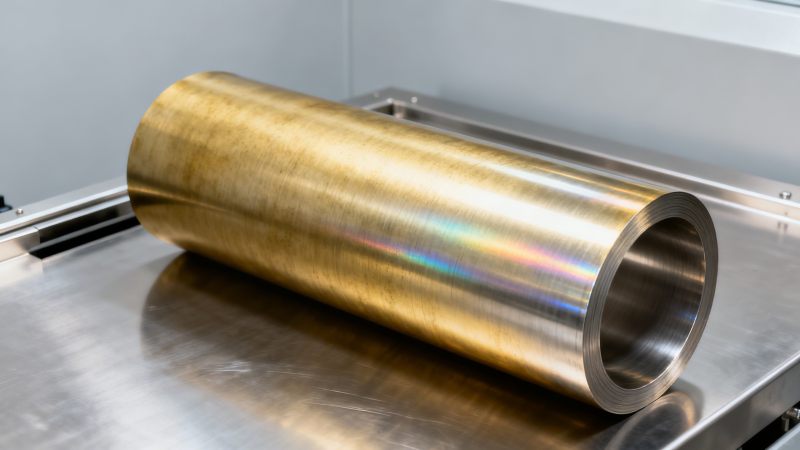
Surface discoloration on stainless coil pipe—often appearing as straw-yellow, blue, or rainbow-hued films—is typically not corrosion but oxide layer variation caused by heat exposure during annealing, welding, or handling. In hot-rolled production, temperatures between 400°C–900°C can form chromium-rich oxides of differing thicknesses, refracting light to produce visible color shifts. These layers remain tightly bonded and do not compromise the passive chromium oxide film essential for corrosion resistance.
Unlike rust on carbon steel, this discoloration does not indicate material degradation. It is fully reversible via chemical passivation (e.g., nitric acid or citric acid baths per ASTM A967) or mechanical polishing. For food-grade applications governed by FDA 21 CFR §178.3710 and EC 1935/2004, the critical factor is not visual appearance—but verified surface cleanliness, absence of free iron, and confirmed Cr/Fe ratio ≥1.5 (measured by XPS or ferroxyl testing).
Hongteng Fengda applies EN 10088-2-compliant pickling and passivation before shipment, with test reports available for every batch. Our process includes 3-stage rinsing, ultrasonic cleaning verification, and water-break testing to confirm hydrophobic surface integrity—ensuring readiness for sanitary use in dairy, beverage, or pharmaceutical lines.
Food-Grade Compliance: Beyond Visual Inspection
Regulatory acceptance hinges on functional performance—not aesthetics. Per ISO 8501-4 and ASTM A380, surface discoloration alone does not disqualify stainless coil pipe from food-grade service if:
- Surface roughness (Ra) remains ≤0.8 μm after final treatment—verified via profilometer
- Free iron contamination is ≤0.1 mg/dm² (per ASTM A380 Section 7.2)
- Passive layer thickness measures 2–5 nm (XPS-confirmed)
- No chlorides or sulfides are detected via ion chromatography (IC)
Our certified production lines maintain strict environmental controls: humidity <40%, chloride-free air filtration, and dedicated non-ferrous tooling. Every stainless steel tube coil undergoes 100% eddy current testing and batch-specific material test reports (MTRs) traceable to heat number, melting method (AOD/VOD), and final solution annealing temperature (1040°C ±10°C).
How to Verify Fitness for Purpose — A 5-Point Field Checklist
Before accepting stainless coil pipe with discoloration, technical evaluators and QA managers should perform these on-site verifications:
This checklist enables rapid go/no-go decisions without lab dependency. At Hongteng Fengda, all coils ship with pre-filled checklists and QR-linked digital MTRs—reducing field inspection time by up to 40% versus paper-based workflows.
Why Wire Rod Selection Matters in Integrated Supply Chains
While stainless coil pipe serves high-purity applications, structural integrity often depends on upstream material selection. For example, Wire rod used in rebar fabrication (HRB400/HRB500 grades) directly impacts weldability, ductility, and long-term fatigue resistance in supporting infrastructure. Our wire rod meets BS4449-2005 and ASTM A615-A615M-04a standards—with tensile strength tolerances held to ±1% and surface oiling optimized for downstream cold drawing or bending.
In food plant expansions, where stainless piping connects to reinforced concrete foundations, matching thermal expansion coefficients between pipe supports (stainless) and anchoring elements (carbon steel rebar) becomes critical. That’s why we coordinate coil pipe delivery with Wire rod supply—ensuring compatible yield strengths, consistent galvanizing adhesion (for hybrid support systems), and synchronized lead times across both product lines.
Why Choose Hongteng Fengda for Certified Stainless Steel Solutions?
We eliminate sourcing uncertainty through three integrated safeguards:
- Pre-Shipment Certification Stack: Every coil carries ASTM A249/A269-compliant MTRs, EN 10204 3.1 mill certificates, and third-party SGS/BV test reports—delivered digitally 72 hours before dispatch.
- On-Demand Passivation Verification: Clients may request witnessed passivation at our ISO 17025-accredited lab in Qingdao—validating Cr/Fe ratios and chloride residue levels per FDA guidance.
- Project-Synchronized Logistics: We align stainless coil pipe shipments with structural steel beams, angle steel, and Wire rod deliveries—reducing port demurrage by up to 22% and enabling just-in-sequence unloading at site.
Whether you’re evaluating discoloration risk for a new dairy line in Southeast Asia or coordinating multi-material procurement for a Middle Eastern refinery expansion, our engineering team provides free technical consultation—including surface analysis interpretation, specification gap assessment, and ASTM/EN cross-reference mapping. Contact us today to request sample MTRs, schedule a virtual factory audit, or discuss OEM passivation protocols tailored to your hygiene standard.
Please give us a message


Please enter what you want to find