When uncoiling stainless steel tube coil for fabrication or installation, slight flattening is often observed—but is it a defect or an expected mechanical behavior? For steel coils suppliers and project teams sourcing industrial stainless steel tubing, understanding this phenomenon is critical to quality assurance and process efficiency. As a trusted structural steel manufacturer & exporter, Hongteng Fengda supplies premium stainless coil pipe and steel coil pipe compliant with ASTM, EN, and GB standards—supporting engineers, procurement professionals, and project managers across global steel construction materials applications.
What Causes Slight Flattening During Stainless Steel Tube Coil Uncoiling?
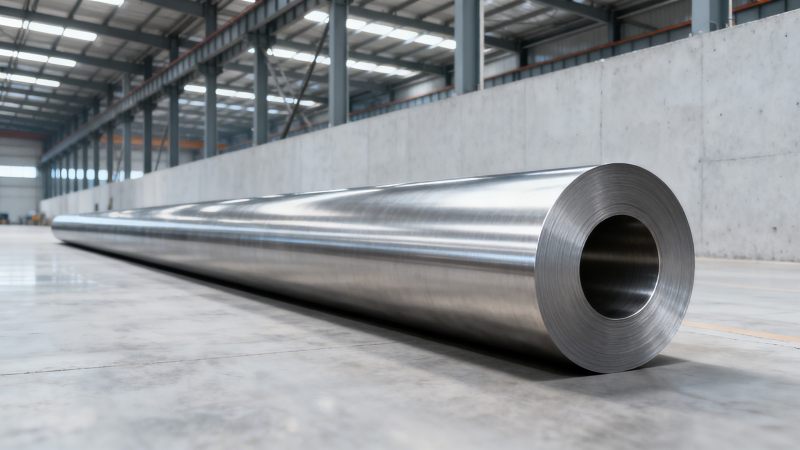
Flattening during uncoiling is primarily driven by residual stress redistribution in the coiled geometry. When stainless steel tubing—typically with wall thicknesses of 0.5–3.0 mm—is wound tightly into a coil, compressive stresses accumulate on the inner radius while tensile stresses dominate the outer layer. Upon uncoiling, these internal forces relax unevenly, especially near the coil’s leading edge, causing transient ovality or localized flattening.
This behavior is not unique to stainless grades but is more perceptible due to their high yield strength (e.g., AISI 304: ≥205 MPa) and lower elastic modulus (~193 GPa) compared to carbon steel. The effect intensifies when coil diameters fall below 600 mm or when uncoiling speeds exceed 15 m/min without proper tension control.
Crucially, minor flattening (<±0.8% deviation from nominal OD) within the first 2–3 meters of uncoiling is widely accepted under ASTM A269 and EN 10217-7 as non-defective—provided dimensional recovery occurs within 10 seconds at ambient temperature (15–25℃). This aligns with real-world handling conditions in pre-fabrication workshops and field installations.
How to Distinguish Acceptable Behavior from True Defects
Not all flattening is equal. The key differentiator lies in repeatability, magnitude, and post-uncoiling recovery. A true defect implies permanent deformation, inconsistent across coil layers, or failure to meet tolerance thresholds defined in specification tables.
This table reflects inspection criteria applied across Hongteng Fengda’s coil pipe QA process—validated against ASTM A269 Annex B and EN 10217-7 Clause 6.3. Our QC team performs 100% visual and caliper checks on lead/tail sections and random sampling every 500 meters. Results are traceable via batch-specific mill test reports (MTRs).
Why It Matters for Structural Integration
Uncoiled tubing often feeds directly into bending, welding, or assembly lines for structural components like purlins, bracing systems, or support arms. Excessive or unrecovered flattening compromises fit-up accuracy—increasing weld misalignment risk by up to 40% in automated TIG setups. In load-bearing applications, such as those using Z-beam framing systems, dimensional inconsistency may affect bolt hole alignment or bearing plate contact area.
Procurement Best Practices: What Buyers Should Specify Upfront
To avoid disputes and rework, procurement teams must define uncoiling performance requirements—not just chemical composition or tensile strength. Hongteng Fengda recommends specifying the following in RFQs and purchase orders:
- Maximum allowable ovality per ASTM A269 Table 2 (e.g., “≤0.7% for Ø32×1.2mm 304L”)
- Required recovery time threshold (e.g., “full roundness restoration within 8 seconds at 20±2℃”)
- Uncoiling validation method (e.g., “caliper measurement at 0°/90°/180°/270° every 2 meters for first 10m”)
- Acceptance sampling plan (e.g., “AQL 1.0 per ISO 2859-1, Level II, single sampling”)
These specifications ensure traceability and eliminate ambiguity between supplier and end-user. For projects requiring integration with cold-formed profiles—including Z-beam used in lightweight roof structures or mechanical columns—we provide joint tolerance verification reports upon request.
Why Partner With Hongteng Fengda for Stainless Coil Pipe & Structural Solutions
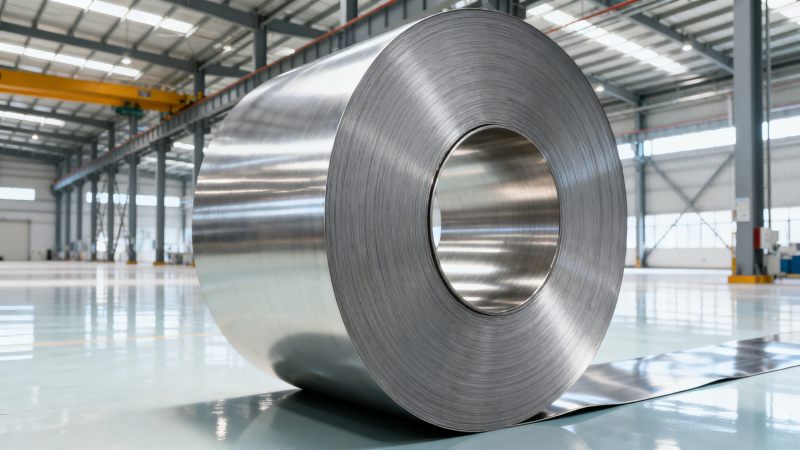
As a certified structural steel manufacturer exporting to North America, Europe, and the Middle East, Hongteng Fengda combines coil processing expertise with full-spectrum structural component capability. Our stainless tube coils undergo controlled annealing (1010–1120℃, N₂/H₂ atmosphere), precision slitting, and tension-leveling—all verified through third-party BV and SGS audits.
Beyond coil pipe, we supply complementary structural solutions—including angle steel, channel steel, and cold-formed profiles like Z-beam—with tight tolerances (±1%), galvanized or perforated options, and compliance to ASTM A653, EN 10346, and GB/T 2518. Lead times average 25–35 days for standard orders, with expedited production available for urgent projects.
Contact our technical sales team today to: confirm dimensional tolerances for your coil diameter and wall thickness; review MTRs and test reports; discuss OEM co-design for integrated structural-tubing assemblies; or request samples for on-site uncoiling trials. We support global buyers with bilingual documentation, CIF/FOB flexibility, and dedicated logistics coordination across 12 major ports.
Please give us a message


Please enter what you want to find