In steel-related searches, #sstlavar may point to a material code, product abbreviation, supplier tag, or misspelled industry term. For buyers and researchers, understanding what #sstlavar may refer to helps narrow sourcing options, avoid confusion, and connect search intent with the right structural steel products, standards, and manufacturers in global markets.
What users usually mean when they search for #sstlavar
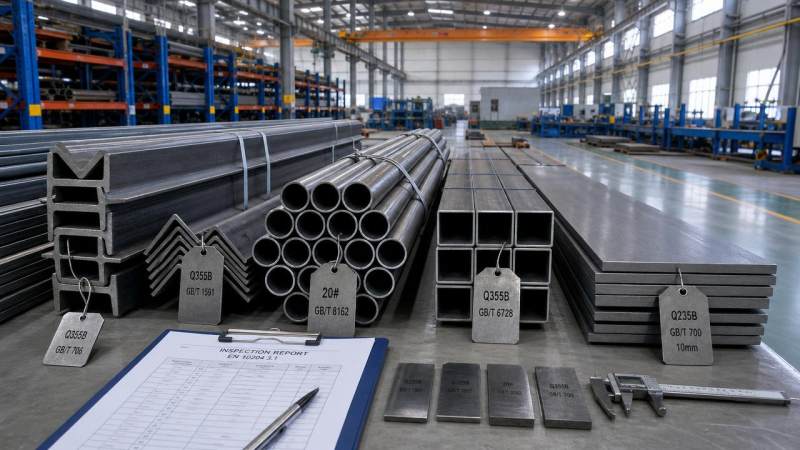
For most steel-related searches, #sstlavar is not a widely recognized formal steel grade, standard designation, or universal engineering abbreviation. That matters immediately because it changes how you should interpret the query.
In practical sourcing and research work, unusual terms like #sstlavar often come from internal product tags, copied catalog labels, marketplace hashtags, ERP references, or simple spelling variations of another steel term.
If you searched #sstlavar hoping to find a precise steel specification, the safest first conclusion is this: treat it as a clue, not a confirmed material definition.
This approach prevents a common mistake in global procurement: assuming that every search term represents a valid steel grade with fixed chemistry, mechanical properties, and manufacturing requirements.
Why #sstlavar can create confusion in steel sourcing
Steel searches are full of abbreviations, regional naming habits, and supplier-specific labels. A term can look technical while actually referring to a stock code, a marketing tag, or an internal classification.
That is especially true in international trade, where ASTM, EN, JIS, and GB systems may describe similar products differently. A nonstandard keyword can easily sit between real specifications and informal naming.
For researchers and buyers, the risk is not only misunderstanding the term. The bigger risk is matching the wrong product to a project, budget, fabrication process, or compliance requirement.
If #sstlavar appears in a quotation request, catalog note, drawing remark, or search history, it should trigger a verification step before any sourcing decision moves forward.
The most likely meanings behind #sstlavar
Although #sstlavar does not clearly match a mainstream structural steel standard, several realistic interpretations are worth checking. These possibilities are much more useful than guessing blindly.
First, it may be a supplier tag or listing hashtag. Many exporters and trading platforms use shortened labels to group products by type, surface condition, or target application.
Second, it may be a misspelling or OCR error. In steel documentation, one incorrect character can turn a valid grade, process, or product family into a meaningless search term.
Third, it may refer to a private project code. Large buyers, EPC contractors, and OEM manufacturers often use internal abbreviations that do not exist in public standards.
Fourth, it may be linked to a product variant rather than a material itself. In that case, the keyword points to dimensions, finish, fabrication status, or package grouping.
Finally, it may come from multilingual sourcing. Terms copied across languages, spreadsheets, and catalogs often become compressed or distorted, especially when handled manually.
How to verify whether #sstlavar is a real steel grade or just a label
The fastest way to verify the term is to look for context around it. A standalone keyword rarely tells enough. Surrounding information is what reveals whether it is technical or informal.
Start by checking whether #sstlavar appears with a standard such as ASTM, EN, API, JIS, or GB. If no standard accompanies it, the term is less likely to be a formal grade.
Next, look for dimensional details. Outer diameter, wall thickness, beam size, flange dimensions, and length often expose the actual product category behind an unclear keyword.
Then review related documents. Drawings, mill test certificates, purchase orders, and previous supplier quotations may contain the correct expanded term or the equivalent recognized standard.
You should also ask whether the term links to performance requirements. Yield strength, tensile strength, corrosion resistance, weldability, and machining needs are more important than the vague code itself.
If the answer still remains unclear, ask the supplier one direct question: “What is the exact corresponding material standard and product type for #sstlavar?” That question usually clears up confusion quickly.
What information buyers and researchers care about most
Information researchers rarely want a vague definition alone. They usually want to know what the term means for sourcing, quality comparison, project suitability, and communication with manufacturers.
The first concern is product identification. Is #sstlavar related to structural sections, carbon steel pipe, plate, bar, or fabricated components? Without this, all next steps remain uncertain.
The second concern is standard equivalency. Buyers need to know whether the term maps to a recognized grade that can be inspected, certified, and accepted by engineers or end users.
The third concern is supply risk. If the term is only a seller’s internal code, sourcing from multiple suppliers becomes harder because quotations may not be directly comparable.
The fourth concern is project compatibility. Even if the product is available, it must still fit application conditions, fabrication methods, and local regulatory expectations.
How to connect an unclear keyword to the right steel product
When the search term is uncertain, the best method is to identify the product family first, then narrow down the specification. This is much more reliable than chasing the keyword alone.
For example, if the surrounding context suggests piping, then you should examine diameter range, wall schedule, end treatment, coating, and pressure or structural requirements.
In some industrial sourcing cases, a buyer looking up an unclear term may actually need a carbon steel pipe solution for general project use rather than a rare or exotic alloy.
A useful reference point in that situation could be High Carbon Steel Pipe, which aligns with global industrial applications and common international specification frameworks.
Products in this category may be supplied under standards such as API 5L, ASTM A106 Gr.B, or ASTM A53 Gr.B, with outer diameters from 15mm to 1200mm and multiple wall schedules.
That kind of specification-driven approach helps buyers move from a confusing keyword toward a concrete and verifiable sourcing discussion based on dimensions, standards, and performance.
Why standards matter more than the keyword itself
If #sstlavar does not map clearly to a formal designation, standards become the real anchor of decision-making. International steel trade depends on recognized technical references, not vague labels.
ASTM, EN, JIS, GB, and API standards define chemistry, mechanical properties, tolerances, testing, and delivery conditions. These are the details engineers and procurement teams can actually compare.
Without a standard reference, the same keyword may describe different products from different suppliers. That creates hidden quality variation, quotation inconsistency, and possible project delays.
For this reason, experienced buyers usually replace unclear terms with a specification package: product type, grade, dimensions, tolerances, surface treatment, testing, and certification requirements.
Common mistakes to avoid when researching #sstlavar
The first mistake is assuming search volume equals technical legitimacy. A term may appear online many times and still fail to correspond to an official steel standard.
The second mistake is relying only on marketplace titles. Product listings often simplify or shorten names for visibility, which can distort technical meaning.
The third mistake is comparing prices before confirming equivalency. A low quote is not useful if suppliers are pricing different materials, finishes, or testing levels.
The fourth mistake is ignoring geography. Regional naming practices can change terminology, and direct translation from one market to another may not preserve exact engineering meaning.
The fifth mistake is skipping documentation review. Mill certificates, inspection reports, and standards references are usually more trustworthy than tags, hashtags, or copied product headlines.
How professional steel suppliers help clarify ambiguous searches
Reliable manufacturers and exporters do more than sell steel. They help buyers translate uncertain demand into standardized product language that can be produced, inspected, and shipped correctly.
For structural steel and related industrial products, that means confirming whether a request refers to angle steel, channel steel, steel beams, cold formed profiles, pipe, or custom fabricated components.
It also means checking compliance with major systems such as ASTM, EN, JIS, and GB, especially for cross-border projects where documentation quality directly affects procurement confidence.
Manufacturers with stable production capacity and export experience are usually better positioned to resolve unclear product references because they have handled many naming variations from global buyers.
That is particularly important when sourcing from China or other large supply markets, where strong technical communication can reduce errors, shorten lead times, and control total procurement risk.
A practical checklist for anyone searching #sstlavar
If you are investigating #sstlavar, use a structured checklist rather than searching the term repeatedly without context. This saves time and improves sourcing accuracy.
First, identify where you found the term: search engine, drawing, supplier catalog, invoice, ERP system, or social media tag. The source often reveals whether it is formal or informal.
Second, determine the product family. Ask whether the term relates to structural sections, pipe, tubing, plate, bar, or custom steel components.
Third, look for companion data such as grade, standard, dimensions, coating, and application. These details are much more reliable than the unclear keyword itself.
Fourth, request standard equivalence from the supplier in writing. This creates a usable basis for comparison across multiple quotations.
Fifth, confirm certification and inspection expectations. ISO9001, SGS, BV, or project-specific documentation may be necessary depending on the destination market and application.
Sixth, evaluate manufacturing capability and delivery reliability, not only nominal product matching. A correct specification still needs dependable production and export execution.
Final takeaway: treat #sstlavar as a starting point, not the answer
In steel-related searches, #sstlavar most likely refers to a nonstandard term rather than a universally recognized steel grade. For researchers, that is the key judgment to make first.
The most productive next step is to decode the context around the term: product type, dimensions, standard, application, and supplier intent. Those factors reveal the real sourcing requirement.
When you shift the focus from the unclear keyword to verifiable steel specifications, decisions become easier, supplier comparisons become more accurate, and project risk becomes easier to control.
So if #sstlavar appears in your research, avoid treating it as a final technical definition. Treat it as a signal to verify, standardize, and connect the query to the right steel product.
Please give us a message


Please enter what you want to find