When galvanized steel wire for fencing fails too early, the real issue often goes beyond installation and points to coating quality, raw material selection, and total project cost. For buyers comparing galvanized steel price, carbon steel price, and long-term durability, understanding the failure causes helps reduce maintenance risks, protect safety, and make smarter sourcing decisions.
Why does galvanized steel wire for fencing fail earlier than expected?
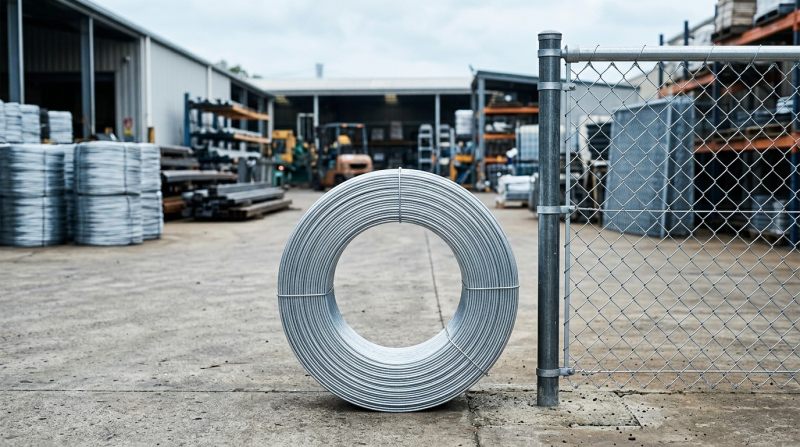
Early failure in galvanized steel wire for fencing usually appears in 3 forms: red rust within 6–18 months, localized corrosion near joints or bends, and strength loss after repeated outdoor exposure. For users and project managers, these symptoms are not just surface defects. They often signal deeper issues involving zinc coating uniformity, steel chemistry, wire drawing quality, and environmental suitability.
In practical fencing projects, a wire product can look acceptable at delivery but still underperform after installation. Coastal sites, livestock enclosures, industrial plants, and humid storage yards all create different corrosion loads. A fence near chloride exposure can face a much shorter service cycle than one used inland, even when the base galvanized steel price appears competitive at the time of purchase.
Technical evaluators and quality control teams usually review tensile strength, diameter tolerance, and coating adhesion. However, buyers often miss the interaction between substrate quality and zinc protection. If the carbon steel substrate has inconsistent composition, poor surface cleanliness, or excessive scale before galvanizing, the coating may not bond properly. That leads to early peeling, cracking, or exposed spots during transport and installation.
For distributors, contractors, and decision-makers, the key lesson is simple: early failure is rarely caused by one factor alone. It is typically the result of 4 linked risks—material inconsistency, unsuitable coating process, rough handling, and mismatch between product grade and service environment. Understanding these risks makes sourcing more accurate and prevents low initial pricing from turning into high replacement cost.
The most common failure triggers in outdoor fencing
The following checklist helps procurement teams and site users identify why galvanized steel wire for fencing may fail too soon in real-world applications:
- Insufficient zinc coating thickness for the exposure class, especially in wet or salt-affected zones.
- Poor adhesion caused by inadequate pre-treatment, residual scale, oil contamination, or unstable galvanizing control.
- Mechanical damage during coiling, transport, stretching, or field fastening, which exposes the carbon steel beneath the coating.
- Improper wire grade selection, where a lower-cost option is used for heavy-duty fencing, animal pressure, or long-span tension loads.
These failure triggers matter because fencing is often expected to remain functional for multiple seasons with limited maintenance. If inspection intervals are every 3–6 months, coating defects can spread before teams react. This is why professional sourcing should consider not only galvanized steel price, but also expected exposure, handling conditions, and replacement frequency.
What should buyers compare beyond galvanized steel price?
A low unit price can be attractive, but fencing performance depends on a broader comparison framework. Procurement teams should evaluate at least 5 dimensions: coating quality, base metal consistency, mechanical properties, compliance standards, and lead-time reliability. This is especially important for projects that involve phased installation over 2–4 weeks or repeated deliveries across multiple sites.
Buyers comparing galvanized steel price with carbon steel price often assume the lowest upfront number represents the best value. In reality, plain carbon steel without proper corrosion protection may require earlier maintenance, repainting, or replacement. Galvanized products cost more initially, but they can reduce downtime, safety risk, and labor expense when matched correctly to the environment.
Commercial evaluators also need to consider hidden cost drivers. These include breakage during installation, higher wastage from inconsistent diameter, claims related to premature rust, and delays caused by quality disputes. In export supply, stable packaging, specification control, and document consistency are often just as important as material cost, especially for dealers and importers serving multiple customer segments.
For steel buyers working across construction and industrial supply chains, the same sourcing discipline used for structural products also applies to wire selection. Companies such as Hongteng Fengda, with experience in international steel manufacturing, standardized quality control, and ASTM, EN, JIS, and GB-oriented production understanding, help reduce sourcing risk by focusing on consistency instead of price alone.
Procurement comparison table for fencing wire decisions
Before placing an order, use the following comparison table to separate low headline pricing from actual long-term value in galvanized steel wire for fencing and related steel sourcing decisions.
This comparison shows why buyers should not isolate galvanized steel price from service life expectations. The more demanding the site, the more important it becomes to assess total ownership cost over 12–36 months instead of focusing only on invoice price at shipment.
A useful midstream material perspective for steel buyers
In many manufacturing chains, fencing wire performance is influenced by the broader quality culture of upstream steel sourcing. For example, projects that also require hot rolled steel for structural or fabricated parts often pay close attention to substrate reliability. A product such as Hrc Coil is commonly evaluated by thickness range, width range, tolerance, and standards alignment before downstream processing.
Typical specifications in this category include thickness from 0.12–12mm, width from 100–2000mm, and tolerance around ±0.02mm for thickness and ±2mm for width, depending on supply conditions. Grades such as Q195, Q235, Q345, SPHC, SPHD, SPHE, and S45C are selected for different forming and load-bearing needs. This reinforces an important procurement principle: reliable end products begin with controlled base materials, not with price comparison alone.
For technical buyers, this cross-category view matters because structural lightweighting, high load-bearing capacity, and compliance with ASTM, AISI, BS, DIN, EN, JIS, and GB/T standards all depend on disciplined steel production. Whether sourcing fencing wire or hot rolled products, consistency in raw material and process control supports better downstream performance and lower quality claims.
How to evaluate coating quality, substrate, and compliance before ordering
Before approving galvanized steel wire for fencing, technical teams should divide inspection into 3 stages: pre-order review, pre-shipment verification, and receiving inspection. This approach is practical for importers, distributors, and project owners because it reduces the chance of discovering critical defects only after the fence is already installed on site.
At the pre-order stage, confirm wire diameter range, coating type, expected environment, packaging method, and reference standards. At pre-shipment, request surface photos, batch data, and dimensional confirmation. At receiving, inspect for scratches, bare spots, white rust, coil deformation, and packaging moisture damage. These checks do not need complex lab resources, but they do require a consistent checklist and trained personnel.
For quality and safety managers, compliance is not limited to a document. A product may reference common international standards, but the real question is whether the supplied batch reflects those control expectations in practice. That includes stable raw material sourcing, process traceability, and dimensional consistency. For fencing used in public, agricultural, or industrial spaces, this is also a safety issue because wire breakage or advanced corrosion can compromise barrier integrity.
Manufacturers with established export processes bring value here. Hongteng Fengda supports global buyers through modern manufacturing, strict quality control, and experience with ASTM, EN, JIS, and GB-oriented requirements. For projects requiring multiple steel categories, that operational discipline helps purchasers align specification review, delivery planning, and quality expectations under one supply framework.
Five practical checks before you confirm the order
The following 5-point checklist is useful for purchasers, engineers, and distributors comparing offers from different suppliers:
- Confirm the service environment, such as inland, humid, agricultural, or chloride-exposed installation.
- Verify dimensional consistency and whether the wire can tolerate expected tension and handling conditions.
- Ask how the galvanizing process is controlled and how coating adhesion is checked before shipment.
- Review packaging and transport protection, especially for sea freight or storage longer than 2–8 weeks.
- Clarify documentation needs, including standard references, batch identification, and any requested test records.
These five checks often prevent the most expensive errors. They also create a more useful supplier discussion than simply requesting a lower galvanized steel price, because they connect pricing directly to performance expectations and risk control.
Inspection priorities by project role
Different teams focus on different problems. The table below helps align purchasing, engineering, quality, and project management before order release.
Using role-based checks improves decision speed and reduces internal confusion. It also makes supplier communication more efficient, especially when several departments influence the final buying decision.
What mistakes increase total cost in fencing projects?
The most expensive fencing mistakes are usually not visible on the day of installation. They show up later as rust claims, repair labor, project delays, and accelerated replacement. In many cases, the buyer saved a small amount on galvanized steel price but absorbed much higher downstream cost across transport, rework, and maintenance.
One common mistake is using one wire grade across every environment. A rural boundary fence, an industrial perimeter, and a humid storage zone do not create the same corrosion stress. Another mistake is ignoring packaging and storage. Even a properly galvanized product can suffer if coils remain wet, compressed, or exposed for several weeks before installation.
A third mistake is evaluating carbon steel price as if it were directly interchangeable with galvanized material in outdoor service. Carbon steel can be suitable in controlled indoor or further-processed applications, but for exposed fencing, corrosion protection is central to lifecycle cost. Buyers should compare not just material categories, but also maintenance intervals, labor demand, and risk of barrier failure.
For enterprise decision-makers, the right sourcing question is not “Which quote is cheapest?” but “Which option keeps the project stable for the required service period?” Once that framing changes, discussions become more practical: batch consistency, claim prevention, standard compliance, replacement cycle, and delivery reliability start to matter as much as the initial steel price.
Cost mistakes that buyers can avoid
- Choosing by ton price only, without reviewing exposure conditions or maintenance budget over the next 12–24 months.
- Approving supply without confirming packaging suitability for export transit, warehouse storage, and field handling.
- Ignoring batch variation, which can lead to uneven installation performance and mixed corrosion behavior across the same fence line.
- Skipping pre-shipment checks when deadlines are tight, then facing costly claims after material reaches site.
Avoiding these four mistakes usually delivers more savings than negotiating a minimal unit discount. In steel supply, stable quality and fewer failures often produce the strongest commercial result.
FAQ and next steps for buyers, engineers, and distributors
The questions below reflect common search intent from information researchers, technical reviewers, purchasing teams, and project leaders dealing with galvanized steel wire for fencing, carbon steel price comparisons, and supplier evaluation.
How can I tell if galvanized steel wire for fencing is suitable for my project?
Start with 3 factors: environment, mechanical demand, and maintenance expectation. If the fence is installed in humid, agricultural, or industrial surroundings, coating quality becomes more critical. Then confirm whether the wire must handle animal impact, perimeter tension, or long unsupported runs. Finally, decide how often the site can realistically be inspected—monthly, quarterly, or only seasonally. This determines how much corrosion tolerance you need.
Is the lowest galvanized steel price ever the best buying option?
Not necessarily. The lowest galvanized steel price may work for low-risk environments or short service cycles, but it can also carry higher risk of coating inconsistency, damage during handling, or shorter replacement intervals. A better comparison includes base material quality, standard alignment, packaging, and likely maintenance cost across 1–3 years of use.
What documents or confirmations should I request before ordering?
Ask for specification confirmation, applicable standard references, batch identification method, dimensional tolerance details, and shipment packaging information. If the order is part of a larger steel procurement package, it is also useful to align delivery sequence, inspection timing, and any project-specific compliance needs before production starts.
Why choose a steel manufacturer with broader structural steel experience?
Because consistency in steel supply rarely comes from one isolated product line. A manufacturer serving global construction, industrial, and manufacturing projects usually has stronger process discipline, quality control routines, and familiarity with international standards. That matters when buyers need dependable lead times, stable material quality, OEM support, or combined procurement across multiple steel categories.
Why choose us for steel sourcing support?
Hongteng Fengda is a structural steel manufacturer and exporter from China serving customers across North America, Europe, the Middle East, and Southeast Asia. We support buyers with stable production capacity, standard-oriented quality control, and practical coordination for construction and industrial steel supply. Our experience covers angle steel, channel steel, steel beams, cold formed steel profiles, and customized structural steel components, with OEM support where required.
If you are evaluating fencing wire quality, comparing galvanized steel price and carbon steel price, or planning broader steel procurement, you can contact us for specific support on 6 key items: parameter confirmation, product selection, delivery cycle planning, custom processing, certification or standards discussion, and quotation communication. We can also help review tolerance needs, packaging expectations, and supply matching for multi-product projects so your sourcing decision is clearer and more practical.
Please give us a message


Please enter what you want to find