Steel rebar cost can change sharply from one order to the next, even when the specifications look similar. For buyers comparing a steel rebar supplier or a steel rebar manufacturer, factors like raw material trends, grade, size, coating, quantity, and shipping all affect pricing. Understanding these variables helps construction and procurement teams control budgets, reduce sourcing risk, and make better purchasing decisions.
In practice, rebar pricing is rarely based on one number alone. A quote may shift within 24 hours because billet prices moved, zinc or alloy inputs changed, ocean freight increased, or a project required different standards such as ASTM, EN, JIS, or GB. For contractors, distributors, and project managers, the key is not just finding a lower unit price, but understanding what is included, what drives variation, and where hidden cost risks can appear.
For global buyers sourcing from China, cost analysis also needs to include manufacturing consistency, lead time stability, packaging method, documentation, inspection, and destination logistics. Hongteng Fengda, as a structural steel manufacturer and exporter, supports buyers who need reliable steel supply, controlled production, and specification-based delivery for construction and industrial projects across North America, Europe, the Middle East, and Southeast Asia.
Raw Material Volatility Is the First Price Driver
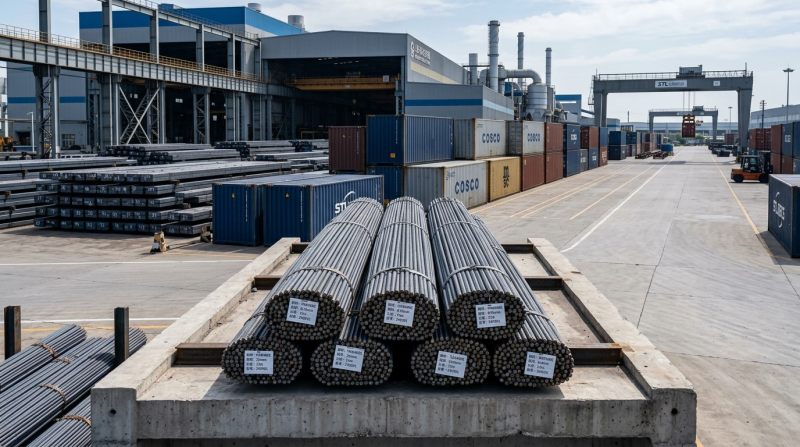
The largest variable in steel rebar cost is usually the underlying steel market. Rebar is closely linked to iron ore, scrap steel, coking coal, billet, and energy prices. When upstream inputs rise by 3% to 8% in a short period, mills and traders often revise quotations quickly. This is why two orders placed 7 to 14 days apart may show a clear price gap, even if the diameter and grade remain unchanged.
Production route matters as well. Rebar made from billet-based rolling may react differently to market changes than rebar produced from scrap-based electric arc furnace operations. Energy costs, especially electricity and natural gas, can affect rolling and heat treatment expenses. In periods of tight supply, even a small increase in power cost can influence the price per ton in export quotations.
Another point buyers often miss is currency movement. Export orders are commonly settled in USD, while many production inputs are purchased in RMB or linked to regional commodity pricing. If exchange rates move by 2% to 5% during negotiation, suppliers may adjust final offers to protect margin and purchasing stability. This becomes more visible in contracts with a validity window of only 3 to 5 business days.
Typical upstream cost factors that affect rebar pricing
The table below shows why the same steel rebar specification may not hold the same price from one order cycle to another.
The main takeaway is that rebar pricing should be viewed as a moving industrial cost structure, not a fixed catalog number. Buyers who monitor upstream market movements weekly usually make better timing decisions than those who request quotes only when project deadlines become urgent.
How procurement teams can respond
- Ask for quote validity, usually 3 days, 7 days, or linked to booking confirmation.
- Separate ex-works, FOB, CFR, and delivered price to see where change is happening.
- Track monthly or biweekly steel market movements before placing large-volume orders above 100 tons.
- Use framework purchasing when a project needs phased delivery over 2 to 6 months.
Specification Differences Often Create Large Quote Gaps
Two rebar orders may look similar on paper, but small specification changes can produce noticeable price differences. Grade is one of the biggest reasons. For example, rebar designed for higher yield strength or stricter seismic performance usually requires tighter chemistry control and more disciplined rolling. A change from one standard grade to a higher-performance equivalent can affect both raw material input and inspection workload.
Diameter also matters. Common sizes such as 10 mm, 12 mm, 16 mm, 20 mm, and 25 mm often have different rolling efficiency and yield rates. Mills may quote more competitively on fast-running sizes, while less common diameters or mixed-size orders increase setup complexity. If an order needs 6 different diameters in small volumes instead of 2 standard sizes in full bundles, the price per ton is likely to rise.
Surface condition and corrosion protection can further widen the cost range. Black rebar, epoxy-coated rebar, and galvanized options do not share the same production and finishing cost. In coastal, humid, or chemical exposure environments, buyers may specify additional protection to reduce service-life risk. The upfront price is higher, but long-term maintenance cost may be lower over 10 to 20 years of use.
Key specification variables in steel rebar purchasing
The table below highlights how common technical choices influence quotation outcomes.
From a technical evaluation standpoint, the cheapest rebar is not always the right rebar. If a project requires a specific standard, weldability level, bendability, or corrosion resistance, substituting a lower-cost option can trigger compliance issues, rework, or inspection delays that cost more than the original savings.
A useful mid-project comparison point
In many construction programs, rebar is only one part of the steel package. Buyers also review sheet, beam, angle, channel, and fabricated structural components together. In such cases, sourcing support from broader steel specialists can improve planning efficiency. For projects that also need corrosion-resistant sheet materials for roofing, cladding, agricultural buildings, equipment covers, or light industrial structures, Galvanised Sheet Steel Suppliers can complement the procurement package with grades such as DX51D, SGCC, S250GD, and S350GD, thickness from 0.12 mm to 6.00 mm, and width from 600 mm to 1500 mm under standards including ASTM, EN, JIS, and GB.
This kind of inserted category support matters because many buyers evaluate steel procurement by total project compatibility, not by one item alone. When sheet steel and rebar both need corrosion performance, mechanical consistency, and dependable lead times, supplier coordination can reduce documentation errors, shorten communication cycles, and simplify inbound inspection across multiple material groups.
Order Volume, Production Planning, and Packaging Change the Unit Cost
Quantity is one of the most practical reasons why steel rebar cost varies between orders. Mills usually optimize production around rolling schedules, bundle weight, and container or truck loading patterns. An order of 500 tons with 2 standard diameters is easier to plan than an order of 38 tons with 5 diameters and special labeling. Larger, cleaner orders often receive better unit pricing because setup loss, production interruption, and handling time are lower.
Small-batch or urgent orders can be more expensive even when the base material is the same. If a buyer needs partial production, split packaging, extra bundle tags, third-party inspection, or fast dispatch within 7 days, the supplier may add operational cost. This is especially true for export cargo, where container loading plans, moisture protection, and document control increase the workload beyond simple mill production.
Production timing also affects price. If a rebar order fits into an existing rolling plan, the cost can be more favorable. If it requires a new production slot, size changeover, or temporary raw material procurement, the quote may be higher. For buyers managing phased construction, submitting a 60-day forecast often leads to better commercial terms than placing last-minute purchase requests.
How order structure influences commercial terms
The following list shows practical order conditions that often move the final number up or down.
- Volume threshold: Orders above 100 to 300 tons may get better rolling efficiency and freight allocation.
- Mixed specifications: More than 4 sizes or multiple length requirements usually increase handling cost.
- Urgency: Delivery requests shorter than normal 15 to 30 days often carry a premium.
- Inspection scope: Mill test certificate only is different from third-party witnessing and pre-shipment checks.
- Packing details: Export seaworthy packing, special marks, and bundle separation add labor and materials.
What procurement and project teams should ask before comparing offers
When three suppliers submit very different prices, buyers should verify whether they are quoting the same commercial basis. Key checkpoints include whether the offer is per theoretical weight or actual weight, whether tolerances are included, whether the quote is FOB or CFR, and whether the supplier priced in all inspection and packing requirements. A low headline price can become less competitive after these items are added back.
For distributors and long-term industrial buyers, annual volume planning can reduce volatility. Instead of negotiating one shipment at a time, some buyers use quarterly release orders, fixed specification lists, and agreed production windows. This approach does not remove market risk completely, but it usually improves lead time visibility and cost predictability.
Freight, Destination, and Compliance Costs Matter More Than Many Buyers Expect
Logistics can make a meaningful difference in steel rebar cost, especially for export orders. Rebar is heavy, low-value-per-cubic-meter cargo, so freight efficiency is critical. A delivered price to Southeast Asia may look very different from the same order shipped to North America or the Middle East because container rates, port charges, customs handling, and inland transportation vary widely by route and season.
Shipping method affects economics. Depending on quantity, buyers may use container shipment, break bulk cargo, or local warehousing support. A 25-ton to 27-ton container load must be planned differently from a 1,000-ton project shipment. If the destination has strict unloading, port appointment, or documentation rules, the logistics cost may rise even before the material leaves the mill.
Compliance costs are another hidden variable. Some markets require extra documents, special marking, third-party inspection, or destination-specific testing. If a project needs ASTM-linked paperwork, EN traceability, or a quality dossier for public infrastructure review, the supplier must dedicate more time to quality management and document preparation. These services are valuable, but they do influence total order cost.
Freight and compliance comparison by order condition
This table helps explain why a mill price and a delivered project cost can differ substantially.
For engineering teams and business evaluators, the lesson is simple: compare landed cost, not just mill cost. A quote that is 2% higher at source can become more economical if the supplier offers stable packaging, fewer documentation mistakes, and predictable delivery windows of 20 to 35 days instead of repeated delays.
Common hidden cost items
- Port congestion surcharges and seasonal freight adjustments.
- Third-party inspection arranged before shipment or at loading.
- Special export marking, pallet separation, or waterproof wrapping.
- Destination customs delays caused by incomplete technical documents.
How to Evaluate Quotes and Reduce Rebar Sourcing Risk
The best way to manage steel rebar cost variation is to build a more complete quote evaluation process. Instead of comparing only price per ton, buyers should compare at least 6 points: grade and standard, size range, weight basis, delivery term, lead time, and inspection scope. This approach gives procurement, engineering, and finance teams a shared framework for decision-making.
Supplier capability should also be part of the price review. A manufacturer with modern production facilities, stable output, and quality control aligned with ASTM, EN, JIS, and GB requirements may not always be the lowest initial quote, but stronger process control often reduces later risk. Delays, off-spec material, and inconsistent bundle weights can create larger project losses than a small difference in unit price.
Hongteng Fengda supports global steel buyers with a practical sourcing model built around consistent quality, dependable lead times, and customized structural steel solutions. For buyers managing multi-category steel purchasing, this matters because procurement efficiency depends on more than one item. Coordinated supply across angle steel, channel steel, steel beams, cold formed profiles, and customized components can simplify planning and reduce sourcing gaps.
A practical 5-step quote review method
- Confirm the exact standard and grade, including any seismic or coating requirement.
- Check whether quantity, diameter mix, and length are identical across all offers.
- Verify trade term, loading basis, lead time, and inspection inclusions.
- Review packaging, marking, and document requirements before order confirmation.
- Evaluate supplier responsiveness, production visibility, and delivery reliability.
FAQ for technical and purchasing teams
Why can two suppliers quote very different prices for the same rebar size?
The size alone does not define the full commercial scope. One supplier may include export packing, stricter tolerance control, faster delivery within 15 days, or third-party inspection, while another may quote only a basic FOB price with a 30-day production window. Always compare full scope before deciding.
Is a larger order always cheaper per ton?
Usually, but not always. Larger volumes often improve production efficiency and freight planning, especially above 100 tons. However, if a large order includes many mixed diameters, urgent split shipments, or special compliance requirements, the savings may be smaller than expected.
When should buyers lock pricing?
If the project timeline is fixed and raw material markets are trending upward, locking price within a valid offer period of 3 to 7 days can reduce uncertainty. If demand is softer and delivery is needed after 45 to 60 days, staged buying may provide more flexibility.
What documents should quality and safety teams review?
At minimum, review mill test certificates, grade and heat traceability, dimensional checks, bundle identification, and any required third-party inspection reports. For regulated projects, confirm the standard reference and destination acceptance requirements before shipment.
Steel rebar cost varies because each order is shaped by a combination of market timing, material grade, size mix, coating, order volume, freight, and compliance scope. Buyers who look beyond the headline price usually make better sourcing decisions and avoid hidden project costs. If you need support with structural steel supply, customized specifications, or export-ready steel solutions for construction and industrial projects, contact Hongteng Fengda to get a tailored quotation, discuss technical requirements, and explore a more reliable procurement plan.
Please give us a message


Please enter what you want to find