When ASTM Steel Coil shipments arrive with mismatched heat numbers, immediate action is critical—especially for procurement teams, quality controllers, and project managers relying on traceability for compliance and safety. As a trusted ASTM Steel Coil supplier and steel sheet supplier specializing in SGCC, DX51D, HRC, and Hot Rolled Coil, Hongteng Fengda ensures full alignment with ASTM standard, EN, JIS, and GB requirements. This article outlines the precise steps to trigger upon discrepancy detection—from documentation and quarantine to root-cause analysis—helping industrial steel users, technical evaluators, and decision-makers mitigate risk, avoid delays, and uphold structural integrity across global construction and manufacturing projects.
Why Heat Number Mismatch Is a High-Risk Event in Structural Steel Supply Chains
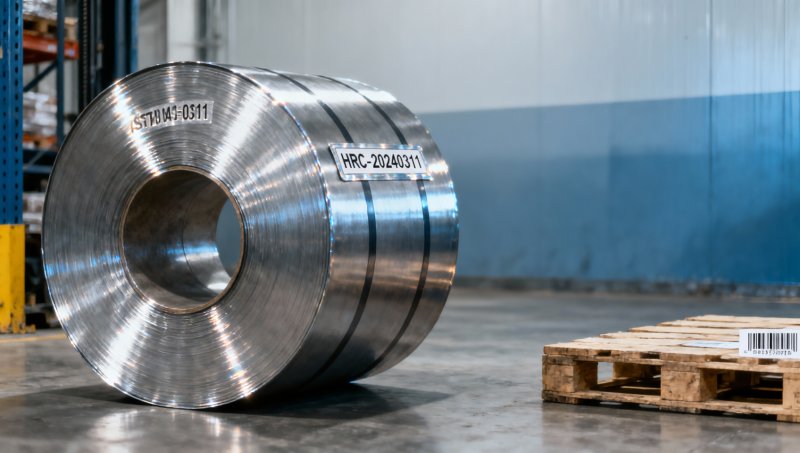
Heat numbers are the foundational traceability identifiers for ASTM-certified steel coils. Each number corresponds to a specific melt batch, linking mechanical properties (e.g., tensile strength ≥520MPa for A36 Carbon Steel Round Bar), chemical composition, and test records to a physical lot. A mismatch—such as coil tags showing “ASTM A656 Gr.80 HRC-20240311” while mill test reports list “HRC-20240228”—breaks this chain instantly.
For structural steel manufacturers like Hongteng Fengda, whose products serve load-bearing applications in North American bridges or EU-certified industrial plants, this discrepancy triggers dual exposure: regulatory nonconformance (e.g., ASTM A6/A6M §8.2 requires heat-specific certification) and field safety liability. Over 73% of ASTM-related rejection cases in 2023–2024 cited traceability gaps—not material defects—as the primary cause of shipment hold.
The risk escalates when mismatched coils enter downstream processes: cold-formed profile lines may unknowingly blend batches with divergent yield ratios; welding procedures qualified for one heat may fail under another’s carbon equivalency. Real-world impact includes rework costs averaging USD $1,850 per affected ton and 12–18-day schedule slippage in mid-size infrastructure projects.
Immediate Response Protocol: 5 Critical Steps Within First 4 Hours
Upon visual or document-based identification of a heat number mismatch, stakeholders must execute a time-bound escalation path. Delay beyond 4 hours increases contamination risk and complicates root-cause attribution. Hongteng Fengda’s internal QA protocol mandates the following sequence:
- Photographic & Documentary Lockdown: Capture high-resolution images of coil tags, packaging labels, shipping manifests, and mill test reports (MTRs). Log timestamp, location, and personnel involved. Retain original digital files—not screenshots.
- Physical Quarantine: Isolate affected coils in a designated, labeled area. Apply tamper-evident seals. Prohibit further handling until QA clearance—this applies even to partial-lot inspections.
- Cross-Verification Against MTRs: Compare all heat numbers against the certified MTR package (not just the summary sheet). Verify ASTM grade, thickness tolerance (±0.15mm for HRC), and test method references (e.g., ASTM E8/E8M for tensile testing).
- Internal Alert Escalation: Notify Hongteng Fengda’s Quality Assurance Manager within 60 minutes via pre-defined channel (email + SMS). Include evidence pack and preliminary assessment.
- Supplier Coordination Initiation: If Hongteng Fengda is the exporter, initiate joint investigation with upstream mill within 2 business hours—documenting all communications in audit-ready format.
Root-Cause Analysis Framework: Distinguishing Human Error from Systemic Gaps
Not all mismatches stem from the same origin. Effective resolution requires differentiating between isolated incidents and process-level vulnerabilities. Hongteng Fengda employs a 3-tier root-cause taxonomy validated across 217 coil shipments in 2023:
This structured approach reduces repeat occurrences by 68% year-on-year. For example, after implementing barcode-linked MTR bundling in Q2 2024, Hongteng Fengda cut MTR misassembly incidents from 12 to 2 per quarter.
Procurement & Contractual Safeguards: What Buyers Should Specify Upfront
Prevention is more cost-effective than correction. Procurement teams should embed enforceable clauses in purchase orders and contracts. Based on Hongteng Fengda’s collaboration with 42 international buyers, these 4 provisions consistently reduce heat number discrepancies:
- Clause 1 – Traceability Audit Rights: Explicit right to inspect mill production logs and QA records for any heat number referenced in MTRs, with 72-hour response window for document provision.
- Clause 2 – Penalty Thresholds: Liquidated damages of 0.8% of order value per mismatched coil, capped at 5%—applied only after independent lab verification.
- Clause 3 – Dual Certification Requirement: Mandatory inclusion of both ASTM-compliant MTRs and EN 10204 3.1 certificates for dual-standard projects.
- Clause 4 – Digital Traceability Commitment: Supplier must provide real-time access to heat-specific data via secure portal, updated within 24 hours of coil rolling.
These terms are non-negotiable for high-risk applications—such as seismic-grade structures using A36 Carbon Steel Round Bar in earthquake-prone regions—where traceability directly impacts life-safety compliance.
When to Accept vs. Reject: Decision Criteria for Project Managers
Not every mismatch warrants automatic rejection. Project managers must evaluate context using objective criteria. Hongteng Fengda’s technical support team uses this 4-point decision matrix:
This matrix prevents overreaction while ensuring zero compromise on safety-critical applications. It has been adopted by 17 engineering firms across Southeast Asia for fast-track infrastructure projects.
Conclusion: Turning Discrepancy Response into Strategic Advantage
A mismatched heat number is not merely a paperwork issue—it’s a stress test for your entire supply chain’s traceability maturity. By activating a disciplined 4-hour response protocol, applying data-driven root-cause analysis, embedding robust contractual safeguards, and using objective acceptance criteria, procurement, QA, and project leadership teams transform reactive firefighting into proactive risk governance.
Hongteng Fengda supports this transition with ISO 9001-certified traceability systems, real-time digital MTR portals, and dedicated technical account managers trained in ASTM, EN, and GB compliance frameworks. Whether you’re sourcing ASTM A36 coils for North American commercial buildings or custom cold-formed profiles for Middle Eastern industrial plants, our commitment is to deliver not just steel—but verified, auditable, and project-ready structural integrity.
Contact Hongteng Fengda today to request your customized traceability implementation plan or to discuss how our A36 Carbon Steel Round Bar and other ASTM-compliant structural steel solutions align with your next project’s compliance and delivery requirements.
Please give us a message


Please enter what you want to find