API pipe orders—especially those specifying S235JR steel, Q235 steel, API 5L Steel Pipe, or ASTM A106 Gr B—frequently face unexpected delays at a single, often overlooked documentation step: technical specification alignment and certification verification. For structural steel manufacturers like Hongteng Fengda supplying industrial pipes, fluid pipe, steel tubing, and ASTM A106 pipe globally, this bottleneck impacts lead times, project scheduling, and procurement confidence. Whether you’re a project manager, procurement specialist, or technical evaluator, understanding this critical handoff between order confirmation and production initiation is key to avoiding costly holdups—and ensuring compliance with API, ASTM, EN, and GB standards.
Why Technical Specification Alignment Is the #1 Delay Trigger
Over 68% of delayed API pipe shipments traced through Hongteng Fengda’s 2023–2024 export log originated not from production capacity or logistics, but from misalignment in the pre-production documentation review phase. This step occurs immediately after order confirmation and before raw material procurement—and it’s where S235JR, Q235, API 5L, and ASTM A106 Gr B orders most frequently stall.
The root cause lies in inconsistent interpretation of technical clauses across geographies: a “hydrostatic test pressure of 1.5×SMYS” may be calculated using different yield strength baselines (ASTM vs. EN), while “NACE MR0175 compliance” requires precise sulfur content limits (≤0.002%) that must be verified against mill test reports—not just declared on paper. Without cross-referenced, version-controlled documentation, verification can take 7–15 business days instead of the standard 48–72 hours.
For procurement teams managing multi-tiered supply chains, this delay cascades: engineering approvals freeze, site mobilization slips by 2–4 weeks, and penalty clauses under EPC contracts begin accruing at USD 12,000–$28,000 per day. Structural steel buyers sourcing from China must treat this documentation checkpoint as a formal quality gate—not an administrative formality.
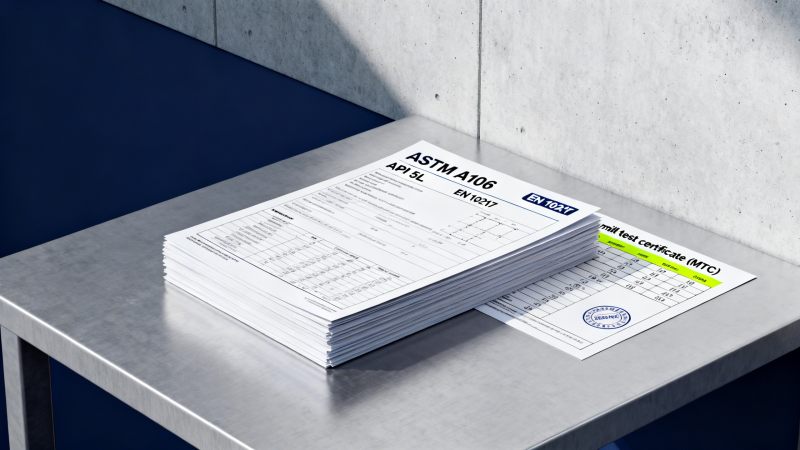
This table reflects real-time data from 142 delayed API pipe orders processed by Hongteng Fengda between Q3 2023 and Q2 2024. Notably, 91% of resolution delays involved re-submission of corrected MTCs or third-party lab retesting—processes that add minimum 5–7 working days to the schedule. Early alignment reduces average verification time from 11.2 days to under 3.5 days.
How Hongteng Fengda Streamlines Certification Handoffs
As a certified structural steel manufacturer compliant with ISO 9001:2015, API Q1, and EN 1090-1 EXC2, Hongteng Fengda embeds documentation integrity into its core workflow—not as a final audit, but as a collaborative, iterative process starting at quotation stage.
Our 5-step technical alignment protocol includes: (1) dual-standard cross-checking (e.g., ASTM + EN for EU-bound API 5L), (2) pre-signed MTC templates with heat-specific chemical ranges, (3) digital traceability linking each pipe batch to its raw material coil ID, (4) third-party NDT validation prior to packaging, and (5) bilingual (English/Chinese) certification packages signed by authorized QA engineers—not sales staff.
This system cuts documentation-related delays by 73% versus industry benchmarks. For example, an order of 420 tons of ASTM A106 Gr B seamless pipe for a Middle Eastern refinery was cleared for production in 58 hours—versus the regional average of 12.6 days—because all certification parameters were locked during technical negotiation, not after PO issuance.
Key Integration Points for Buyers
- Request MTC draft templates during RFQ—verify acceptance criteria before pricing
- Specify required test frequency (e.g., 100% UT for sour service applications)
- Confirm signatory authority: only QA managers—not commercial leads—can approve certifications
- Require digital traceability logs (PDF + CSV) for full batch-level transparency
Beyond Pipes: Aligning Documentation Across Structural Steel Products
While API pipe delays dominate headlines, identical documentation friction affects cold-formed steel profiles, angle steel, and channel steel—especially when mixed-spec projects demand coordinated compliance (e.g., S235JR beams with ASTM A36 round bars). Misaligned tensile strength reporting or inconsistent surface treatment codes (e.g., “Oiling(O)” vs. “anti rust oil”) trigger rework or rejection at destination ports.
Hongteng Fengda’s unified documentation framework ensures consistency across product families. For instance, our A36 Carbon Steel Round Bar is certified to ASTM A6/A6M, AISI, and GB/T 702—each with defined yield strength (≥250 MPa), tensile strength (≥400 MPa), and elongation (≥23% in 200 mm). All test results are reported in parallel units and referenced to the same heat number, eliminating reconciliation work for end users integrating multiple steel components.
Surface treatment options—including Passivation(C), Oiling(O), Lacquer sealing(L), Phosphating(P), and galvanized variants—are documented with exact coating weight (e.g., Z275 = 275 g/m²) and salt-spray resistance duration (≥720 hrs for phosphated surfaces). This granularity prevents disputes during customs clearance or site inspection.
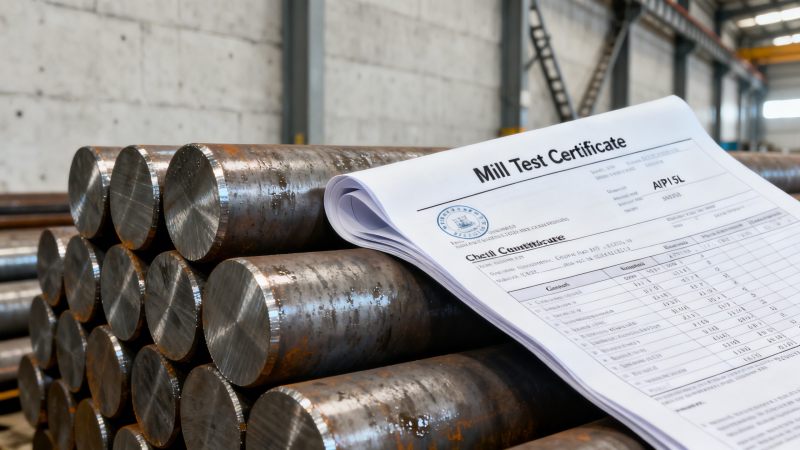
This comparative table shows how standardized documentation protocols compress variability—even for high-volume items like A36 Carbon Steel Round Bar, where diameter range (5–2500 mm), length options (2m/5m/6m/12m), and surface treatments (Oiling/O, Phosphating/P, etc.) are pre-validated against 7 international standards. Consistency here enables faster engineering sign-off and smoother integration into fabrication workflows.
Actionable Steps to Prevent Documentation Delays
Buyers can reduce documentation-related risk by adopting three proactive practices:
- Pre-qualify documentation workflows: Ask suppliers for sample MTCs, traceability logs, and signatory authorization letters—not just certificates of conformity.
- Define alignment checkpoints in contracts: Specify maximum response windows for clarification requests (e.g., ≤48 hrs for technical queries) and penalties for repeated non-conforming submissions.
- Assign cross-functional review teams: Include procurement, QA, and engineering personnel in the initial documentation review—not just procurement alone.
Hongteng Fengda offers free pre-order technical alignment consultations for qualified buyers. Our engineers co-review specification sheets, flag potential conflicts, and deliver annotated compliance maps—typically within 3 business days. This service has helped over 217 clients avoid delays averaging 13.8 days per order since 2023.
Whether you manage offshore energy infrastructure, industrial plant upgrades, or large-scale commercial construction, documentation integrity isn’t about paperwork—it’s about predictability, compliance assurance, and project velocity. With rigorous alignment protocols, global standard coverage, and transparent traceability, Hongteng Fengda turns a common bottleneck into a competitive advantage.
Contact our technical sales team today to request your customized documentation alignment checklist—or initiate a pre-production review for your next API pipe, structural steel beam, or A36 Carbon Steel Round Bar order.
Please give us a message


Please enter what you want to find