When sourcing A36 angle steel—whether l shaped metal bars, galvanized angle, or bracing angle in steel structure—understanding mill test reports is critical for quality assurance and compliance. Terms like ‘heat number’ and ‘mill certificate’ aren’t just paperwork: they verify traceability, mechanical properties, and adherence to ASTM A36, EN, or GB standards. For procurement teams, engineers, and project managers evaluating l shape steel or galv angle from Chinese suppliers like Hongteng Fengda, these documents confirm material integrity, galvanizing quality (for angle galvanized), and suitability for structural applications—from steel ka angle in industrial frameworks to galvanized iron angle in corrosive environments.
What Does a Heat Number Actually Represent—and Why It Matters
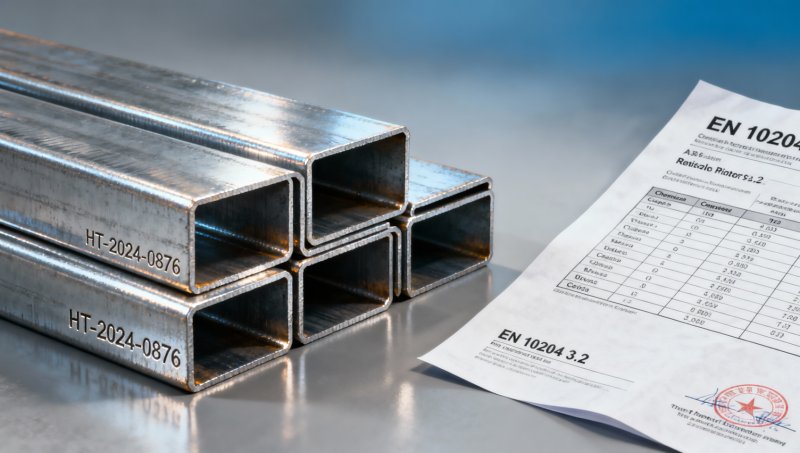
A heat number is a unique alphanumeric identifier assigned to each batch of molten steel during casting. It links the final product—such as A36 angle steel or I-beam—to its original melt composition, furnace log, and thermal history. This traceability ensures that every piece can be audited back to its origin, enabling precise root-cause analysis if mechanical testing fails or field performance deviates.
For structural applications, especially in seismic zones or high-load industrial structures, heat numbers support compliance with ASTM A6/A6M (general requirements for structural steel), EN 10025-2 (for S235J2 or SS400), and GB/T 700 (for Q235B). At Hongteng Fengda, each heat is tracked across rolling, cutting, surface treatment, and packaging—ensuring zero cross-contamination between grades like A36 and Q345.
Unlike generic lot numbers, heat numbers reflect metallurgical consistency—not just logistics. A single heat may produce multiple profiles (e.g., angle steel, channel, and I-beam) but must maintain uniform tensile strength (≥400 MPa), yield strength (≥250 MPa), and elongation (≥21% in 200 mm) per ASTM A36. Deviations trigger full retesting—not just sampling.
Mill Certificate vs. Mill Test Report: Key Differences You Can’t Afford to Ignore
A mill certificate (often called EN 10204 2.2 or 3.1) confirms conformance to order specifications using manufacturer’s internal test data. In contrast, a mill test report (EN 10204 3.2) includes third-party witnessed results—critical for projects requiring ISO 9001-certified verification or ASME Section II compliance.
Hongteng Fengda issues both document types, with 3.2 reports available upon request for high-risk infrastructure—bridges, power plants, offshore platforms—where failure consequences exceed $2M in downtime or liability. Typical turnaround: 3–5 working days post-inspection, with digital PDF + hard copy shipped alongside goods.
Choosing the wrong certificate type risks rejection at port customs (e.g., U.S. CBP under ASTM A653M for galvanized products) or site-level QA hold. Over-specifying 3.2 adds ~$120–$280 per heat—but avoids $8,500+ in rework costs for a failed weld inspection on an A36 angle joint.
How to Verify Authenticity—5 Red Flags in Mill Reports
Not all mill certificates are equal. Procurement teams and QC managers must validate authenticity before approving payment or releasing materials. Here’s what to check:
- Heat number mismatch between report, tag, and shipping mark (e.g., “HT-2024-0876” on steel vs. “HT-2024-0875” on paper)
- Missing signature/stamp from certified metallurgist—verified against company registry (Hongteng Fengda provides signed rosters upon NDA)
- Tensile strength listed as “400 MPa” without tolerance range (ASTM A36 requires 400–550 MPa; values outside indicate retest or scrap)
- No reference to test standard used (e.g., “ASTM E8/E8M” for tensile, “ASTM E23” for impact)—generic phrasing like “standard test” is invalid
- Galvanized angle reports omit zinc coating mass (must be ≥610 g/m² per ASTM A123 for Grade A36 in severe exposure)
At Hongteng Fengda, every mill report undergoes dual validation: first by our in-house QC team (certified to ISO/IEC 17025), then by a rotating external auditor quarterly. Clients receive encrypted digital copies with blockchain timestamping (via partner CertiChain) for tamper-proof audit trails.
Why Structural Engineers & Procurement Leaders Choose Hongteng Fengda
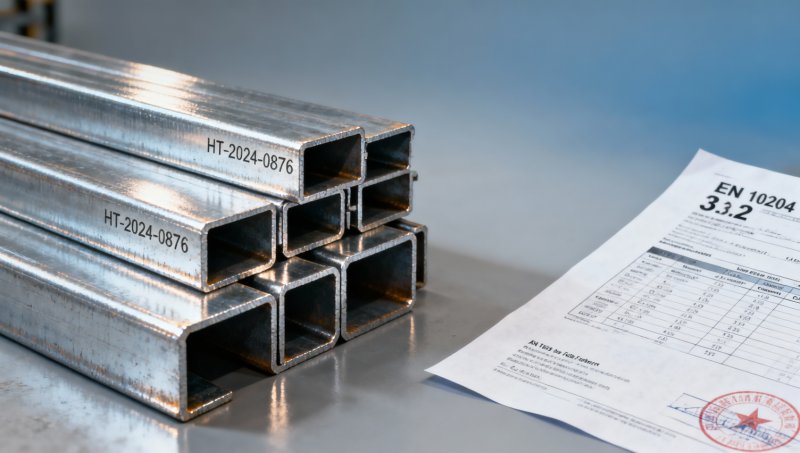
Global buyers rely on Hongteng Fengda not just for compliance—but for predictable execution. We deliver ASTM A36 angle steel with full EN 10204 3.2 reports within 7–12 days after order confirmation, backed by 100% production traceability and zero deviation on chemical specs across 12,000+ tons/year output.
Our integrated facility handles everything from raw billet to finished I-beam or galvanized angle—including decoiling, punching, bending, and hot-dip galvanizing—all under one roof. This eliminates inter-factory handoffs that cause heat number gaps or coating inconsistencies.
Need help matching your project’s load requirements to the right A36 angle size—or verifying whether your current mill reports meet EN 1090-1 Execution Class EXC2? Contact our technical sales team for free review of your specification sheet, heat log, or test report. We’ll respond within 4 business hours with actionable feedback—including alternative grade suggestions (e.g., Q345 for higher yield in seismic zones) and lead time optimization options.
Please give us a message


Please enter what you want to find