For quality control and safety teams, evaluating Galvanized cold drawn soft hard steel wire rod for cold drawn wire starts with the right checkpoints. From surface finish and zinc coating consistency to tensile performance, diameter tolerance, and compliance with ASTM, EN, JIS, or GB standards, every detail affects downstream safety and processing stability. This guide outlines the key quality indicators buyers should verify before approval.
Why a checklist matters for soft hard steel wire rod quality
Galvanized cold drawn soft hard steel wire rod for cold drawn wire is often used in processes where stable drawing behavior is critical. Small defects can cause breakage, uneven tension, or coating loss.
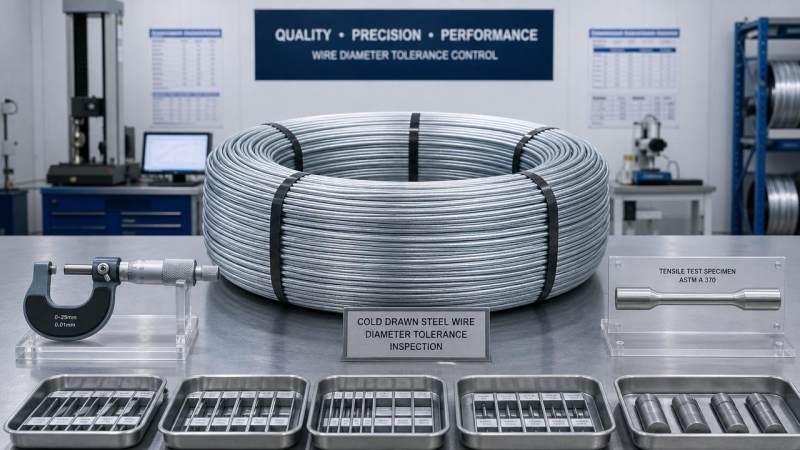
A checklist reduces subjective judgment. It helps verify whether the material matches the purchase specification, the intended application, and the required international standard before production begins.
This is especially important in steel supply chains where wire rod quality affects forming, welding, galvanizing performance, corrosion life, and final product consistency.
Core checklist: what to check in soft hard steel wire rod quality
Use the following checkpoints when reviewing Galvanized cold drawn soft hard steel wire rod for cold drawn wire before unloading, sampling, or release to production.
- Confirm the steel grade first. Match heat number, grade, and certificate data with the order, because incorrect chemistry changes drawability, hardness range, and final mechanical behavior.
- Inspect the surface carefully. Reject coils with rust, pitting, laps, seams, scale residue, zinc ash, oil contamination, or deep scratches that can trigger wire breaks.
- Measure wire rod diameter at several positions. Verify average size and ovality, since poor dimensional control causes unstable die pressure and uneven deformation during cold drawing.
- Check zinc coating uniformity. Look for bare spots, peeling, excessive lumps, or color inconsistency, because coating defects reduce corrosion resistance and interfere with later processing.
- Review tensile strength and yield behavior. The soft hard condition should fit the drawing schedule, avoiding material that is too brittle or too soft for line speed.
- Test elongation and reduction of area. Adequate ductility is necessary for repeated deformation, bending, and coiling without cracking at the surface or core.
- Verify coil weight, coil inner diameter, and winding condition. Tight, uniform coils feed better and reduce handling damage, tangling, and line stoppage in automated operations.
- Examine decarburization and microstructure when required. Nonuniform pearlite, ferrite excess, or surface decarburization can weaken the rod and disrupt predictable drawing performance.
- Check weld joints within coils. Confirm whether in-coil welding is allowed, how many joints are present, and whether each joint area was clearly marked.
- Validate compliance documents. Review mill test certificates, coating test reports, and standard references such as ASTM, EN, JIS, or GB for complete traceability.
Key test methods that support the checklist
- Use micrometers for diameter and ovality checks on different coil layers.
- Run tensile testing on sampled lengths from coil head, middle, and tail.
- Apply bend or reverse bend tests where specifications require forming validation.
- Measure zinc coating mass or thickness using standardized coating methods.
- Perform metallographic inspection for grain flow, inclusions, and decarburization depth.
What surface and coating results should look like
For Galvanized cold drawn soft hard steel wire rod for cold drawn wire, surface quality is not a cosmetic issue. It directly affects lubrication pickup, die wear, drawing force, and corrosion life.
A good surface should appear clean and continuous. Slight process marks may be acceptable, but sharp defects, zinc flaking, and embedded foreign matter are not.
Coating should remain adherent after handling and normal bending. If zinc powder falls off easily, adhesion may be poor, indicating process instability or improper substrate preparation.
Application-specific checks for downstream use
Cold drawing lines
In continuous drawing, diameter consistency and tensile stability matter most. Even small variation can shift die pressure, change elongation, and increase scrap rates.
Lubrication behavior should also be observed during trial runs. A clean, stable surface usually supports smoother feeding and lower friction.
Fasteners, mesh, and formed wire products
Products that will be bent, woven, or cut need balanced hardness and ductility. Excessively hard wire rod may pass certificate checks but still crack during forming.
When corrosion resistance is important, coating uniformity becomes more critical than average coating thickness alone. Weak spots fail first in service.
Structural steel fabrication support
Wire rod is often part of broader steel procurement programs. In projects involving framing and fabricated sections, consistency across supply categories improves quality planning and inspection efficiency.
For example, some buyers sourcing wire products also coordinate section steel supply such as Metal Channel for construction, wall beam, bracket, and lightweight roof applications. In those cases, traceability, standard compliance, and dimensional tolerance should be managed with the same discipline.
A structural steel exporter with modern production control can support this approach by offering standard grades, OEM options, and certification coverage across ASTM, EN, JIS, and GB requirements.
Commonly missed issues that create later failures
One common mistake is checking only the certificate and skipping physical inspection. Documents cannot reveal transport damage, moisture exposure, or poor coil winding.
Another missed issue is evaluating only average tensile strength. Variation within the same coil can still create unstable drawing results and frequent line adjustments.
Some inspections also overlook edge-layer samples. Outer coil wraps may differ from inner wraps because of handling impact, storage conditions, or coating damage.
Packaging condition is often underestimated. Broken ties, poor wrapping, and missing tags increase identification errors and raise the risk of mixed lots.
Finally, standard references may be incomplete. A rod described as compliant should still be checked against the exact edition, grade limits, and coating requirements in the contract.
Practical execution steps before approval
- Define acceptance limits for chemistry, diameter, coating, tensile range, and appearance before shipment.
- Sample from multiple coil positions instead of relying on one test piece.
- Compare certificate data with in-house verification results and hold material if discrepancies appear.
- Record photos of surface defects, coil tags, and packaging for traceability.
- Run a short production trial when the order is new, the source changes, or the application is critical.
Conclusion: approve soft hard steel wire rod with evidence, not assumption
Galvanized cold drawn soft hard steel wire rod for cold drawn wire should be approved only after surface, coating, dimensions, mechanical properties, microstructure, and documents are all checked together.
A structured inspection process lowers sourcing risk, improves downstream stability, and prevents expensive failures during drawing, forming, and end use.
If the next shipment is under review, convert these checkpoints into a receiving form, align them with ASTM, EN, JIS, or GB requirements, and verify each coil before release.
Please give us a message


Please enter what you want to find