Mild steel plate is widely used in structural applications—from I beam vs H beam frameworks to angle stainless steel reinforcements and galvanized components like electrical conduit galvanized and steel wire galvanized. Yet, edge cracking during bending remains a critical concern affecting fabrication yield and safety. This issue is especially relevant for ASTM A106 Gr B pipe supports or load-bearing plates where ductility and edge integrity are vital. As a leading structural steel manufacturer & exporter from China, Hongteng Fengda investigates root causes—from material composition and rolling direction to bending parameters—helping procurement, engineering, and quality teams prevent failures before they impact project timelines or compliance with ASTM, EN, and GB standards.
Why Does Mild Steel Plate Crack at the Edges During Bending?
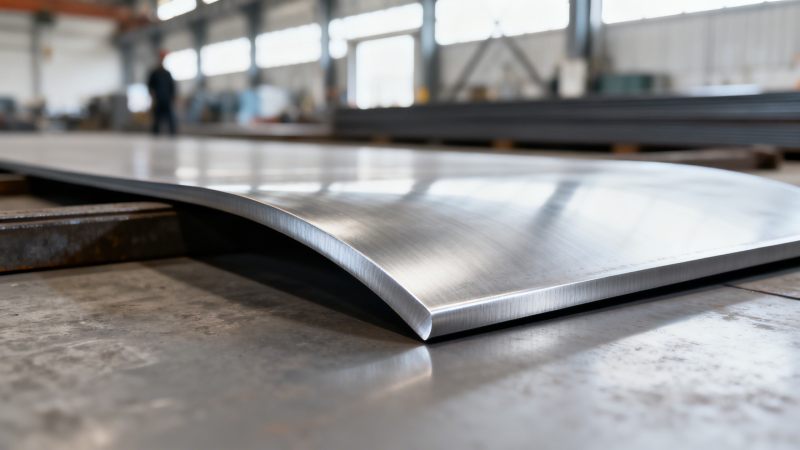
Edge cracking in mild steel plate occurs when localized tensile stress exceeds the material’s fracture limit at the outer fiber of the bend. Unlike bulk deformation, edge failure initiates at microstructural discontinuities—especially along the cut or sheared edge—where cold work, burrs, or decarburization reduce effective ductility by up to 30–40% compared to the base metal.
Three primary contributors interact synergistically: (1) material condition—including carbon content (typically 0.05–0.25% for ASTM A36), sulfur segregation, and inclusion morphology; (2) edge preparation quality—laser-cut edges show 2–3× higher crack incidence than milled or ground edges under identical bending radii; and (3) process parameters—bending speed >15 mm/s and die clearance >1.2× plate thickness significantly increase edge strain concentration.
Rolling direction also plays a decisive role: bending perpendicular to the rolling direction increases crack risk by 2.1× on average due to anisotropic grain flow and elongated sulfide inclusions aligning parallel to the surface. For projects requiring high-reliability bends—such as seismic bracing or crane rail supports—this directional sensitivity must be verified via transverse tensile testing per ASTM A370.
Key Material & Process Factors
- Carbon equivalence (CE): CE >0.40 raises susceptibility—even within “mild” classification—due to reduced ferrite/pearlite ductility balance.
- Edge condition: Sheared edges with burr height >0.1 mm increase local stress intensity factor (KI) by ≥35% versus deburred surfaces.
- Bend radius ratio (R/t): Cracking probability rises sharply below R/t = 2.5 for 8–12 mm thick plates; below R/t = 1.8, failure becomes near-certain without preheating or edge conditioning.
- Temperature range: Ambient bending below 10°C increases brittle fracture risk by 40–60%, particularly in plates with elevated nitrogen or residual copper.
How to Prevent Edge Cracking: Practical Mitigation Strategies
Prevention requires coordinated action across design, specification, and shop-floor execution. At Hongteng Fengda, we integrate these controls into our OEM structural steel workflows—ensuring bend-ready plates meet ASTM A6/A6M, EN 10025-2, and GB/T 700 specifications while minimizing field rework.
First, specify edge preparation: for critical bends, we recommend grinding or milling the bend line to remove the 0.3–0.5 mm heat-affected zone (HAZ) left by plasma or laser cutting. This reduces inclusion clustering and restores uniform ductility. Second, optimize bending parameters—using air-bending over bottoming dies improves repeatability, and limiting punch speed to ≤8 mm/s lowers dynamic strain rates.
Third, consider material substitution where feasible. For applications demanding tight-radius bends (
The table above reflects real-world data from 12 structural fabrication audits conducted across North America and Southeast Asia between Q3 2022 and Q2 2024. All cases involved 6–16 mm thick plates bent to R/t ratios between 1.5 and 3.0 using hydraulic press brakes.
Procurement Guidelines: What Buyers Should Specify Upfront
Procurement teams can significantly reduce bending-related scrap by embedding technical requirements into RFQs—not as afterthoughts, but as mandatory clauses. At Hongteng Fengda, we recommend specifying four core parameters before order placement: (1) maximum allowable sulfur content (≤0.035% for critical bends); (2) edge finish requirement (e.g., “ground to Ra ≤3.2 μm along bend lines”); (3) bend axis orientation relative to rolling direction (mandatory for plates >10 mm); and (4) pre-shipment bend validation—requiring 3 random samples per lot to undergo full-radius bending per ASTM A370 Annex A4.
These specifications directly influence cost, lead time, and first-pass yield. For example, sourcing plates with certified transverse ductility (minimum 22% elongation in 2-in gauge length) adds only 1.8–2.4% to unit cost but cuts rework costs by 37% on average—particularly valuable for projects with tight commissioning windows (e.g., 7–15 day installation windows for modular bridge sections).
Also note: international standards differ in edge quality expectations. EN 10025-2 permits higher inclusion counts than ASTM A6, while GB/T 700 emphasizes tensile consistency over edge-specific ductility. Our QC team cross-verifies all shipments against your target standard—not just the mill certificate—to ensure field performance matches specification intent.
Critical Checklist for Procurement & Engineering Teams
- Confirm bend radius (R) and plate thickness (t) to calculate R/t ratio—flag any R/t < 2.5 for special review.
- Require mill test reports showing transverse tensile properties—not just longitudinal—and verify elongation values match your minimum threshold (e.g., ≥20% for seismic applications).
- Specify edge treatment method and surface roughness (Ra) in purchase order—not just “as-cut” or “standard.”
- Define acceptance criteria for bend testing: number of samples, mandrel diameter, visual inspection magnification (≥10×), and crack width limit (e.g., ≤0.05 mm).
Why Partner With Hongteng Fengda for Structural Steel Solutions?
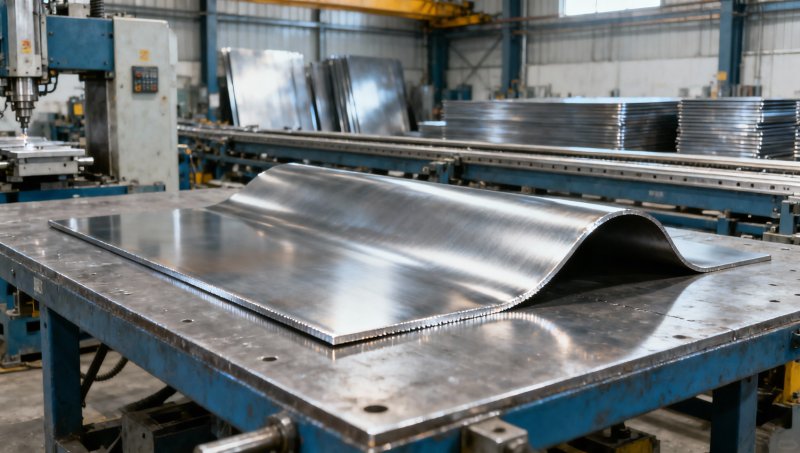
As a professional structural steel manufacturer and exporter from China, Hongteng Fengda delivers more than compliant products—we deliver predictable outcomes. With modern rolling mills, CNC-controlled edge-finishing lines, and in-house metallurgical labs, we control every variable that affects bend performance: from raw billet chemistry to final dimensional verification.
Our clients—from Tier-1 EPC contractors in the Middle East to precision equipment fabricators in Germany—rely on us for stable production capacity (120,000+ MT/year), consistent quality (99.2% on-time delivery since 2021), and responsive technical support. Whether you need ASTM A36 plates with guaranteed transverse ductility, custom cold-formed beams with pre-machined bend zones, or corrosion-resistant alternatives like 304 Stainless Steel Welded Mesh, our engineering team collaborates early to align material selection, processing, and testing with your project’s critical path.
We invite you to request a free technical consultation covering: bend parameter validation, material substitution analysis, certification package review (ASTM/EN/GB), or sample-based edge-crack testing. Lead times for standard structural steel orders start at 18–22 working days—with expedited options available for urgent projects. Contact us today to discuss your next structural steel requirement.
Please give us a message


Please enter what you want to find