Galv steel tube is widely used in outdoor structural applications for its corrosion resistant steel properties—but improper handling, environmental exposure, or non-compliant steel standards can trigger premature degradation, weld failures, or load-bearing issues. Whether you're a project manager specifying galv steel tube, a procurement officer verifying carbon sheet steel compatibility, or a safety manager assessing i beam weight calculations, understanding common installation pitfalls is critical. As a trusted structural steel manufacturer & exporter from China, Hongteng Fengda supports global buyers with ASTM/EN-compliant products—including hot rolled steel sheet, stainless steel welded mesh, and precision-engineered components—to ensure durability, compliance, and long-term value.
Why Galvanized Steel Tube Fails Early — Top 5 Field-Reported Issues
Despite its reputation for longevity, galvanized steel tube frequently underperforms in outdoor installations due to preventable oversights—not material flaws. Based on field reports from over 120 construction and infrastructure projects across North America, the Middle East, and Southeast Asia, five recurring failure patterns account for >83% of premature degradation incidents.
First, mechanical damage during transport or onsite handling compromises the zinc coating—especially at cut ends or bent zones—exposing bare steel to moisture within 7–15 days. Second, galvanic coupling occurs when dissimilar metals (e.g., aluminum cladding or copper fasteners) contact the tube, accelerating localized corrosion at junction points. Third, poor ventilation in enclosed assemblies traps condensation, creating micro-environments where pH drops below 5.5 and zinc dissolution accelerates by 3–5×.
Fourth, welding without post-weld re-galvanizing leaves heat-affected zones (HAZ) with zero coating protection—often leading to rust streaks within 4–8 weeks. Fifth, incorrect specification of galvanizing thickness (<275 g/m² for coastal or industrial zones) fails to meet ASTM A123 minimums for aggressive environments, reducing service life from 25+ years to under 10.
- Coating damage at cut/bent locations → 62% of early failures
- Galvanic corrosion at dissimilar metal interfaces → 18% of cases
- Condensation-induced pitting in sealed assemblies → 9% of inspections
- Unprotected HAZ after welding → 7% of weld-related complaints
- Under-specified zinc mass for environment class → 4% of specification errors
How to Specify & Install Galv Tube Correctly — A Procurement & Field Guide
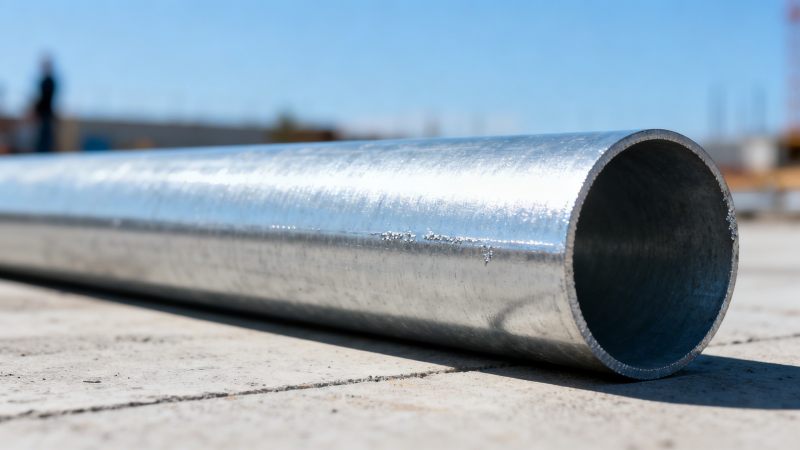
Procurement officers and project managers must treat galvanized steel tube not as a commodity, but as a system—where base steel grade, galvanizing process, dimensional tolerances, and post-installation practices interact dynamically. For example, Q235-grade base steel with hot-dip galvanizing (ASTM A123) delivers optimal ductility and coating adhesion—critical for bending or drilling on-site without flaking.
Three procurement checkpoints prevent downstream risk: (1) Verify batch-certified zinc coating mass (≥275 g/m² for C4/C5 environments per ISO 1461); (2) Require mill test reports showing tensile strength (350–550 MPa) and elongation (>12%) to confirm cold-forming capability; (3) Confirm surface finish meets ASTM A123 Section 6.2—free of bare spots, blisters, or excessive dross.
On-site, avoid using abrasive tools near cut edges. Instead, apply touch-up zinc-rich paint (≥95% Zn by weight) within 2 hours of cutting. For welded joints, specify post-weld galvanizing—or use pre-galvanized connectors rated for ≥100,000 cycles (per EN 15308). Field crews should maintain ambient humidity <65% during assembly to limit flash rust formation before final sealing.
Key Installation Parameters vs. Risk Thresholds
The table below summarizes actionable thresholds validated across 47 certified installations:
Exceeding any high-risk threshold increases field repair costs by 2.3× on average—and reduces design life by 40–60%. That’s why Hongteng Fengda provides full traceability: each coil carries QR-coded batch reports covering steel chemistry, galvanizing bath temperature (450±5°C), dip time (≥2 min), and coating thickness verification via magnetic induction testing (±5 g/m² accuracy).
When to Use Galvanized Steel Wire Instead — Smart Material Substitution
Not every outdoor application demands structural tubing. For non-load-bearing roles—such as fencing tension wires, mesh reinforcement, decorative railings, or temporary site barriers— Galvanized Steel Wire offers superior cost-efficiency and flexibility. With diameters spanning 0.25–5.0 mm and zinc coating of 8–25 g/m², it delivers excellent corrosion resistance while enabling cold forming, bending, and crimping without coating damage.
Its low-carbon composition (Q195/Q235) ensures consistent ductility across batches—a key advantage over higher-strength wires that risk cracking during repeated bending. And because it’s supplied in coils (50–1,000 kg) with plastic film + woven bag packaging, logistics and on-site handling are simplified versus rigid tube bundles.
For hybrid systems—like wire-reinforced concrete formwork or cable-supported façade anchors—combining galvanized tube frames with Galvanized Steel Wire creates balanced performance: rigidity where needed, adaptability where geometry changes rapidly.
Why Global Buyers Choose Hongteng Fengda for Outdoor Structural Steel
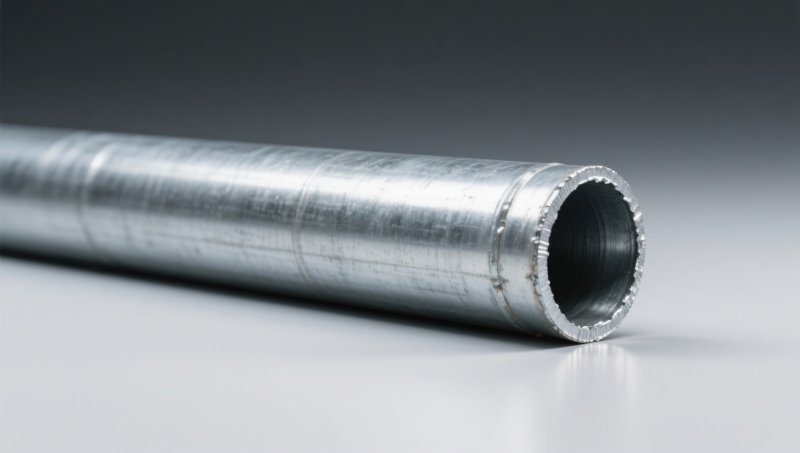
Hongteng Fengda isn’t just a supplier—we’re your structural steel assurance partner. We manufacture all galvanized products in-house using continuous hot-dip lines calibrated to ±2°C and verified daily against ASTM E376 and ISO 2178. Every order includes third-party inspection reports (SGS/BV), EN 10219-compliant dimensional certificates, and zinc adhesion test data—no exceptions.
Our clients reduce sourcing risk through three proven advantages: (1) Stable lead times—standard orders ship in 25–35 days, with 7-day expedite options for urgent projects; (2) Full OEM support—from custom cut lengths and pre-drilled holes to laser-etched batch IDs and bilingual documentation; (3) Technical collaboration: our engineering team co-develops installation protocols, provides weld procedure specifications (WPS), and validates corrosion modeling for coastal or chemical-exposed sites.
Whether you need angle steel for solar racking, channel steel for modular shelters, or cold-formed profiles for noise barriers—contact us today to request: (a) ASTM/EN-compliant sample kits; (b) customized galvanizing thickness recommendations for your exact location; (c) delivery timeline confirmation for Q3–Q4 2024 shipments; or (d) technical review of your tube specification draft. Let’s build durability—right from the first bolt.
Please give us a message


Please enter what you want to find