What is angle steel, and why is it so widely used in construction and manufacturing? As a versatile structural steel product with an L-shaped cross-section, angle steel offers strength, stability, and flexibility for a wide range of applications. In this article, we will explain what is angle steel, explore its common uses, and help buyers understand how to choose the right specification for different project needs.
What is angle steel and why does it matter in structural applications?
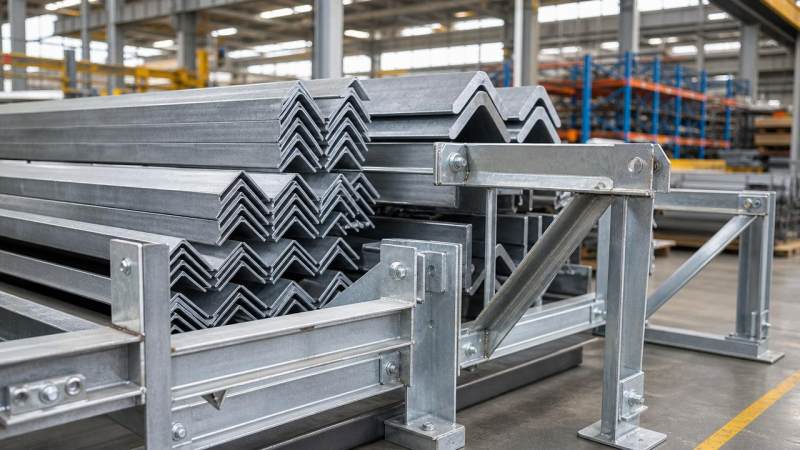
Angle steel is a long steel section formed into an L-shape, with two legs that may be equal or unequal in length. It is one of the most common structural profiles used to carry loads, reinforce frames, connect members, and improve stiffness in metal structures.
When buyers ask what is angle steel, they are usually trying to understand more than the shape. They want to know how it performs, where it fits in a project, and whether it is the right choice compared with channels, flat bars, or fabricated sections.
In practical terms, angle steel is valued because it combines reasonable strength, efficient material usage, easy fabrication, and broad availability. It can be drilled, cut, welded, bolted, and galvanized, which makes it suitable for both standard construction work and customized industrial assemblies.
- Equal angle steel is often chosen where both legs share loads or where symmetry helps installation.
- Unequal angle steel is useful where space is limited or where the connection detail requires different leg lengths.
- Hot rolled angle steel is common in heavy structural work, while lighter gauges may be used in support frames and secondary members.
Where is angle steel commonly used in real projects?
The answer to what is angle steel becomes clearer when you look at applications. This section is found across buildings, towers, machinery supports, transport equipment, warehouses, and infrastructure because it can act as both a primary and a secondary structural element.
For information-focused buyers, the most important point is not simply that angle steel is common, but why engineers keep choosing it. The reasons usually include connection simplicity, lower fabrication complexity, and dependable structural behavior in bracing and edge reinforcement.
Typical application scenarios
The table below helps explain what is angle steel by linking the profile to actual use cases, loading patterns, and project requirements.
These applications show that angle steel is not limited to one sector. It works wherever designers need edge strength, diagonal stability, or efficient joint design without moving to a more complex structural shape.
How does angle steel compare with other steel sections?
A common sourcing question behind what is angle steel is whether it is better than a channel, flat bar, or beam for the same job. The answer depends on load path, fabrication method, and connection design. Angle steel is rarely the universal answer, but it is often the practical answer.
Compared with beams, angle steel usually handles lighter structural duties. Compared with flat bars, it provides much better rigidity. Compared with channels, it may be easier to use in bracing and corner reinforcement, especially where bolt access or compact geometry matters.
When corrosion protection is part of the design, buyers may also use galvanized accessories or cladding materials together with structural sections. In roofing, enclosure, and support systems, products such as Galv Sheeting are often specified alongside angle steel to create durable assemblies for construction, agriculture, industry, and light manufacturing environments.
Section comparison for sourcing decisions
If you are evaluating what is angle steel in relation to other sections, use the comparison below to narrow the correct material choice for your project.
This comparison highlights a key point: angle steel performs best when the structure needs practical strength with efficient connections, not when the project demands the highest bending resistance from a single section.
What technical factors should buyers check before selecting angle steel?
Knowing what is angle steel is only the starting point. For procurement, the real challenge is choosing the right specification. A wrong selection can lead to overdesign, poor fit-up, coating problems, or extra fabrication cost.
Core technical checkpoints
- Leg size and thickness: These determine section capacity, connection area, and overall weight.
- Equal or unequal legs: The correct geometry depends on support layout and attachment surfaces.
- Steel grade: Material grade affects yield strength, tensile strength, weldability, and code compliance.
- Surface condition: Black steel, primer-coated, or galvanized finishes suit different exposure environments.
- Dimensional tolerance: Important for assembly accuracy, especially in modular and export projects.
- Applicable standards: ASTM, EN, JIS, and GB references should match the destination market or project specification.
In projects that combine structural framing with enclosure systems, galvanized sheet products may also influence the material decision. For example, galvanized steel and carbon steel sheeting with hot-dip or electro-galvanized coatings can be selected for wall, roof, or equipment cover systems where corrosion resistance and standard compliance are required.
Typical sheeting ranges used in these systems may include thicknesses from 0.12mm to 6.00mm, widths from 600mm to 1500mm, lengths from 1m to 12m, and zinc coatings such as 60-275g/m² for hot galvanizing. This matters because angle steel often works as the supporting member behind those protective surfaces.
How to choose the right angle steel for different project needs?
Buyers researching what is angle steel often need a practical decision path, not just product theory. The best approach is to connect the section choice to load, environment, fabrication, and supply chain requirements from the start.
A simple procurement checklist
- Confirm the structural role. Is the angle steel acting as a brace, frame member, support leg, bracket, or edge stiffener?
- Define load conditions. Static load, vibration, impact, and wind exposure all affect section selection.
- Check the environment. Outdoor, marine-adjacent, humid, or chemical exposure may require galvanized or otherwise protected surfaces.
- Review fabrication methods. If the profile will be punched, cut to length, welded, or bolted, tolerances and grade choice must support those steps.
- Align with local standards. Imported materials should match project drawings and code expectations in the destination market.
- Evaluate delivery reliability. Consistent lead time and stable production matter as much as price in large or phased projects.
Selection guide by project type
The following table turns the question what is angle steel into a more useful buying tool by connecting project scenarios with typical selection logic.
This type of selection framework helps buyers reduce sourcing risk. It also prevents a common mistake: choosing only by nominal size without checking coating, tolerances, and fabrication compatibility.
What standards, compliance points, and sourcing risks should be reviewed?
For international procurement, what is angle steel is also a compliance question. Dimensions, chemistry, mechanical properties, and coating requirements can differ by standard system and project specification. A section that looks similar on paper may not be accepted if its material documentation does not align with the required code.
Common reference systems in global steel trade include ASTM, EN, JIS, and GB. Buyers should confirm not only the main standard but also the grade designation, dimensional tolerance, surface treatment, and inspection documentation expected by the contractor or end user.
- Request clear confirmation of grade, size, and standard before order release.
- Check whether galvanizing, primer coating, or bare finish is required for the service environment.
- Verify mill documentation and inspection scope for projects with consultant or owner approval procedures.
- Review packing, marking, and shipping details for export orders to avoid handling or identification issues on site.
Hongteng Fengda supports buyers who need standard structural steel products as well as customized solutions. For global construction, industrial, and manufacturing projects, this matters because many orders involve mixed requirements: standard sections, cut-to-length processing, OEM components, and schedules that must stay aligned with project milestones.
FAQ: what is angle steel and what do buyers usually ask?
Is angle steel suitable for heavy load-bearing structures?
It can be, but not in every case. Angle steel is widely used in bracing, frames, supports, and connection members. For major columns or long-span primary beams, engineers often choose I-beams, H-beams, or built-up sections because they provide better bending performance for large loads.
What is the difference between equal and unequal angle steel?
Equal angle steel has two legs of the same length, which simplifies detailing and makes it popular for repetitive structural work. Unequal angle steel has different leg lengths, which can be useful when one side needs a wider connection surface or when space constraints affect installation.
Should buyers choose black angle steel or galvanized angle steel?
That depends on the environment and maintenance strategy. Black angle steel may be appropriate for indoor dry conditions or for parts that will be painted later. Galvanized angle steel is often preferred for outdoor exposure, humid conditions, and projects that want stronger corrosion resistance with lower maintenance frequency.
What documents are useful when importing angle steel?
Buyers commonly request material grade confirmation, dimensional details, applicable standards, and inspection or mill documentation depending on project requirements. It is also wise to align packing lists, shipment marks, and quantity breakdowns with site receiving procedures.
Why choose us for angle steel sourcing and customized structural steel support?
If your team is still evaluating what is angle steel and which specification fits your project, a capable supplier can save time long before the order is placed. Hongteng Fengda manufactures and exports structural steel products from China, supporting buyers with standard sections and customized solutions for construction, industrial, and manufacturing applications.
Our product scope includes angle steel, channel steel, steel beams, cold formed steel profiles, and OEM structural steel components. With modern manufacturing facilities and strict quality control, we support requirements aligned with major international standards such as ASTM, EN, JIS, and GB, while helping customers manage consistency, delivery timing, and sourcing risk.
You can contact us for practical support on specification confirmation, equal or unequal angle selection, coating options, custom processing, delivery lead time, export packing, standard matching, sample support, and quotation planning for upcoming projects. For buyers comparing multiple steel options, we can also help review whether angle steel, channel steel, or a customized structural component is the more efficient choice.
Please give us a message


Please enter what you want to find