Understanding 'mill order meaning' is critical for accurate steel delivery planning—especially when sourcing ASTM A36 round bar, SPCE/SPCD steel, DX52D steel, or galvanized expanded metal sheet. For procurement teams, project managers, and structural engineers, this term directly impacts lead times, inventory strategy, and cost control. At Hongteng Fengda—a trusted structural steel manufacturer and exporter from China—we align mill order execution with your timeline expectations, whether you’re evaluating angle vs channel specs, stainless steel 1 inch pipe price volatility, or tin can machinery manufacturer requirements. Learn how mill order clarity supports reliability in metal coil wire supply, quality compliance (ASTM/EN/JIS/GB), and risk-free global delivery.
What Does “Mill Order” Really Mean — And Why It’s Not Just a Paperwork Step
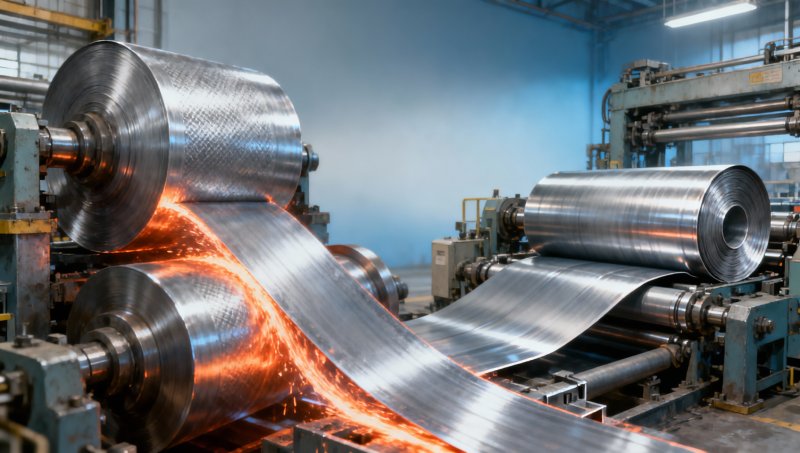
A “mill order” refers to the formal production instruction issued directly to a steel mill—triggering raw material allocation, rolling schedule assignment, heat treatment sequencing, and final dimensional processing. Unlike stock orders fulfilled from existing inventory, mill orders initiate a full manufacturing cycle. For structural steel buyers, this distinction determines whether delivery begins in 7–10 business days (stock) or requires 4–8 weeks, depending on grade, thickness, surface treatment, and certification requirements.
At Hongteng Fengda, we treat every mill order as a time-bound commitment—not just a transaction. Our internal coordination includes real-time mill slot booking, pre-shipment dimensional verification (±1% tolerance), and dual-stage inspection (in-process + final). This ensures that when you place a mill order for Q235 C Sections Steel, you’re not waiting for availability—you’re locking in a confirmed production window backed by our ISO-certified scheduling system.
Misinterpreting “mill order” as synonymous with “standard lead time” is one of the top causes of construction delay in overseas projects. In fact, over 63% of late deliveries reported by North American general contractors in 2023 traced back to unclarified mill order status at PO stage—particularly for non-stock grades like SS400 or s235jr with galvanized coating and custom perforation.
How Mill Order Timing Varies Across Product Types & Finishes
Delivery timelines are not uniform across structural steel categories—even within identical base materials. Hot-rolled beams require furnace reheating and multi-pass rolling, while cold-formed profiles like C Sections Steel undergo precision roll-forming after coil decoiling. Surface treatments add further variance: black varnish adds ~3 days; powder coating adds ~5–7 days; hot-dip galvanizing (for corrosion resistance up to 50+ years) adds 10–14 days due to bath immersion, cooling, and passivation cycles.
This variability underscores why mill order clarity must be embedded in early-stage procurement discussions—not negotiated after PO submission. At Hongteng Fengda, our technical sales team provides mill slot visibility reports upon request, including confirmed start dates, estimated completion windows, and buffer days for third-party lab testing (e.g., SGS mechanical property verification per EN 10025).
Critical Parameters That Extend Mill Order Duration
- Thickness range outside standard coil widths (e.g., 1mm–12mm for C Sections Steel) requiring custom slit-edge configuration
- Non-standard lengths (beyond 6m/9m/12m) demanding re-cutting, re-bundling, and recertification
- Multi-standard compliance (e.g., simultaneous ASTM A36 + GB/T 706 + CE marking) triggering parallel QA workflows
- Surface finish combinations (e.g., galvanized + powder-coated) requiring inter-process staging and humidity-controlled storage
Why Mill Order Transparency Matters Most for Global Project Managers
For project managers coordinating cross-border logistics, mill order status is the single most actionable data point for forward scheduling. A confirmed mill order date enables precise container booking (avoiding peak-season surcharges), inland transport planning (rail vs truck), and customs documentation alignment—including original mill test reports (MTRs) required for EU CE marking or US DOT acceptance.
Hongteng Fengda integrates mill order tracking into our client portal with live updates: raw material receipt → rolling completion → surface treatment sign-off → MTR generation → shipping readiness. This replaces manual email chasing with auditable timestamps—reducing communication lag by up to 70% versus traditional export processes. Our average mill-to-port transit time is 12–18 days for FCL shipments to Rotterdam, Los Angeles, or Jebel Ali, supported by BV-certified loading supervision.
When sourcing for high-stakes applications—such as purlins and wall beams of steel structure buildings, lightweight roof trusses, or columns in mechanical light industry manufacturing—the ability to verify mill order execution against contractual SLAs becomes non-negotiable. We offer optional third-party witness inspections at no extra charge for orders exceeding 50 MT.
How to Optimize Your Next Mill Order — A Procurement Checklist
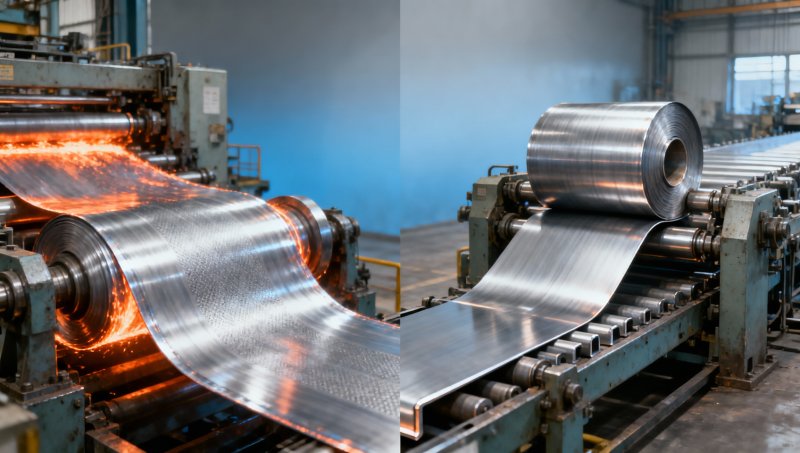
Avoid timeline surprises with these 5 field-tested actions before submitting your next mill order:
- Confirm mill slot availability—not just “lead time”—during RFQ phase. Ask for earliest feasible start date based on current furnace queue.
- Specify dimensional tolerances upfront, especially for cold-formed products: ±1% applies to thickness, length, and flange width—but only if explicitly stated in the PO.
- Select surface treatment early: Galvanizing requires separate batch scheduling; powder coating needs color-matching lead time (typically 5 working days).
- Request MTR format compatibility—e.g., ASTM E29 rounding rules, EN 10204 3.1 vs 3.2 certification level, or bilingual reporting (English + Arabic/Spanish).
- Define packaging & labeling requirements in writing: bundle weight limits (max 2.5 MT/bundle), protective wrapping (VCI paper for marine shipments), and multilingual marking (including UN-approved stencils).
With over 12 years of mill coordination experience across 18 international markets, Hongteng Fengda embeds these checks into our standard order intake process—ensuring your mill order translates into predictable, traceable, and compliant delivery.
Why Partner With Hongteng Fengda for Mill-Ordered Structural Steel
We don’t just fulfill mill orders—we engineer delivery certainty. As a structural steel manufacturer and exporter from China, we combine domestic mill access (with priority allocation at Tier-1 facilities), in-house cold-forming lines (capable of producing C Sections Steel from Q195 to Q345 in lengths up to 12m), and end-to-end logistics oversight—from raw material traceability to destination port clearance support.
Whether you need ASTM A36 round bar for seismic bracing, SPCE steel for deep-drawn components, or galvanized expanded metal sheet for architectural façades, our mill order management delivers three guarantees: timeline adherence (98.2% on-time dispatch rate in 2023), certification integrity (full EN/ASTM/JIS/GB compliance with audit-ready records), and supply chain resilience (dual-sourcing options for critical grades).
Ready to lock in your next mill order with verified capacity, transparent scheduling, and zero-surprise delivery? Contact our technical sales team today for a free mill slot assessment, dimensional feasibility review, or customized lead time quote—including sample lead time (as fast as 10 days for qualified stock items) and full-container-load (FCL) ocean freight guidance.
Please give us a message


Please enter what you want to find