For procurement teams, an ASTM stainless steel price list is never shaped by one factor alone. Raw material fluctuations, grade selection, processing requirements, order volume, and international shipping all directly affect final pricing. Understanding what drives these changes helps buyers compare offers more accurately, control sourcing costs, and choose reliable suppliers for long-term steel purchasing.
Why an ASTM stainless steel price list changes faster than many buyers expect
The ASTM stainless steel price list often moves with broader steel market signals. It reflects material costs, compliance requirements, mill capacity, and global trade conditions.
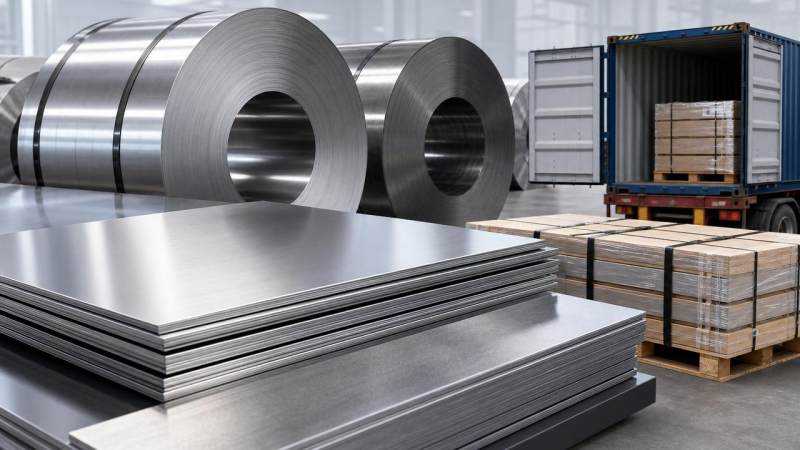
Unlike simple commodity pricing, stainless steel values depend on chemistry, finish, and processing depth. Two offers may look similar, yet their real cost structure can differ greatly.
This is especially true in structural steel and industrial supply chains. International buyers usually compare ASTM stainless steel price list data across several regions and standards.
Recent market behavior shows more frequent adjustments. Energy costs, freight volatility, alloy surcharges, and shorter planning cycles now reshape quotations more often than before.
Current signals behind ASTM stainless steel price list volatility
Several trend signals explain why the ASTM stainless steel price list can change within a short period. These signals are visible in both domestic and export-oriented steel transactions.
- Nickel and chromium price swings remain a major driver for austenitic stainless steel costs.
- Higher electricity and gas prices raise melting, rolling, and heat treatment expenses.
- Shipping disruptions increase landed costs for coils, plates, sheets, and fabricated steel items.
- Mill lead time changes affect spot availability and price negotiation power.
- Standard compliance and documentation requirements add inspection and testing costs.
When these signals appear together, the ASTM stainless steel price list becomes less stable. Buyers then need more than a simple per-ton comparison.
The main cost drivers that reshape an ASTM stainless steel price list
A clear cost breakdown helps explain why one ASTM stainless steel price list differs from another. The table below summarizes the most common pricing drivers.
Among these factors, grade and alloy costs usually create the largest movement. Freight becomes more important for long-distance steel exports.
Grade choice can quickly widen the price gap
A practical example is the comparison between 304 and 201 stainless steel. Both are used widely, but their composition and application value are different.
For some industrial uses, 304 Stainless Steel Plate remains a preferred option because of balanced corrosion resistance, strength, and fabrication performance.
Typical tensile strength can reach at least 520MPa, with yield strength above 275MPa. Elongation is usually high, helping forming and fabrication work.
It is used in chemical equipment, food processing, kitchen supplies, transport components, screens, bolts, nuts, and conveyor systems. These applications support steady demand.
Processing requirements often change the final ASTM stainless steel price list more than expected
Many buyers focus first on material grade. However, fabrication details often explain why the ASTM stainless steel price list rises after technical review.
- Cut-to-size services add labor and yield management costs.
- Protective film, export packing, and edge treatment raise finishing expenses.
- Special widths or thicknesses may require separate production arrangements.
- Surface treatments such as BA, 2B, NO.4, or HL affect unit price.
- Third-party inspection may extend lead time and increase total supply cost.
For stainless steel plates, common size ranges can include thickness from 0.3mm to 200mm, with many width and length options. Standard dimensions usually improve price efficiency.
Once customization rises, waste control and machine setup become more important. That directly influences the final ASTM stainless steel price list offered by suppliers.
Supply chain pressure is now a stronger pricing factor in steel exports
The export steel business has become more sensitive to logistics and scheduling. This shift affects any ASTM stainless steel price list used for cross-border purchasing.
Ocean freight can change faster than mill prices. Port congestion, container shortages, and route adjustments all influence landed cost calculations.
Delivery timing also matters. Short lead-time orders often carry a premium because mills must prioritize stock, cutting capacity, or booking arrangements.
Reliable suppliers with stable production planning can reduce these swings. That is important for structural steel, stainless steel plates, beams, channels, and customized steel components.
How ASTM stainless steel price list changes affect different business decisions
Price movement does not only affect direct material spending. It also changes planning, inventory, specification decisions, and project timing.
This is why reading an ASTM stainless steel price list requires technical context. A lower number is not always the better commercial result.
What deserves closer attention before accepting an ASTM stainless steel price list
Before confirming an order, several checkpoints help reduce future cost surprises and quality disputes.
- Check whether the quoted grade fully matches the required ASTM specification.
- Confirm thickness tolerance, width tolerance, and finish condition in writing.
- Review whether testing, certificates, and third-party inspection are included.
- Clarify packing method, delivery term, and destination port responsibilities.
- Ask about validity period because the ASTM stainless steel price list may change quickly.
- Compare standard sizes with custom sizes to identify hidden processing premiums.
These checks are especially useful when purchasing export steel from different origins. They improve comparability and reduce sourcing risk.
A practical way to judge future ASTM stainless steel price list movement
No forecast is perfect, but a structured view helps. Watch alloy markets, mill operating rates, freight direction, and downstream demand at the same time.
If nickel rises, freight remains firm, and project demand improves, the ASTM stainless steel price list will likely strengthen. If inventory builds and orders slow, pressure may ease.
For ongoing steel sourcing, shorter review cycles work better than fixed long-term assumptions. Market-linked monitoring usually creates better timing decisions.
Next steps for more accurate stainless steel sourcing
A useful ASTM stainless steel price list should be read together with grade data, finish details, tolerance requirements, and delivery conditions. That gives a true comparison basis.
For projects requiring standard or customized steel supply, it is worth requesting clear technical quotations, stable lead times, and documented quality control from the start.
Hongteng Fengda supports global steel supply with structural steel manufacturing experience, international standard compliance, and customized export solutions across multiple application sectors.
When the ASTM stainless steel price list changes, faster decisions come from better information. A detailed quotation review is the most practical next move.
Please give us a message


Please enter what you want to find