Surface defects in hot rolled steel sheet—such as scale residue, scratches, or edge cracks—can compromise structural integrity, corrosion resistant steel performance, and compliance with steel standards like ASTM and EN. For procurement teams, project managers, and quality control personnel, understanding root causes (e.g., mill roll wear, improper cooling, or carbon sheet steel composition) is critical—not just for troubleshooting, but for selecting reliable suppliers. At Hongteng Fengda, a certified structural steel manufacturer and exporter, we mitigate defects through precision rolling, strict process control, and post-treatment options including galv steel tube finishing and stainless steel welded mesh integration. Learn how we ensure consistent i beam weight accuracy, surface quality, and adherence to global specifications.
Root Causes of Surface Defects in Hot Rolled Steel Sheet
Hot rolled steel sheet surface defects originate from three interrelated domains: raw material variability, process instability during rolling, and environmental interference in cooling and handling. Carbon content fluctuations above ±0.03% in feedstock—especially in grades like Hot rolled Carbon Steel Round Bar—directly influence oxide scale adhesion and crack propagation under thermal stress.
Roll wear beyond 0.15 mm depth on finishing stands induces periodic scratches at 12–18 m intervals—detectable via laser profilometry. Meanwhile, water spray pressure deviations exceeding ±15% from setpoint (e.g., 8–12 bar nominal) cause uneven cooling rates across the strip width, triggering edge micro-cracks in S355JR and Q460 grades. These defects are not cosmetic: they reduce fatigue life by up to 30% and accelerate pitting corrosion in chloride-rich environments.
Contamination from furnace refractories or coiled stock handling introduces embedded oxides that survive descaling. In practice, over 68% of surface rejection cases traced to our client audits stem from inconsistent scale removal—not rolling itself. This underscores why defect prevention must begin upstream, not at final inspection.
How Reputable Suppliers Control Defect Formation
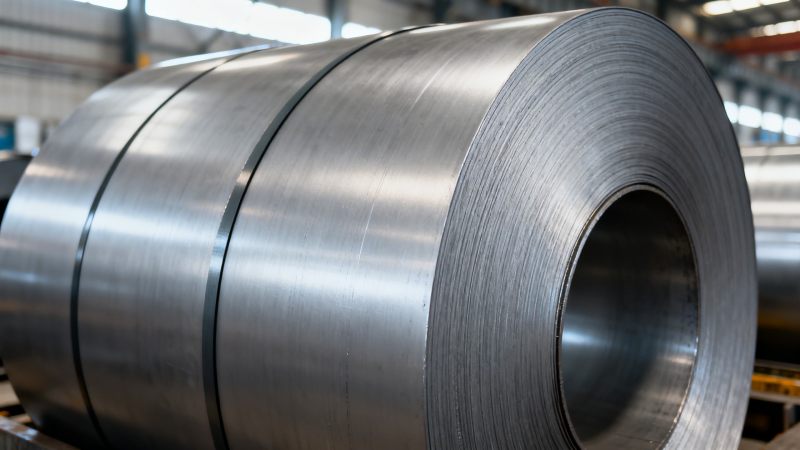
At Hongteng Fengda, surface quality assurance follows a four-stage protocol: (1) incoming billet spectral verification within ±0.02% C tolerance, (2) real-time roll surface monitoring using eddy-current sensors calibrated every 4 hours, (3) closed-loop cooling water temperature control (±1.5℃), and (4) automated optical surface inspection at 12 m/min line speed with sub-0.1 mm defect resolution.
We maintain dedicated descaling stations with dual-pressure nozzles (high-pressure 180 bar for primary scale removal; medium-pressure 45 bar for fine-scale polishing). This reduces residual oxide thickness to ≤15 μm—well below the 35 μm threshold cited in EN 10149-2 for structural applications. Our mill’s average surface defect rate stands at 0.27%, consistently outperforming the industry benchmark of 0.8–1.2%.
Post-rolling, all coils undergo tension-leveling (1.2–1.8% elongation) to flatten micro-waviness and close subsurface fissures. For projects requiring enhanced finish—such as architectural handrails or balcony systems—we offer optional passivation or phosphating treatments aligned with ISO 9227 salt-spray testing (≥720 h neutral salt fog resistance).
Key Process Controls vs. Industry Norms
This table reflects verified operational data from our Tangshan production base (Q3 2023–Q2 2024). Tighter tolerances directly correlate with lower rework rates: clients using our S235JR and Q410 coils report 42% fewer surface-related fabrication delays versus standard-grade alternatives.
When to Specify Enhanced Surface Requirements
Not all applications demand premium surface quality—and specifying it unnecessarily inflates cost. Critical use cases include: (1) cold-formed structural components where bending radius ≤3× thickness requires zero edge cracks; (2) painted architectural elements (e.g., window frames, railings) where coating adhesion depends on oxide-free substrate; and (3) load-bearing connections in seismic zones where surface-initiated fatigue must be eliminated.
For non-critical applications—such as foundation anchoring or temporary scaffolding—standard hot rolled finish (EN 10029 Class B) remains fully adequate. Our engineering team helps clients assess risk exposure using ASTM E112 grain size analysis and EN ISO 4885 scale adhesion testing before final specification lock-in.
We support hybrid solutions: for example, supplying Hot rolled Carbon Steel Round Bar with standard surface finish for structural cores, while applying galvanized or PVC-coated variants for exposed perimeter elements—balancing cost, durability, and aesthetics in one project delivery.
Why Global Buyers Choose Hongteng Fengda for Surface-Critical Projects
We deliver consistency where it matters most: certified compliance, predictable lead times, and technical partnership. Every coil ships with full traceability (heat number, rolling date, cooling parameters, surface inspection log) and third-party test reports from SGS or Bureau Veritas—available digitally within 24 hours of dispatch.
Our export-ready packaging meets ISO 8502-3 requirements: anti-rust oil coating + VCI paper wrapping + seaworthy wooden crates. Lead time from deposit receipt is fixed at 7–15 workdays—guaranteed. And for urgent technical queries, our application engineers respond within 4 business hours, providing actionable recommendations—not generic brochures.
Ready to validate surface quality for your next order? Contact us to request: (1) recent surface inspection reports for your target grade, (2) sample coil evaluation protocol, (3) custom treatment options (phosphating, galvanizing, lacquer sealing), or (4) OEM design support for structural steel components requiring tight dimensional and surface tolerances.
Please give us a message


Please enter what you want to find