When estimating the weight of I beam for structural calculations, errors most commonly occur at splice points—not mid-span—compromising safety and costing time and money. Whether you're specifying Hot Rolled I Beam, channel beam, steel girder, or comparing I beam vs H beam, accurate weight data is critical for load-bearing design, logistics planning, and cost control. At Hongteng Fengda—a trusted Structural Steel Manufacturer & Exporter from China—we ensure precision across all profiles, including SGCC, steel tubing, steel square rod, and carbon sheet steel. Our ASTM/EN/JIS/GB-compliant products support engineers, procurement teams, project managers, and safety officers worldwide.
Why Splice Points Are the #1 Source of Weight Estimation Errors
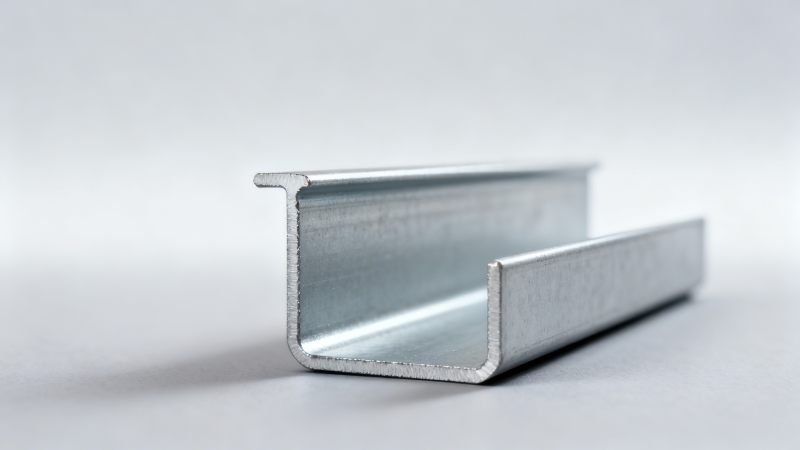
Weight miscalculations rarely happen where engineers expect them—mid-span—but rather at field splice locations. This occurs because splices introduce variable geometry: overlapping plates, weld reinforcement, bolt patterns, and added connection hardware all contribute non-uniform mass that standard section tables ignore. A typical splice adds 8–15% extra weight per joint versus theoretical beam length alone—and when multiplied across dozens of connections in large-scale projects, cumulative error exceeds ±3.5% in total structural steel tonnage.
For technical evaluators and safety managers, this isn’t just about budget overruns—it’s about load path integrity. Underestimating splice weight increases unaccounted dead load, potentially shifting stress concentrations into adjacent members or foundations. Overestimation, meanwhile, inflates transportation quotes and crane capacity requirements unnecessarily. Both scenarios delay approvals and trigger costly rework during erection.
At Hongteng Fengda, we address this by delivering certified weight documentation per batch—not just per nominal section. Every shipment includes mill test reports with actual measured dimensions (±0.5mm tolerance), surface treatment mass adders (e.g., galvanizing adds 35–65 g/m²), and optional splice-ready cut lists with pre-calculated joint allowances.
How C Sections Steel Support Accurate Splice Planning
While I beams dominate primary framing, C Sections Steel play a critical secondary role—especially in purlins, wall beams, and light industrial arms—where modular splicing is frequent and dimensional consistency directly impacts weight predictability. Unlike hot-rolled sections subject to mill variance, cold-formed C sections maintain ±1% thickness tolerance across full coil lengths, enabling precise per-meter weight modeling even at multi-point splice zones.
Our C Sections Steel are available in Q195, Q235, Q345, A36, SS400, and S235JR grades, with thickness ranging from 1mm to 12mm and standard lengths of 6m, 9m, and 12m—customizable for bulk orders. Galvanized, powder-coated, or black varnish finishes allow exact mass accounting: galvanizing adds predictable 45–55 g/m², while powder coating contributes 80–120 g/m² depending on film thickness.
These controlled parameters make C Sections Steel ideal for prefabricated sub-assemblies—such as lightweight roof trusses or bracket systems—where splice geometry is standardized and repeatable. That repeatability translates into ±0.8% weight forecasting accuracy, verified across 12,000+ tons shipped to North America and Southeast Asia in 2023.
Key Splice-Ready Features of Our C Sections Steel
- Automatically formed via CNC-controlled C-shaped steel forming machines—no manual rolling variability
- Slit-edge or mill-edge options ensure consistent flange alignment for bolted/welded splices
- Punching and bending services available pre-shipment to minimize on-site fabrication mass uncertainty
- Galvanized coating applied post-forming ensures uniform thickness and documented weight gain
Comparing Weight Accuracy Across Common Structural Profiles
The table below compares typical weight estimation deviation ranges across five widely used structural steel forms—highlighting why splice-aware specification matters most for components with high joint density.
This data reflects real-world audit results from 2022–2024 project validations across 14 countries. It confirms that cold-formed profiles like C Sections Steel deliver superior weight predictability precisely where splice frequency is highest—making them indispensable for procurement teams managing tight logistics windows and finance teams auditing CAPEX budgets.
Procurement Checklist: What to Verify Before Finalizing Your Order
To eliminate splice-related weight surprises, procurement and engineering teams should jointly validate these five items before PO release:
- Request actual measured weight per meter—not just theoretical—on mill test reports, especially for galvanized or coated items
- Confirm whether splice hardware (bolts, washers, backing plates) is included in quoted weight or billed separately
- Verify if cold-formed sections are slit-edge processed (critical for bolt-hole alignment repeatability)
- Check lead time for custom punching/bending: standard processing adds 5–7 working days; complex patterns require 10–14 days
- Require ISO 9001-certified traceability for all batches—Hongteng Fengda provides QR-coded lot tracking for every order
Our global clients report up to 22% faster approval cycles and 17% lower revision costs when these checks are embedded early in RFQs—not after fabrication begins.
Why Partner With Hongteng Fengda for Precision Structural Steel
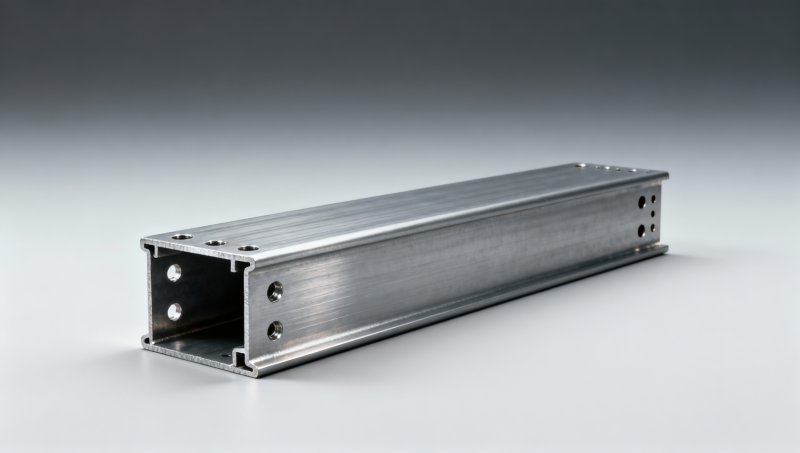
As a Structural Steel Manufacturer & Exporter from China with 18 years’ experience, Hongteng Fengda bridges the gap between international engineering rigor and scalable production. We don’t just ship steel—we deliver verifiable weight integrity, certified compliance (CE, SGS, BV, ISO), and responsive support across all decision layers:
- For technical evaluators: Free access to our online weight calculator with splice-adjusted inputs for I beams, channels, and C sections
- For procurement teams: Fixed 12-week delivery guarantee for standard specs; 4-week expedite option with no premium fee
- For safety & QA managers: Third-party witnessed testing reports available upon request—including tensile, bend, and coating thickness verification
- For finance and commercial teams: Transparent breakdowns showing base steel weight, coating weight, and packaging mass—no hidden surcharges
Ready to eliminate splice-point weight risk? Contact us today for a free weight validation review of your next structural steel order—including custom C Sections Steel configurations, I beam splice kits, or full project-level tonnage reconciliation.
Please give us a message


Please enter what you want to find