Looking for a reliable 304 stainless steel coil price list? Prices can vary widely based on raw material costs, thickness, width, surface finish, order volume, and supplier location. For buyers comparing options, understanding these factors is essential to avoid overpaying and reduce sourcing risks. This guide explains what really influences pricing and how to evaluate quotations more accurately in the global steel market.
For importers, distributors, fabricators, and project sourcing teams, a quoted coil price is rarely just a simple number per ton. In the steel trade, the final value often reflects a combination of grade verification, production route, tolerances, packaging method, logistics terms, and supplier reliability.
Although 304 stainless steel coil is a standard and widely traded product, quotations can still differ by 5% to 20% across markets in the same month. Understanding why that happens helps buyers compare offers on a like-for-like basis instead of choosing only the lowest visible figure.
The Main Cost Drivers Behind a 304 Stainless Steel Coil Price List
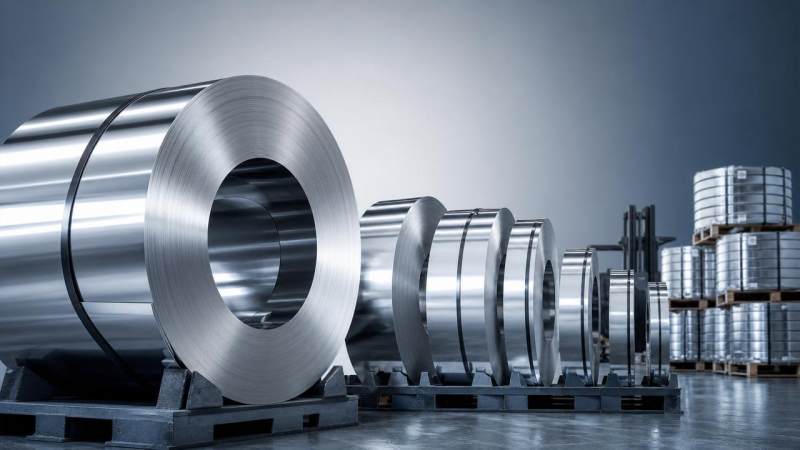
When reviewing a 304 stainless steel coil price list, buyers should separate base material cost from processing and trade-related charges. This makes it easier to identify where the real price difference comes from and whether the quote is commercially reasonable.
Raw Material Composition and Nickel Volatility
304 stainless steel contains chromium and nickel, and nickel is often one of the most sensitive cost variables. Even a short-term movement in nickel pricing over 7 to 30 days can change export offers noticeably, especially for mills pricing against recent melt cost adjustments.
In practical sourcing, two quotations issued 10 days apart may differ even when thickness, width, and finish are unchanged. That is why many suppliers limit quote validity to 24 hours, 48 hours, or 3 business days during volatile market periods.
Thickness, Width, and Coil Weight
Thickness is one of the most direct price factors. A 0.3 mm coil and a 3.0 mm coil may both be labeled 304, but production cost, rolling complexity, and yield rate are not the same. Thin gauge products usually require stricter process control and often carry a higher conversion premium.
Width also matters. Standard widths such as 1000 mm, 1219 mm, and 1500 mm are generally easier to source than special widths. If a buyer requests non-standard slitting or custom narrow strips, extra processing charges and material loss can increase the final unit price.
Surface Finish and Quality Expectations
A BA, 2B, No.1, or brushed finish can significantly affect the quote. Higher cosmetic requirements usually mean tighter inspection, better surface consistency, and lower acceptance for scratches, roller marks, or edge defects. This raises production and sorting costs.
For decorative, kitchenware, or visible fabrication applications, buyers often pay more for appearance stability than for chemical composition alone. A low quote may not include the same surface standard, protective film grade, or packaging level as a higher one.
Typical quotation variables buyers should confirm
- Grade confirmation: 304 or equivalent standard reference
- Thickness tolerance: for example ±0.03 mm or mill standard
- Width tolerance and edge type: mill edge or slit edge
- Finish type: 2B, BA, No.1, No.4, HL
- Inner diameter, outer diameter, and coil weight range
- PVC film, export packing, or seaworthy pallet requirement
The table below shows how common pricing variables influence the way a 304 stainless steel coil price list should be interpreted during sourcing and quotation comparison.
The key takeaway is that a useful 304 stainless steel coil price list is never only a number table. It should also reflect specification clarity. If the offer lacks tolerance, finish, packaging, or trade term details, the apparent savings may disappear after order confirmation.
How Order Conditions and Supplier Location Change the Final Cost
Beyond mill production cost, international buyers must account for trade conditions. A quote based on FOB China can look very different from a CIF destination port offer, even if the same coil comes from the same production source. Freight, inland transport, insurance, and export packing all matter.
MOQ, Production Schedule, and Lead Time
Some suppliers offer better pricing for 20 to 25 metric tons per size, while smaller mixed orders may include slitting, setup, or packaging surcharges. For highly customized requirements, the mill may require a minimum production quantity before accepting the order.
Lead time also affects price. Standard export production may take 15 to 30 days, but urgent orders often cost more because they disrupt rolling schedules, warehouse allocation, or vessel booking plans. A low-priced offer with a 6-week delay may not be suitable for a fast-track project.
Export Region, Freight, and Trade Terms
Freight cost can represent a meaningful share of delivered price, particularly for buyers in North America, Europe, the Middle East, or Southeast Asia. Even when the ex-works or FOB price stays stable, CIF pricing can move because ocean rates and destination charges change.
Serious buyers should compare at least 3 dimensions: FOB unit price, estimated logistics cost, and landed risk. In some cases, a supplier with a slightly higher FOB rate may still offer lower total procurement cost through better packing, faster documents, and fewer claims.
Mill Reputation and Documentation Quality
A competitive 304 stainless steel coil price list should be supported by clear documentation. This includes test certificates, chemical composition details, mechanical property references, packing list accuracy, and inspection responsiveness. Missing documentation can delay customs clearance or downstream production.
For B2B importers, supplier reliability is not a soft factor. A 2% lower purchase price can quickly turn into a larger loss if coils arrive with edge damage, inaccurate thickness, or inconsistent finish that causes rework, rejection, or late delivery penalties.
Inserted sourcing perspective from structural steel supply
Buyers who source stainless coil often also purchase carbon steel or structural sections for broader manufacturing and construction projects. In such cases, working with a supplier network familiar with standards like ASTM, EN, JIS, and GB can simplify cross-category procurement and reduce communication gaps.
For example, companies involved in steel structure buildings or mechanical light industry manufacturing may also need galvanized channels and formed sections such as C Channel Beam. This product is commonly available in Q195, Q235, Q345, A36, SS400, and S235JR, with thickness from 1 mm to 12 mm and standard lengths of 6 m, 9 m, and 12 m.
It is often produced by hot roll, cold roll, or cold drawn processing, with galvanized, powder coating, or black varnish surface options. For project buyers, combining stainless and structural steel sourcing under coordinated quality control can help reduce schedule risk by 1 to 2 procurement cycles.
The following table helps buyers understand how trade conditions influence the final payable amount, not just the published 304 stainless steel coil price list.
This comparison shows why buyers should not evaluate quotations in isolation. A lower nominal price may become less attractive once MOQ, freight, packaging, and quality assurance are added to the calculation.
How to Compare Quotes More Accurately and Avoid Overpaying
A good purchasing process converts a basic 304 stainless steel coil price list into a decision tool. Buyers should compare supplier offers using the same specification sheet, the same trade term, and the same commercial assumptions. Without that, price benchmarking becomes unreliable.
Use a 5-Point Quote Review Method
- Confirm exact grade, standard, thickness, width, and finish.
- Check tolerance, edge type, and coil weight range.
- Review packing details, film protection, and seaworthy handling.
- Compare FOB, CFR, or CIF on the same basis.
- Verify lead time, payment term, and document support.
This 5-step method helps expose hidden cost differences quickly. In many cases, buyers discover that two offers with only a 3% price gap actually represent very different quality or delivery conditions.
Watch for Common Misunderstandings
One common mistake is assuming all 304 coils in the market are interchangeable. In reality, consistency in flatness, surface quality, coil weight, and actual gauge performance can vary. This matters more when the material goes into precision fabrication, food equipment, or visible stainless applications.
Another mistake is focusing only on the current 304 stainless steel coil price list without considering future repeatability. If a supplier cannot keep quality stable over 2 or 3 consecutive shipments, the short-term savings may not support long-term supply planning.
Questions worth asking before placing an order
- Is the quote based on actual available stock or future production?
- What is the allowed tolerance for thickness and width?
- Can the supplier provide finish photos or sample pieces?
- How is export packing handled for sea transport over 20 to 40 days?
- Is third-party inspection possible if the order value is high?
- What is the response procedure for claims or replacement?
For global buyers, especially those consolidating multiple steel items from China, the best sourcing outcome usually comes from balanced evaluation: competitive pricing, documented quality control, practical lead time, and responsive service. That is particularly important when project schedules depend on coordinated steel supply.
Hongteng Fengda supports international buyers with stable structural steel production, customized solutions, and export-oriented quality management across ASTM, EN, JIS, and GB standards. While stainless coil pricing should always be confirmed against current market conditions, a supplier with disciplined manufacturing and communication processes can significantly reduce procurement uncertainty.
Practical Buying Advice for Information-Stage Researchers
If you are still in the research phase, start by collecting 3 to 5 comparable offers instead of asking for a single headline number. Build a simple comparison sheet covering specification, unit price, trade term, lead time, MOQ, and document package. This approach creates a clearer view of the real market range.
It is also useful to define your acceptable threshold before negotiation. For example, identify the maximum lead time, the minimum packaging standard, and whether ±1% or tighter dimensional tolerance is necessary for your downstream use. These details help suppliers quote more accurately and reduce revision rounds.
A dependable 304 stainless steel coil price list is not only about today’s price. It is about whether the offer can support your production plan, resale margin, or project schedule over the next 15, 30, or 60 days. Better quote analysis leads to better sourcing decisions.
If you need support comparing steel quotations, confirming specifications, or coordinating structural steel and related export products from China, Hongteng Fengda can help with practical sourcing guidance and customized solutions. Contact us today to discuss your requirements, request product details, or get a tailored quotation plan for your next steel purchase.
Please give us a message


Please enter what you want to find