Choosing a reliable stainless steel tube manufacturer is essential for buyers who need consistent quality, certified standards, and dependable delivery. For global construction and industrial projects, the right supplier does more than provide products—it helps reduce sourcing risks, control costs, and support long-term project success. Understanding what sets a trustworthy manufacturer apart can help you make smarter purchasing decisions.
Why does choosing the right stainless steel tube manufacturer matter so much?
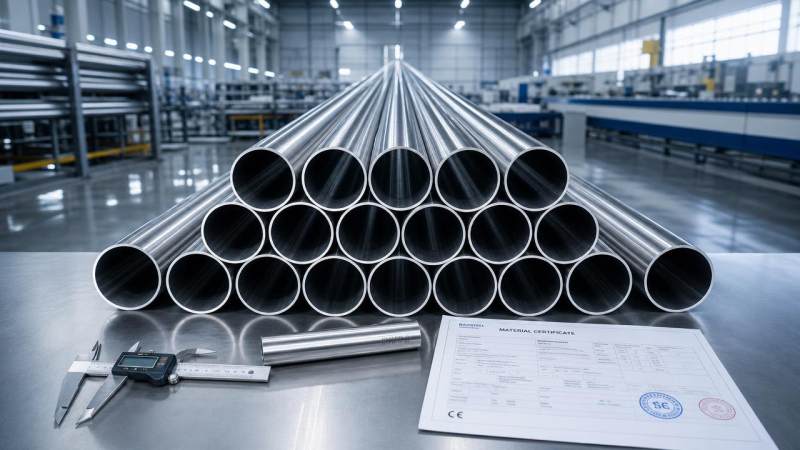
When buyers search for a stainless steel tube manufacturer, they are rarely looking only for a low price. They are trying to avoid late shipments, inconsistent wall thickness, unclear raw material sources, and compliance problems that may delay a project or increase downstream fabrication costs.
In the steel industry, reliability is not a marketing phrase. It is a measurable combination of production discipline, quality control, standard compliance, communication speed, and delivery execution. A supplier that performs well in all of these areas can help buyers lower procurement risk across the full supply chain.
This is especially important for international buyers working on structural, industrial, and manufacturing applications. Even if stainless steel tubes are only one part of the material package, supplier quality affects fabrication efficiency, welding consistency, inspection approval, and final project scheduling.
- Poor dimensional control can create cutting, fitting, and installation problems.
- Weak documentation can slow customs clearance and third-party inspections.
- Unstable lead times can disrupt site schedules and increase inventory pressure.
- Inadequate packaging can lead to corrosion, scratches, or deformation during transport.
What defines a reliable stainless steel tube manufacturer?
A reliable stainless steel tube manufacturer combines technical capability with supply reliability. That means the company can produce to specification, verify quality before shipment, communicate clearly during production, and support different project requirements without creating avoidable uncertainty.
For information-stage buyers, it helps to assess a supplier through several practical criteria rather than general claims. The table below shows the core indicators that usually separate a dependable manufacturer from a high-risk trading source or an underqualified producer.
If a stainless steel tube manufacturer cannot explain these points clearly, buyers should investigate further. Reliable suppliers are usually willing to discuss tolerances, standards, testing scope, and production flow in concrete terms rather than only offering broad assurances.
Which technical and quality factors should buyers verify first?
Before comparing prices, buyers should confirm whether the stainless steel tube manufacturer can meet the required grade, dimensions, surface condition, and inspection level. Many sourcing problems start when specifications are incomplete or when the supplier interprets them differently from the buyer.
Key technical checkpoints
- Material grade compatibility, such as 201, 202, 304, 310, or 316, based on corrosion environment and fabrication needs.
- Dimensional tolerance on outer diameter, wall thickness, straightness, and length.
- Surface finish requirements, especially for visible architectural or hygienic applications.
- Mechanical properties relevant to forming, welding, bending, or load-bearing use.
- Testing scope, including chemical composition, mechanical tests, and visual inspection.
Buyers in construction and industrial sectors should also consider whether the supplier understands project coordination. In real procurement, stainless steel tubes are often sourced together with structural steel sections, fabricated components, or custom profiles. A supplier with broader steel manufacturing experience can often simplify communication and material matching.
For example, companies handling wider structural steel supply programs may also support beam, channel, angle, or custom section requirements. In mixed-material projects, products such as Hot Rolled H Beam are frequently specified for steel structure, bridging, shipbuilding, mechanical manufacture, and automobile chassis applications. Available grades may include Q235, Q345B, Q460C, SS400, S275JR, S355JR, A572, A992, 201, 202, 304, 310, and 316, with standards such as JIS G3101, EN10025, ASTM A36, ASTM A572, and ASTM A992.
That type of product integration matters because buyers often prefer fewer suppliers, clearer quality accountability, and better compatibility between stainless and carbon steel packages. It can also improve cutting, welding, punching, bending, and customized processing coordination when schedules are tight.
How can you compare manufacturers beyond price?
Price comparison is necessary, but the lowest quote does not always produce the lowest total cost. A dependable stainless steel tube manufacturer should be evaluated on commercial terms, production transparency, and after-sales responsiveness as well as unit price.
The comparison table below helps information-stage buyers assess practical differences between a stronger supplier and a higher-risk alternative.
This comparison shows why buyers should examine total procurement value. A slightly higher initial quote may result in lower fabrication losses, lower rejection risk, and fewer schedule disruptions. For project buyers, that often matters more than a narrow price gap.
What standards and compliance signals should you look for?
In global steel sourcing, standards are not just paperwork. They define the material basis for acceptance. A reliable stainless steel tube manufacturer should be able to produce according to recognized standards and explain how those standards affect dimensions, chemistry, mechanical performance, and inspection requirements.
Important compliance points
- Confirm the applicable standard at quotation stage rather than after order confirmation.
- Request material test certificates when required for project filing or customer approval.
- Check whether the supplier can align with ASTM, EN, JIS, or GB references relevant to the destination market.
- Verify traceability if the project involves quality audits or third-party inspection.
Hongteng Fengda’s broader structural steel manufacturing background is relevant here. For international projects requiring multiple product categories, experience with ASTM, EN, JIS, and GB-aligned production can help streamline documentation and reduce communication gaps between engineering, purchasing, and site teams.
How do lead time, packaging, and export support affect reliability?
Many buyers judge a stainless steel tube manufacturer mainly by production quality, but export execution matters almost as much. Even well-made material can become a problem if it arrives late, without clear marks, or with inadequate packing protection.
Practical delivery factors to review
- Production lead time by grade and size, especially for non-standard dimensions or mixed orders.
- Export packaging methods that reduce abrasion, moisture exposure, and transit deformation.
- Bundle marking and label clarity for warehouse receiving and site identification.
- Support for packing lists, shipping documents, and coordination with freight schedules.
For buyers sourcing from China, stable capacity and dependable lead times are often decisive. Hongteng Fengda serves customers across North America, Europe, the Middle East, and Southeast Asia with a focus on consistent production, controlled quality, and practical export support. For information-stage buyers, this kind of operational stability can be as important as product specifications.
What procurement mistakes do buyers often make?
A common mistake is assuming all stainless steel tubes with the same nominal grade are interchangeable. In practice, application environment, fabrication method, dimensional tolerance, and document requirements all influence whether a product is suitable for the project.
Common sourcing mistakes
- Selecting by price first without fully defining standard, finish, and tolerance requirements.
- Ignoring packaging and logistics details for long-distance export shipments.
- Requesting certification too late, after production has already started.
- Using one inquiry for several different end uses without clarifying performance priorities.
The best way to reduce these mistakes is to create a structured inquiry. A serious stainless steel tube manufacturer can only quote accurately when the buyer defines grade, size range, quantity, standard, application, destination market, and required documents from the beginning.
FAQ: what do information-stage buyers usually ask?
How do I evaluate a stainless steel tube manufacturer before placing a trial order?
Start with technical clarity. Ask for grade options, standard references, tolerance capability, document samples, and lead time ranges. Then review response quality. A reliable manufacturer should answer with specific details, not generic statements. If possible, compare quotation completeness across suppliers.
Which grades are commonly considered for different environments?
Grades such as 201 and 202 may be considered where cost sensitivity is high and corrosion exposure is moderate, while 304 is widely used for general corrosion resistance. Grades such as 316 are often chosen for more demanding environments. Final selection should always follow actual service conditions and project specifications.
What should I include in an RFQ to get an accurate offer?
Include grade, dimensions, wall thickness, length, standard, quantity, finish, application, destination country, packaging needs, certification requirements, and preferred delivery schedule. This helps the stainless steel tube manufacturer quote accurately and reduce later revisions.
Why do some quotes vary so much between suppliers?
The difference may come from grade assumptions, tolerance scope, origin of raw material, inspection level, packaging method, or delivery term. A lower quote may exclude testing, export packing, or certain documentation. Always compare scope line by line, not price alone.
Why choose us for steel sourcing support?
For global buyers, reliable sourcing often means working with a partner that understands more than one product line. Hongteng Fengda is a professional structural steel manufacturer and exporter from China, supplying angle steel, channel steel, steel beams, cold formed steel profiles, and customized structural steel components for construction, industrial, and manufacturing projects.
Our strength lies in combining stable production capacity, strict quality control, and practical export support. We work with internationally recognized standards including ASTM, EN, JIS, and GB, helping buyers manage specification clarity, delivery planning, and documentation needs across diverse project environments.
If you are evaluating a stainless steel tube manufacturer or planning a broader steel procurement package, you can contact us to discuss parameter confirmation, grade selection, custom processing, lead time planning, certification requirements, sample support, and quotation details. Clear technical communication at the early stage can reduce sourcing risk and improve project efficiency later.
Please give us a message


Please enter what you want to find