When comparing 2 stainless steel pipe and stainless steel tube, many buyers assume they are interchangeable. In reality, the differences in dimensions, tolerances, applications, and standards can directly affect project cost, performance, and compliance. This guide explains the real distinction so engineers, contractors, and sourcing professionals can choose the right product with greater confidence.
Why the 2 stainless steel pipe vs tube choice changes by project scenario
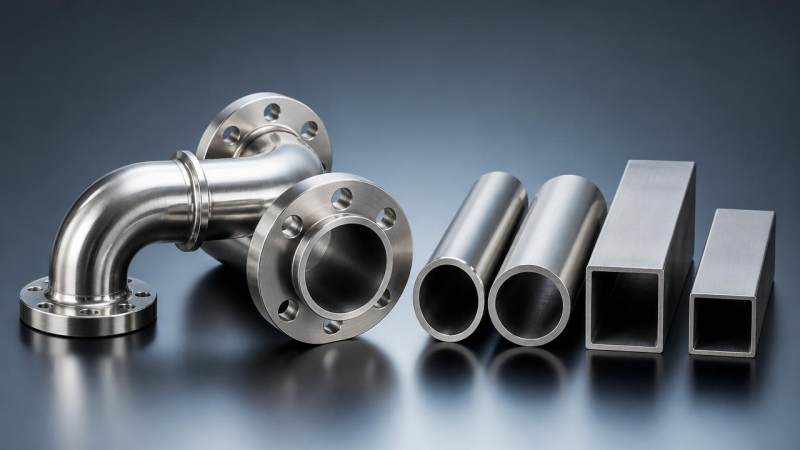
The term 2 stainless steel pipe usually points to a nominal pipe size used for flow systems. Tube often refers to exact outside diameter and wall thickness.
That difference seems small, but it shapes installation, welding, pressure rating, and inspection requirements. In steel projects, wrong selection can create delays and rework.
For example, a process line needs pressure performance and code compliance. A decorative handrail needs cleaner appearance, tighter tolerance, and better bending consistency.
Understanding where 2 stainless steel pipe fits best helps avoid over-specifying tube or under-specifying pipe. Both materials have value, but not in identical conditions.
Scenario one: fluid transport systems usually favor 2 stainless steel pipe
In water, steam, gas, and chemical transfer systems, 2 stainless steel pipe is generally the more appropriate choice. Pipe is built around flow capacity and pressure service.
It is commonly specified by NPS and schedule, such as Schedule 10, 40, or 80. These standards simplify valve, flange, and fitting compatibility.
When a drawing calls for 2 stainless steel pipe, fabricators usually expect standard pipe tolerances, tested welds, and recognized pressure service documentation.
This matters in food processing, pharmaceutical piping, building services, and industrial utility lines, where leakage risk and code acceptance carry real cost.
Key checks for flow-service applications
- Confirm nominal size, schedule, and pressure requirement.
- Match material grade to corrosion environment.
- Verify ASTM or ASME compliance for the project.
- Check fitting availability before ordering mill lengths.
Scenario two: structural, architectural, and fabrication work often favors tube
Tube is often selected when outside dimensions, appearance, and forming behavior matter more than nominal flow size. This includes frames, supports, guards, and railings.
A tube may be round, square, or rectangular. It is measured by exact outside diameter or exact width and height, then by wall thickness.
In these scenarios, tighter tolerance supports better fit-up, cleaner joints, and more predictable machining. That is why tube is common in visible or precision assemblies.
If the project includes handrails, support frames, or decorative stainless assemblies, tube can reduce finishing work and improve final visual quality.
A related steel application in transport and railing systems
In broader steel construction, different shapes serve different duties. For track and railing projects, Rail products are used where load guidance and wheel-bearing performance are essential.
Available grades include U74, U71Mn, PD2, PD3, BNbRE, Q235, 55Q, 50Q, U71, and 45Mn. Typical lengths range from 12m to 30m.
Thickness can range from 3mm to 24mm, with rail height from 134mm to 170mm. Surface options include oil, black, galvanized, and painted finishes.
This example shows an important sourcing principle: steel product names may sound similar, but application standards and performance roles are not interchangeable.
How dimensions create the real difference in 2 stainless steel pipe
The most common source of confusion is sizing. A 2 stainless steel pipe does not mean a pipe with exactly 2 inches outside diameter.
For NPS 2 pipe, the outside diameter is typically 2.375 inches. The inside diameter changes with wall thickness or schedule.
By contrast, a 2-inch stainless steel tube usually means the actual outside diameter is 2.000 inches. Wall thickness is then specified separately.
That dimensional mismatch affects clamp fit, joint alignment, support spacing, and compatibility with pre-drilled plates or machined connection points.
Which standards and tolerances matter in each usage scenario
Standards drive acceptance. For 2 stainless steel pipe, projects often reference ASTM A312, ASME B36.19, or related piping standards.
For stainless tube, standards may vary by mechanical, sanitary, heat exchanger, or ornamental use. Tolerance and finish expectations are often tighter.
This is why direct substitution creates risk. Even if alloy grade looks similar, documentation, testing scope, and dimensional controls may differ significantly.
Reliable structural steel suppliers understand these distinctions and match products to ASTM, EN, JIS, or GB requirements based on project needs.
Common tolerance-related decision points
- Need for exact outside diameter across many assemblies.
- Need for verified wall thickness under pressure service.
- Need for polished finish or visible surface quality.
- Need for code inspection and traceable mill certificates.
Practical selection advice when comparing 2 stainless steel pipe and tube
Choose 2 stainless steel pipe when the core function is transporting media safely. Choose tube when exact dimensions or structural appearance define success.
If the project combines both demands, separate the service zones. Use pipe for process flow areas and tube for external guards, frames, or visible supports.
Also compare total installed cost, not only material price. A cheaper item can become expensive if fittings fail, fabrication time increases, or approval is delayed.
For international sourcing, stable production, consistent quality, and clear documentation are just as important as unit cost. That reduces risk across shipment and installation stages.
Quick selection checklist
- Define whether the primary duty is flow, structure, or appearance.
- Confirm exact dimensional requirement on drawings.
- Review applicable standards and inspection documents.
- Check compatibility with fittings, supports, and fabrication methods.
- Compare lifecycle cost, not only purchase price.
Frequent mistakes when specifying 2 stainless steel pipe
One mistake is assuming identical outside diameter between pipe and tube. Another is matching by alloy grade alone and ignoring dimension system and standard.
A second mistake is choosing tube for pressure service because it looks cleaner on paper. Without proper standard alignment, approval and safety concerns may follow.
A third mistake is using 2 stainless steel pipe in exposed architectural work where visible weld consistency and exact fit are critical.
These errors are avoidable through early dimensional review, standard verification, and supplier communication before production begins.
Final takeaway for stainless steel sourcing decisions
The real difference between 2 stainless steel pipe and stainless steel tube is not just terminology. It is about how each product serves a specific project scenario.
Pipe supports flow systems, standard fittings, and pressure-focused compliance. Tube supports precision fabrication, cleaner appearance, and exact dimensional control.
For steel supply projects requiring dependable quality, international standard compliance, and custom support, working with an experienced structural steel exporter improves decision accuracy.
If your specification is still unclear, compare drawings, service conditions, and connection details first. That simple step usually reveals whether 2 stainless steel pipe or tube is the better fit.
Please give us a message


Please enter what you want to find