When choosing metal wire for fencing, the first outdoor failure rarely comes without warning. Corrosion, coating breakdown, and tensile fatigue can all shorten service life, especially in demanding environments. For buyers comparing steel sheet for construction, structural steel beams for construction, or metal wire for fencing, understanding what fails first helps reduce maintenance costs, improve safety, and support smarter sourcing decisions.
In steel-intensive projects, fencing wire is often treated as a minor line item, yet it directly affects perimeter safety, livestock control, site security, and long-term maintenance budgets. For procurement teams, technical evaluators, distributors, and project managers, the key issue is not only initial price per coil or per ton, but which failure mode appears first under real outdoor exposure.
That first failure can differ by climate, coating system, wire diameter, tensile class, installation method, and contact with other metals. A fence near the coast may fail from red rust in 12–24 months if the wrong finish is selected, while a high-tension agricultural fence inland may hold its coating but lose performance through repeated strain cycles. Understanding these patterns helps buyers specify better materials and avoid premature replacement.
What Usually Fails First in Outdoor Fencing Wire
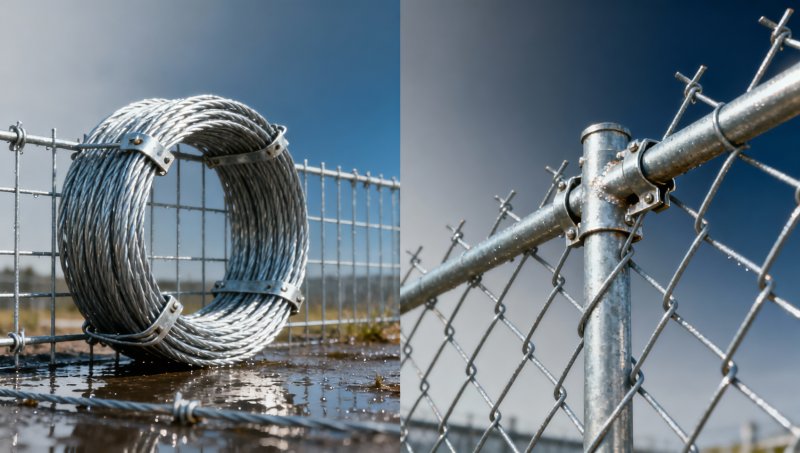
In most outdoor environments, the first visible failure is not complete wire breakage. It is usually surface-level deterioration: zinc coating depletion, polymer cracking, or early corrosion at cut ends, knots, bends, and tie points. These areas experience coating thinning during manufacturing or installation, making them the most vulnerable points within the first 1–3 years of exposure.
For carbon steel fencing wire, galvanizing is often the main protective barrier. Once that barrier is damaged or consumed, base steel begins oxidizing. In mild inland conditions, this process can be slow. In coastal, industrial, or high-humidity zones, chloride salts, acidic rain, and continuous wet-dry cycles can accelerate visible corrosion several times faster than in dry rural areas.
The second common failure is tensile fatigue. This matters in chain link fencing, welded wire mesh, barbed wire, and high-tensile field fencing exposed to wind loads, animal pressure, gate vibration, or repeated thermal expansion. A wire may still look acceptable on the surface, yet micro-cracks can form at stressed points and eventually lead to snap failures, especially where bends are too sharp or installation tension exceeds recommended limits.
A third early problem is connection failure. Staples, clips, tying wire, and weld points often deteriorate before the main line wire. In practical terms, a fence system is only as durable as its weakest component. A 4.0 mm line wire paired with low-quality ties or inconsistent coating at joints may lose function long before the primary wire section reaches its theoretical service life.
The first-warning signs buyers should not ignore
- White rust on galvanized surfaces during storage or in the first months after installation.
- Red rust at cut ends, crossover points, and welded joints.
- Coating peeling after bending, twisting, or mechanical impact.
- Wire slackness caused by creep, tension loss, or anchor movement.
- Localized breakage near posts, gates, or corners where stress concentration is highest.
The table below summarizes the most common first-failure patterns and where they typically begin in outdoor steel fencing applications.
</Please give us a message


Please enter what you want to find