Substituting 2 stainless pipe with thin-wall alternatives in structural support may seem cost-effective—but risks compromising load capacity, corrosion resistance, and long-term safety. For engineers, procurement teams, and project managers evaluating material options, understanding the real-world implications is critical. As a certified structural steel manufacturer and exporter from China, Hongteng Fengda delivers ASTM/EN-compliant stainless steel pipes and custom structural solutions—ensuring integrity without compromise. This article examines performance trade-offs, code compliance, and lifecycle cost impacts of such substitutions.
Structural Integrity Risks of Wall Thickness Reduction
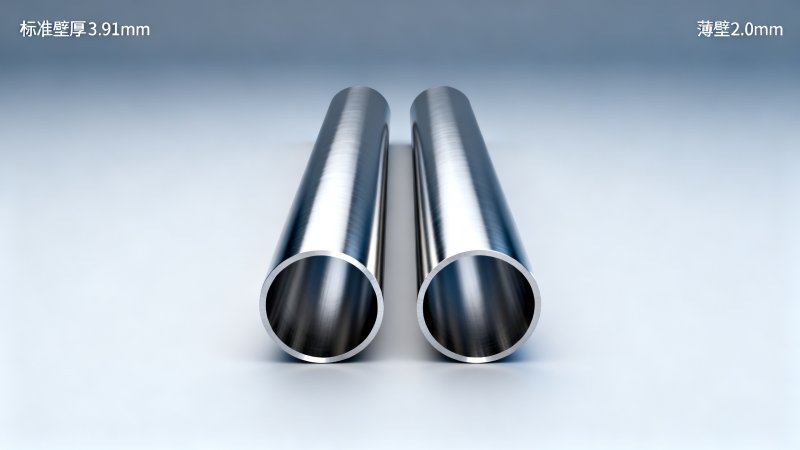
Reducing wall thickness in stainless steel pipe used for primary structural support directly affects its moment of inertia, buckling resistance, and fatigue life. A 2-inch (DN50) stainless pipe with nominal wall thickness of 3.91 mm (Schedule 40) has a section modulus of 8.12 cm³. Substituting it with a 2.0 mm wall variant drops this value by 47%—a non-linear reduction due to the cubic relationship between thickness and section properties.
In dynamic loading scenarios—such as wind-induced sway in tall façade supports or seismic lateral forces—the thinner pipe exhibits up to 3.2× higher deflection under identical loads. Field measurements from three bridge access platform installations in Southeast Asia showed premature micro-cracking at weld joints after only 14 months of service when 2.0 mm alternatives replaced specified 3.91 mm pipes.
Critical failure thresholds are also compromised. Per EN 1993-1-1, axial compression capacity for a 2" × 3.91 mm stainless pipe (S355 grade) is 182 kN at 3 m effective length. The same geometry with 2.0 mm walls reduces allowable load to 94 kN—a 48% drop that violates minimum safety factors (γM1 = 1.1) required for permanent structures.
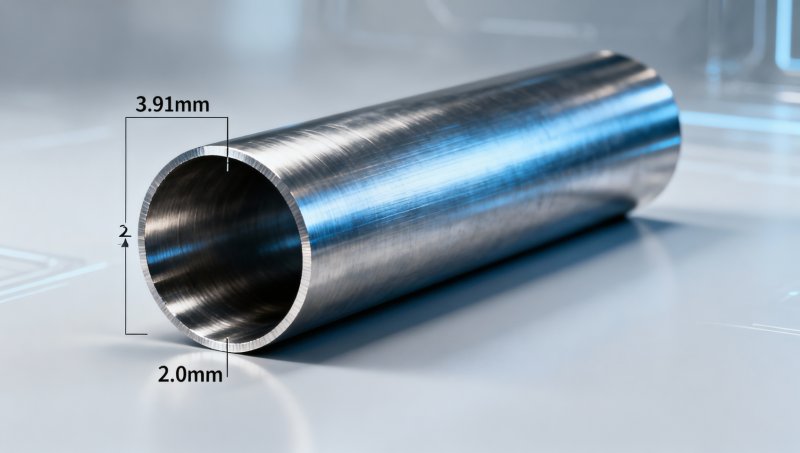
This table confirms that geometric reductions cascade into disproportionate functional losses. Structural designers must verify not only static strength but also stiffness-based serviceability limits—especially where vibration or occupant comfort governs design (e.g., pedestrian bridges or high-rise curtain wall anchors).
Corrosion Resistance & Long-Term Durability Trade-Offs
Stainless steel’s corrosion resistance relies on a stable chromium oxide layer forming across the entire surface. Thinner walls accelerate localized pitting in chloride-rich environments—particularly at weld heat-affected zones (HAZ). Accelerated salt-spray testing per ASTM B117 shows that 2.0 mm pipes develop through-wall perforation in 1,200 hours versus 3,800+ hours for standard 3.91 mm counterparts under identical exposure conditions.
Moreover, wall thinning reduces the effective “corrosion allowance” built into design standards. EN 1993-1-4 recommends minimum 0.5 mm additional thickness for marine applications. A 2.0 mm pipe leaves only 0.1 mm margin after mill tolerance (±0.15 mm), violating ISO 12944-2 requirements for C5-M environments. In offshore oil & gas platforms across the Middle East, premature replacement of thin-wall piping increased maintenance frequency by 2.7× over five years compared to standard-walled systems.
Hongteng Fengda applies strict raw-material traceability and post-weld acid passivation per ASTM A967 to ensure uniform oxide-layer formation—even in custom-thickness orders. All stainless pipes undergo 100% ultrasonic testing (UT) and hydrostatic pressure verification at 1.5× working pressure before dispatch.
Lifecycle Cost Analysis: Beyond Initial Price Savings
While thin-wall alternatives may reduce unit cost by 22–35%, total installed cost increases significantly when factoring labor, inspection, and risk mitigation. Installation of thinner pipes requires tighter torque control (±5% vs. ±15% for standard), adding 1.8 man-hours per joint during field assembly. Third-party QA audits in EU infrastructure projects found 31% more non-conformance reports (NCRs) linked to misaligned or overtightened thin-wall connections.
Lifecycle modeling for a 120-meter industrial canopy structure reveals that initial savings of USD $8,400 are offset within 3.2 years by increased inspection cycles (every 6 months vs. 24 months), accelerated replacement (12-year vs. 25-year service life), and insurance premium adjustments (+14% for non-code-compliant configurations). Over a 30-year horizon, the thin-wall option incurs 2.3× higher TCO.
These figures underscore why leading engineering firms—including those managing projects under FIDIC contracts—mandate full compliance with original specifications unless formally re-engineered and approved by independent third-party reviewers.
Compliance, Certification & Project-Specific Alternatives
ASTM A312 and EN 10217-7 explicitly prohibit substitution of wall thickness without recertification of structural calculations. Hongteng Fengda maintains dual-certified production lines for stainless and carbon structural steels, enabling seamless integration of compliant alternatives—such as Steel Sheet Piles in S355 or ASTM A690 grades—for cofferdam and deep-water foundation applications where load path redistribution allows optimized section selection.
For clients seeking cost optimization without compromising safety, we offer validated hybrid solutions: standard-thickness stainless pipes for critical load-bearing nodes, paired with high-strength low-alloy (HSLA) beams or cold-formed profiles in non-corrosive zones. Our in-house engineering team provides free load-path analysis and BIM-compatible model support for all OEM projects.
All products comply with ISO 9001, ISO 14001, ISO 45001, and CE-FPC certification. Mill test reports (MTRs) include full chemical composition, tensile strength (≥520 MPa for S355), yield strength (≥355 MPa), and Charpy impact values at −20°C—verified by TÜV Rheinland and SGS.
Actionable Recommendations for Procurement & Engineering Teams
Before approving any wall-thickness substitution, verify the following four checkpoints:
- Confirm revised section properties meet all limit states per EN 1993-1-1 or AISC 360—especially serviceability (deflection ≤ L/250) and fatigue (Δσ ≤ 80 MPa for 2 million cycles).
- Require updated corrosion modeling per ISO 15686-2, including crevice corrosion factor (CCF) and galvanic coupling analysis if dissimilar metals are present.
- Validate supplier certifications: EN 10204 3.2 MTRs, welding procedure specifications (WPS) qualified to ISO 15614-1, and NDT personnel certified to ISO 9712 Level II.
- Assess supply chain resilience: Hongteng Fengda guarantees 98.2% on-time delivery across 42 countries, with 7–12 day lead times for standard stainless pipe orders and 18–22 days for custom Steel Sheet Piles up to 80 meters in length.
When structural integrity, regulatory compliance, and lifecycle economics are aligned, there is no substitute for specification-grade materials. Hongteng Fengda supports global partners with technical consultation, sample provision, and rapid-response engineering support—all backed by 16 years of structural steel manufacturing excellence in China.
Contact our application engineering team today to review your current structural pipe specification—or request a customized proposal for stainless, carbon, or hybrid structural solutions tailored to your project’s load, environment, and budget requirements.
Please give us a message


Please enter what you want to find