Understanding ASTM A106 Gr B chemical composition is essential when evaluating ASTM A106 Gr B pipe performance, ASTM A106 Gr.B specification compliance, and ASTM A106 Gr.B equivalent materials. For buyers, engineers, and project teams, this knowledge also supports smarter comparisons with ASTM A106 Gr B mechanical properties, helping reduce sourcing risks and improve decisions in industrial and structural steel applications.
For most buyers and technical teams, the real question is simple: what does ASTM A106 Gr B chemical composition actually tell you about service performance, weldability, compliance risk, and material suitability? The short answer is that it gives you an early and practical way to judge whether a seamless carbon steel pipe can handle pressure, temperature, fabrication, and inspection requirements before you go too far into procurement or project execution.
If you are comparing suppliers, reviewing mill test certificates, or checking ASTM A106 Gr.B equivalent options, chemistry is not just a list of numbers. It is a decision tool. Carbon, manganese, phosphorus, sulfur, silicon, chromium, copper, molybdenum, nickel, vanadium, and other residual elements all affect strength, toughness, heat resistance, weldability, and consistency. Knowing how to read that composition helps you avoid quality disputes, overbuying, or choosing a pipe grade that looks acceptable on paper but creates problems in service.
Why chemical composition matters more than many buyers expect
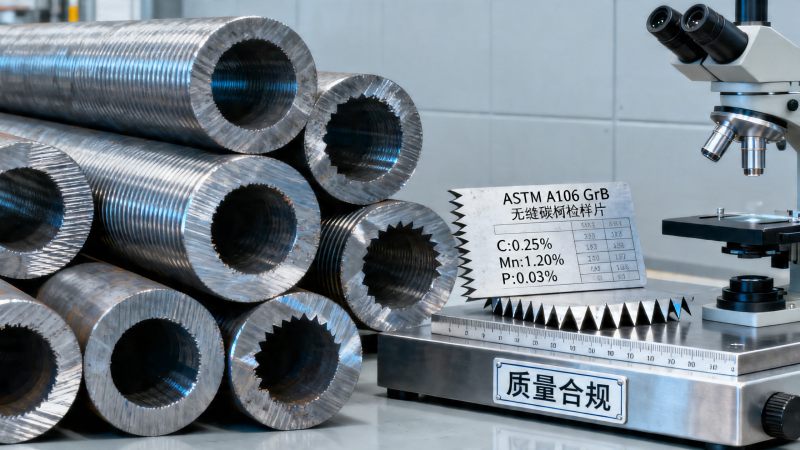
When people search for ASTM A106 Gr B chemical composition, they are usually not looking for a table alone. They want to understand whether the material is safe, standard-compliant, and commercially reliable. That is especially true for engineers, procurement managers, QA teams, and project owners working in power, oil and gas, petrochemical, construction support, and industrial systems.
In practical terms, chemical composition helps answer five key questions:
- Can the pipe meet ASTM A106 Gr.B specification limits?
- Will it deliver stable ASTM A106 Gr B mechanical properties?
- Is it suitable for welding, bending, and fabrication?
- Can it perform in elevated-temperature service?
- Does the supplier have real process control, or just attractive pricing?
This is why chemistry review should happen early. Mechanical test results show what a sample did in testing, but chemistry helps explain why the material behaves that way and whether production quality is likely to remain consistent batch after batch.
What is the ASTM A106 Gr B chemical composition?
ASTM A106 Grade B is a seamless carbon steel pipe commonly used for high-temperature service. Exact mill chemistry can vary within specification limits, but the standard typically includes the following maximum or controlled values:
- Carbon (C): about 0.30% max
- Manganese (Mn): about 0.29% to 1.06%
- Phosphorus (P): 0.035% max
- Sulfur (S): 0.035% max
- Silicon (Si): minimum often around 0.10%
- Chromium (Cr): 0.40% max
- Copper (Cu): 0.40% max
- Molybdenum (Mo): 0.15% max
- Nickel (Ni): 0.40% max
- Vanadium (V): 0.08% max
These values matter because ASTM A106 Gr B is designed to balance manufacturability and service performance. It is not alloy steel, but it still needs enough chemistry control to achieve the required tensile strength, yield strength, and reasonable weldability for demanding industrial use.
For readers evaluating ASTM A106 Gr.B equivalent materials, this is also the first checkpoint. A substitute material cannot be judged by strength alone. If its chemistry profile differs too much, fabrication behavior, corrosion response, heat performance, or inspection acceptance may also differ.
How each element affects performance, welding, and compliance
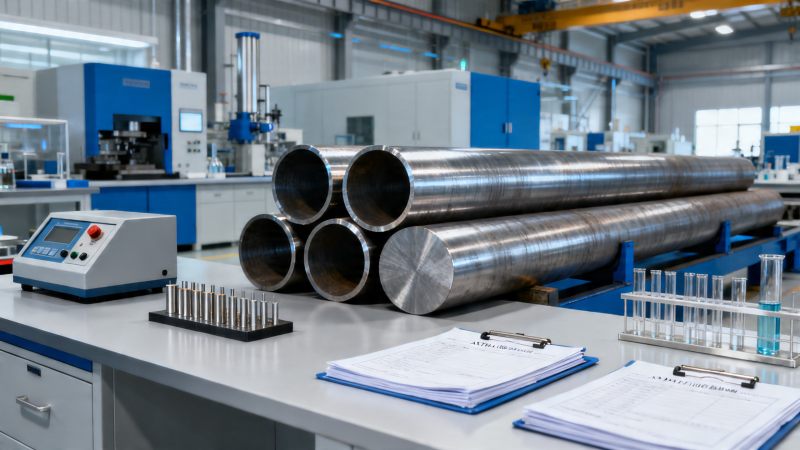
The most useful way to read ASTM A106 Gr B chemical composition is element by element.
Carbon: strength versus weldability
Carbon is one of the main drivers of strength and hardness. Higher carbon can improve strength, but too much can reduce weldability and increase cracking risk, especially in field fabrication or when preheat control is poor. For many users, carbon content is the first clue about whether the pipe will be easy to process on site.
Manganese: strength and toughness support
Manganese helps improve strength and contributes to toughness. It also helps offset some of the negative effects of sulfur. If manganese is too low, the material may not develop the expected mechanical balance. If it is pushed too high without proper control, consistency can become a concern.
Phosphorus and sulfur: watch these carefully
Phosphorus and sulfur are generally undesirable when present at elevated levels. They can reduce ductility, toughness, and weld quality. For procurement and QA teams, high P or S is a red flag because these elements often correlate with lower steel cleanliness and increased fabrication risk.
Silicon: deoxidation and process stability
Silicon is usually present as a deoxidizer. In practical terms, it supports cleaner steelmaking and can help with consistency. It is not usually the most discussed element in sourcing conversations, but it still matters to manufacturing quality.
Residual alloying elements: small numbers, real impact
Chromium, copper, molybdenum, nickel, and vanadium are generally controlled by maximum limits in ASTM A106 Gr B. Even though they are present in relatively small amounts, they can influence hardenability, heat response, and welding behavior. Their limits also help ensure the steel stays within the intended carbon steel category rather than drifting into a chemistry profile with different performance expectations.
For project teams that also buy broader steel products, it helps to remember that chemistry interpretation is always application-specific. For example, in rail-related infrastructure or industrial support projects, product selection follows the same principle: chemical composition must align with load, wear, fabrication, and compliance requirements. In such cases, products like Rail are evaluated not only by size and appearance, but also by steel grade, dimensional tolerance, and service function. Common options such as U74, U71Mn, PD2, Q235, and 55Q serve different railway or structural railing applications, with lengths typically from 12m to 30m, thickness from 3mm to 24mm, and tolerance around ±1%, showing how specification details directly affect end-use suitability.
What chemical composition tells you about ASTM A106 Gr B mechanical properties
Many readers want to connect chemistry with ASTM A106 Gr B mechanical properties, and that is exactly the right approach. Mechanical properties such as tensile strength, yield strength, and elongation are test outcomes, but composition strongly influences whether those outcomes are achievable and repeatable.
For ASTM A106 Grade B, typical mechanical requirements include:
- Tensile strength: minimum 60,000 psi
- Yield strength: minimum 35,000 psi
Chemical composition supports these targets in several ways:
- Controlled carbon and manganese help deliver the needed strength level
- Low phosphorus and sulfur help preserve ductility and reduce defect sensitivity
- Balanced residual elements help maintain consistency across heats
If a supplier provides acceptable mechanical test values but chemistry trends close to specification limits in an uncontrolled way, buyers should ask more questions. It may still pass the standard, but process stability, welding results, or batch-to-batch consistency could become issues later.
How to use composition data when comparing ASTM A106 Gr.B equivalent materials
This is one of the most important real-world use cases. Many buyers search for ASTM A106 Gr.B equivalent grades because they want lower cost, local availability, or dual-standard procurement flexibility. That can be reasonable, but chemistry comparison must be handled carefully.
When comparing equivalent materials, check the following:
- Base chemistry range: Does the alternative have similar carbon and manganese control?
- Impurity limits: Are phosphorus and sulfur limits equal or tighter?
- Intended service: Is the substitute approved for similar temperature and pressure conditions?
- Manufacturing route: Is it seamless if the application requires seamless pipe?
- Code acceptance: Will the end user, EPC, inspector, or authority accept the substitute standard?
A common mistake is to treat “equivalent” as “interchangeable in every case.” In reality, two materials can look close in chemistry or strength but still differ in code approval, testing expectations, or service history. For critical projects, equivalency should be verified by engineering review, not purchasing assumption alone.
What buyers, QA teams, and project managers should check on mill documents
If you are sourcing ASTM A106 Grade B pipe, the chemistry section of the mill test certificate deserves careful review. It should not be treated as a formality.
Focus on these points:
- Do all listed elements fall within ASTM A106 Gr.B specification limits?
- Are carbon, manganese, phosphorus, and sulfur levels reasonable rather than merely acceptable?
- Are there unusual residual element values that need explanation?
- Do chemistry and mechanical results appear technically consistent with each other?
- Is the heat number traceable to the supplied pipe?
For quality control and safety personnel, this review helps identify potential risks before fabrication or installation. For financial approvers and business evaluators, it helps avoid hidden cost from rework, claim disputes, delays, or failure investigations. For distributors and resellers, it supports more credible communication with downstream customers.
Common misunderstandings about ASTM A106 Gr B chemical composition
Several misunderstandings appear often in the market:
- “If the chemistry passes, the pipe is automatically good.”
Not necessarily. Chemistry is critical, but dimensional accuracy, NDT, mechanical testing, heat treatment control, and surface condition also matter. - “Lower carbon is always better.”
Lower carbon may improve weldability, but the steel still needs enough strength and compliance with the intended standard. - “Equivalent grades are the same in practice.”
Only after full review of chemistry, mechanical properties, manufacturing method, and code acceptance. - “Residual elements are too small to matter.”
Even small amounts can affect processing and service behavior, especially when several elements trend high together.
A more reliable view is this: chemical composition is one of the fastest ways to judge whether a material is likely to be suitable, but it must be read together with testing data, application requirements, and supplier capability.
How to make a smarter sourcing decision
If your project involves ASTM A106 Grade B pipe, use chemistry as part of a broader evaluation framework:
- Confirm service conditions, especially temperature, pressure, and fabrication demands
- Check ASTM A106 Gr B chemical composition against the standard and against typical market ranges
- Compare ASTM A106 Gr B mechanical properties with project requirements
- Review manufacturing method, testing scope, and traceability
- Assess supplier quality control, export experience, and document reliability
This approach is especially useful when purchasing internationally. A supplier with strong production management and standard familiarity can reduce sourcing risk significantly, even before price negotiation enters the discussion.
For global buyers of structural and industrial steel products, working with an experienced manufacturer matters because compliance, quality consistency, and delivery reliability often affect total project cost more than unit price alone.
Conclusion
ASTM A106 Gr B chemical composition tells you far more than what elements are inside the pipe. It reveals likely strength balance, weldability, impurity control, elevated-temperature suitability, and the overall discipline of the manufacturing process. For engineers, buyers, QA teams, and project decision-makers, this information is one of the best early indicators of whether a material is worth approving, comparing, or questioning.
If you remember one point, let it be this: do not read ASTM A106 Gr B chemistry as a static table. Read it as a practical risk and performance guide. When combined with ASTM A106 Gr B mechanical properties, specification review, and supplier assessment, it becomes a powerful tool for making safer and smarter sourcing decisions.
Please give us a message


Please enter what you want to find