When evaluating ASTM A106 Gr.B specification for pressure piping and industrial sourcing, buyers often focus on ASTM A106 Gr B mechanical properties, ASTM A106 Gr B chemical composition, and ASTM A106 Gr.B equivalent grades. This guide explains which requirements truly matter for performance, compliance, cost control, and project safety, helping engineers, purchasers, and decision-makers choose the right ASTM A106 Gr B pipe with greater confidence.
If you need a short answer first, the most critical ASTM A106 Gr.B requirements are not all clauses in the standard equally. In real projects, the key checkpoints are grade confirmation, chemical composition limits, tensile and yield strength, hydrostatic or NDT testing requirements, dimensional tolerances, heat treatment condition, traceability, and actual suitability for the intended pressure-temperature service. For most buyers, the biggest mistake is comparing price before confirming whether the pipe fully matches the service condition, inspection scope, and project specification.
What Is the Core Buying Question Behind ASTM A106 Gr.B?
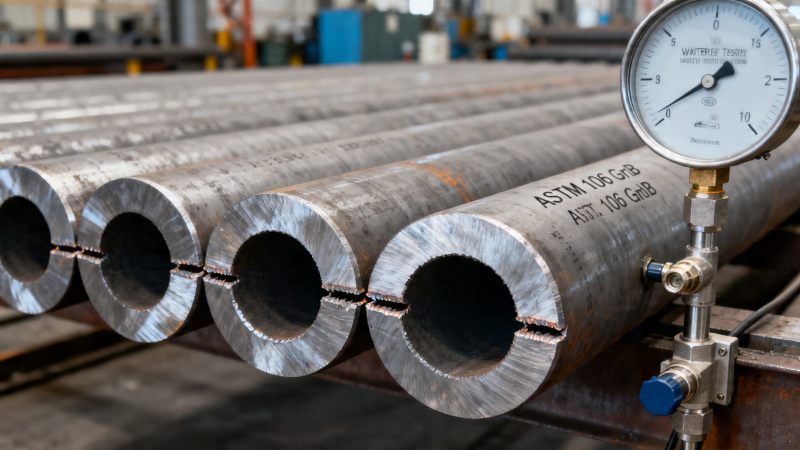
Most users searching for ASTM A106 Gr.B specification are not looking for a textbook definition. They usually want to answer one practical question: Which parts of the specification directly affect safety, compliance, and total procurement risk?
This is especially important for pressure piping, refinery systems, power plants, boilers, process lines, and other high-temperature services where ASTM A106 Grade B is commonly specified. Engineers want to avoid under-specification. Procurement teams want to avoid overpaying for unnecessary inspection or premium supply. Quality managers want clear acceptance criteria. Decision-makers want confidence that the purchased material will not create delays, claims, or safety issues later.
That is why the specification should be read as a risk-control document, not just a material description.
Which ASTM A106 Gr.B Requirements Are Truly Critical?
Below are the requirements that usually matter most in actual sourcing and engineering evaluation.
1. Grade identification and intended service
ASTM A106 covers seamless carbon steel pipe for high-temperature service. Grade B is the most commonly used grade because it offers a practical balance of strength, availability, and cost. The first critical point is confirming that the project really needs ASTM A106 Gr.B, not another standard such as ASTM A53, API 5L, or a low-temperature or alloy steel alternative.
If the line will operate under elevated temperature and pressure, ASTM A106 Gr.B is often preferred. But if the environment includes severe corrosion, sour service, extreme low temperatures, or special code requirements, additional material selection review is necessary.
2. Chemical composition limits
ASTM A106 Gr B chemical composition is critical because it affects weldability, strength consistency, and service reliability. Buyers should not treat chemistry as a formality on the mill test certificate. Carbon, manganese, phosphorus, sulfur, silicon, chromium, copper, molybdenum, nickel, vanadium, and other residual elements can influence fabrication behavior and long-term performance.
In practice, the most important concern is whether the chemistry remains within standard limits and whether it supports good weldability for field installation. Excessive carbon equivalent can increase cracking risk during welding, especially if preheat and procedure control are weak.
3. Mechanical properties
ASTM A106 Gr B mechanical properties are one of the main reasons this grade is selected. The minimum tensile strength and minimum yield strength must meet standard requirements. These values are basic acceptance criteria, but buyers should go one step further and ask: are the reported test values stable and realistic across the lot, or are they only barely above the minimum?
For high-consequence projects, consistency matters more than a single passing number. Stable mechanical performance reduces fabrication problems and improves confidence in service behavior.
4. Manufacturing route: seamless pipe really matters
ASTM A106 is specifically a seamless pipe standard. That matters because seamless pipe is often chosen where pressure integrity and elevated-temperature service are important. If a quotation looks unusually low, buyers should verify that the offered product is actually seamless and not being compared against welded pipe under a different standard.
5. Testing requirements: hydrostatic test, NDT, flattening, bending
One of the most overlooked parts of ASTM A106 Gr.B specification is inspection scope. The standard includes mechanical testing and other examination requirements, but project documents may add extra requirements such as ultrasonic examination, third-party inspection, or stricter documentation.
Critical questions include:
- Is hydrostatic testing required or replaced by NDT under the project specification?
- Are supplementary requirements applicable?
- Will third-party witnessing be needed before shipment?
- Do traceability and heat number marking need to be maintained piece by piece?
Many sourcing disputes happen not because the base material is wrong, but because the delivered inspection scope does not match the contract requirement.
6. Dimensional tolerances and wall thickness control
Even when chemistry and strength pass, dimensional nonconformity can create serious field issues. Outside diameter, wall thickness, length, straightness, end finish, and bevel condition all affect installation efficiency. For pressure piping, wall thickness is particularly important because it directly links to pressure design calculations and corrosion allowance assumptions.
Buyers should pay close attention to tolerance control, especially on large orders where installation productivity matters.
7. Heat treatment and processing condition
The manufacturing and heat treatment route affects grain structure, mechanical stability, and consistency. While many buyers only check the standard name, experienced evaluators also review how the pipe was processed and whether the production route is appropriate for the required service.
8. Marking, documentation, and traceability
For many industrial projects, documentation is not secondary. It is part of compliance. Material test certificates, heat number traceability, inspection records, standard markings, and packing integrity all influence whether the product can be accepted on site without delay.
If traceability breaks, even acceptable material may be rejected.
How Should Engineers and Buyers Prioritize These Requirements?
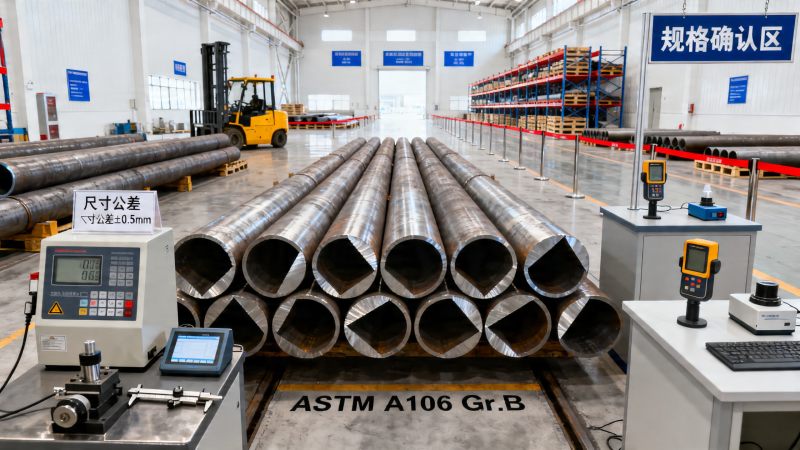
A useful way to evaluate ASTM A106 Gr.B is to divide requirements into three levels:
Level 1: Non-negotiable safety and compliance items
- Correct standard and grade
- Seamless manufacturing
- Chemical composition within limits
- Mechanical properties meeting minimum requirements
- Required pressure test or NDT compliance
- Dimensional conformity
- Traceability and valid MTC documentation
Level 2: Project execution and fabrication efficiency items
- Wall thickness consistency
- End condition and bevel quality
- Length tolerances
- Weldability and carbon equivalent control
- Packing and shipment protection
Level 3: Commercial optimization items
- Lead time reliability
- Batch consolidation
- Third-party inspection coordination
- Cost impact of supplementary requirements
- Supplier responsiveness and after-sales support
This framework helps avoid a common procurement problem: negotiating hard on unit price while leaving inspection, tolerance, or documentation requirements unclear.
What Do Buyers Often Misunderstand About ASTM A106 Gr.B Equivalent Grades?
ASTM A106 Gr.B equivalent grades are a frequent search topic, but this area requires caution. Equivalent does not always mean interchangeable in every code, project, or service condition.
A material from another standard may have similar strength values, but differences in manufacturing route, testing requirements, heat treatment, impact performance, or approval status can still make substitution unacceptable. In other words, “close enough” is not a safe engineering basis.
Before accepting an alternative, buyers should verify:
- Code and project specification acceptance
- Matching pressure-temperature suitability
- Chemical and mechanical compatibility
- Inspection and test equivalence
- Owner or EPC approval procedure
This is especially important in refinery, petrochemical, and power projects where substitutions can trigger re-approval delays.
How to Check Whether a Supplier Can Really Meet the Specification
Choosing compliant ASTM A106 Gr.B pipe is not only about reading the standard. It is also about evaluating supplier capability. A reliable supplier should be able to provide:
- Clear mill test certificates
- Stable quality control records
- Support for international standards and export documentation
- Dimensional and inspection consistency across batches
- Dependable lead times for project schedules
For international buyers, it is often helpful to work with manufacturers and exporters familiar with ASTM, EN, JIS, and GB systems, because many projects involve mixed sourcing environments and cross-standard verification.
In broader industrial procurement, many buyers also source related carbon steel products from the same supply chain to improve coordination. For example, in manufacturing, construction, and industrial support applications, Wire Rod may be considered alongside other steel materials where formability, weldability, and multi-standard compliance are required. This can be useful for buyers managing combined sourcing plans across building material, petrochemical plants, machinery, and fabrication support needs.
What Requirements Affect Cost the Most?
From a commercial perspective, the largest cost drivers are usually not the base grade alone. They include:
- Pipe size and wall thickness
- Inspection scope and third-party testing
- Supplementary requirements
- Urgent delivery schedules
- Small quantity or mixed-size orders
- Special documentation or destination-specific export requirements
This means the cheapest quotation may not be the lowest total cost option. A supplier with better dimensional control, documentation quality, and delivery reliability may reduce rework, site delay, and rejection risk enough to create a better overall commercial outcome.
A Practical Checklist Before You Approve an ASTM A106 Gr.B Purchase
Before issuing a purchase order, buyers and technical reviewers should confirm the following:
- The standard is correctly specified as ASTM A106 Grade B for the intended service.
- The product is seamless carbon steel pipe.
- Chemical composition and mechanical properties meet the required limits.
- Pipe dimensions, schedule, and tolerances match the design requirement.
- Hydrostatic test, NDT, and any supplementary requirements are clearly defined.
- Documentation, marking, and traceability requirements are included in the PO.
- Any equivalent grade proposal is technically reviewed and formally approved.
- Supplier quality capability and delivery reliability are verified.
This checklist is simple, but it addresses the issues that most often cause technical or commercial problems.
Conclusion: Focus on Risk-Critical Requirements, Not Just the Standard Name
ASTM A106 Gr.B specification matters because it defines more than a material category. It sets the baseline for pressure piping safety, fabrication reliability, and procurement control. The most critical requirements are those that affect actual service performance and project acceptance: chemistry, mechanical properties, seamless manufacturing, testing scope, dimensions, traceability, and suitability for the real operating condition.
For engineers, the key is technical fit. For procurement teams, the key is requirement clarity. For managers and decision-makers, the key is reducing lifecycle risk rather than chasing the lowest initial price. If these priorities are aligned, selecting ASTM A106 Gr.B becomes much more straightforward and much more reliable.
Please give us a message


Please enter what you want to find