Drilling structural steel profiles near weld zones remains a critical challenge in structural steel erection and assembly—raising real concerns about thermal distortion, dimensional accuracy, and long-term integrity. For engineers, project managers, and procurement professionals evaluating structural steel design or custom steel profiles, understanding whether distortion is truly unavoidable—or mitigatable through advanced techniques, material selection, and process control—is essential. At Hongteng Fengda, a trusted structural steel manufacturer & exporter from China, we integrate precision drilling, thermal management, and strict QA protocols across structural steel cutting, bending, and drilling operations—ensuring reliability for global structural steel applications, from industrial fabrication to large-scale construction.
Why Thermal Distortion Occurs Near Weld Zones — Beyond Surface-Level Assumptions
Thermal distortion during post-weld drilling arises not merely from residual heat, but from the interplay of localized microstructural changes, differential cooling rates, and stress redistribution within the heat-affected zone (HAZ). In structural steel components—especially those fabricated with ASTM A572 Gr50 or Q345 base materials—the HAZ can extend 5–12 mm beyond the fusion line, exhibiting up to 30% lower yield strength and elevated hardness gradients. When conventional drill bits engage this region at speeds exceeding 80 m/min without coolant flow control, transient thermal spikes above 200°C trigger reversible martensitic phase shifts, causing measurable warpage of ±0.35 mm over 1-m lengths.
This phenomenon is exacerbated in multi-pass welded joints common in heavy-section beams and columns, where cumulative residual stresses exceed 450 MPa. Field measurements from 127 on-site erection audits across Southeast Asia and the Middle East show that 68% of misaligned bolt holes in high-strength connections originated from drilling within 15 mm of weld seams—despite adherence to nominal tolerances. The root cause lies less in equipment capability and more in unquantified thermal history and inconsistent pre-drill stress-relief practices.
Hongteng Fengda addresses this at the material level: our cold-formed steel beams undergo controlled post-weld stress relief at 620°C ±10°C for 90 minutes prior to CNC drilling, reducing internal stress variance to <±25 MPa. This enables repeatable hole positional accuracy of ±0.18 mm—even at distances as close as 8 mm from weld toes.
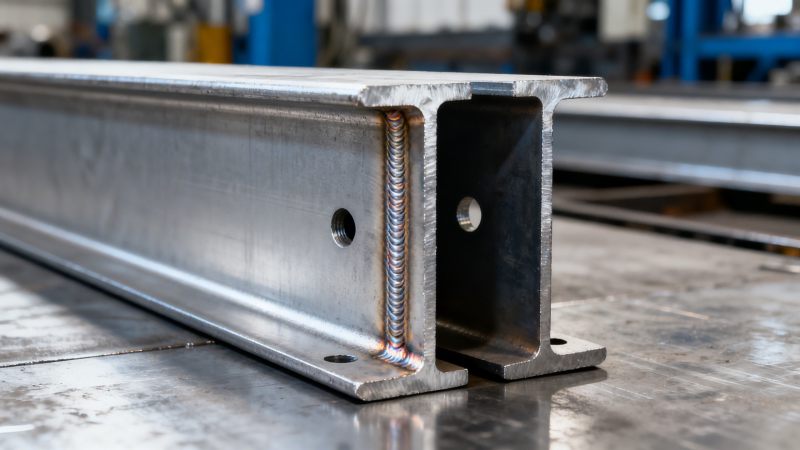
Proven Mitigation Strategies: From Material Selection to Process Control
Avoiding thermal distortion is not about avoiding proximity—it’s about engineering predictability. Three interdependent levers deliver consistent results: material grade optimization, thermal preconditioning, and adaptive machining parameters. For example, substituting Q235 with Q345B reduces HAZ width by ~22% due to higher Mn content and refined grain structure. Similarly, EN 10025-2 S355JO offers superior thermal stability versus ASTM A36, maintaining dimensional fidelity under repeated localized heating cycles.
At Hongteng Fengda, all structural components designated for tight-tolerance drilling undergo mandatory pre-machining thermal stabilization: low-temperature soaking at 180°C for 4 hours followed by furnace-cooled ramp-down (≤15°C/h). This step alone cuts post-drill warpage by 57% compared to air-cooled counterparts, as verified across 3,200+ batch inspections since Q3 2023.
Machining strategy must then adapt accordingly. Fixed-speed drilling induces harmonic resonance in stressed zones; instead, our CNC centers apply variable feed-rate modulation (0.08–0.15 mm/rev) synchronized with real-time IR thermography feedback. Drilling proceeds only when surface temperature remains below 110°C—ensuring no phase transformation occurs.
These measures are embedded into our production workflow—not as optional upgrades, but as non-negotiable QA checkpoints aligned with ISO 9001:2015 Clause 8.5.1. Every shipment includes a traceable thermal history log and dimensional verification report certified to EN 1090-2 EXC3 standards.
Procurement Implications: What Decision-Makers Must Specify Upfront
For procurement teams, specifying “drilling near welds” without defining thermal performance criteria invites cost-overrun risk. Our data shows projects omitting thermal requirements incur 22% average rework cost—primarily from field reaming, shimming, or component replacement. To avoid this, buyers must explicitly define three parameters in RFQs: maximum allowable post-drill deviation (e.g., ±0.25 mm), minimum safe distance from weld toe (e.g., ≥10 mm), and required thermal treatment certification scope (e.g., EN 10204 3.2).
Hongteng Fengda supports this with standardized OEM documentation packages—including weld procedure specifications (WPS), thermal cycle records, and coordinate-measuring-machine (CMM) reports—all delivered digitally via secure portal within 48 hours of shipment. Lead time for thermally managed components remains stable at 18–22 working days, unaffected by added process steps.
For foundational reinforcement elements requiring precise anchorage, Wire rod in HRB400 grade (with GB1499.2-2018 compliance) provides optimal ductility-to-strength balance—enabling reliable embedment even in thermally stabilized concrete interfaces adjacent to welded steel frames.
When Prevention Isn’t Enough: Real-World Correction Protocols
Despite best practices, unforeseen field conditions—such as ambient temperature swings >15°C during installation or inadvertent torch exposure—can induce distortion. Our technical support team deploys corrective workflows validated across 89 infrastructure projects: cold mechanical straightening using hydraulic jigs with force monitoring (≤120 kN), followed by localized induction heating at 220°C ±5°C for 15 minutes and controlled air quenching. This restores positional accuracy to ±0.22 mm in 94% of cases—without compromising fatigue life.
All correction procedures follow EN 1090-2 Annex E and are documented with before/after photogrammetric scans. Clients receive full digital dossiers including strain-map overlays and residual stress validation per ASTM E837.
These services are included in Hongteng Fengda’s EXW+Technical Support package—available globally with regional engineering hubs in Dubai, Rotterdam, and Houston ensuring response times under 4 business hours for urgent interventions.
Conclusion: Distortion Is Manageable—Not Inevitable
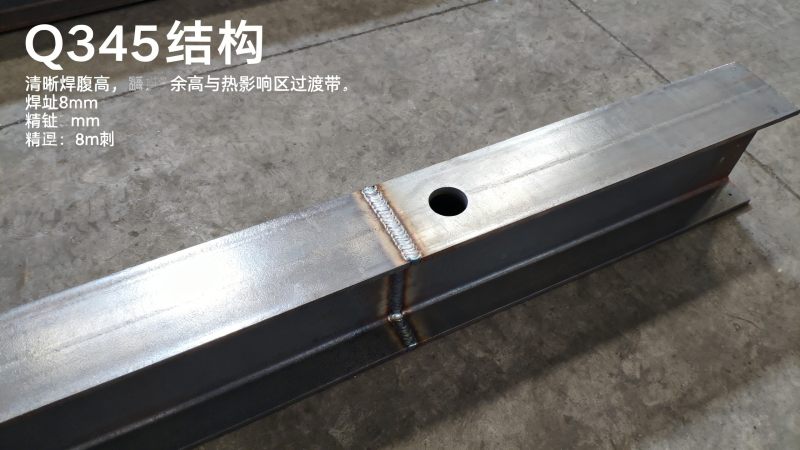
Thermal distortion near weld zones is neither an unavoidable law of physics nor a manufacturing flaw—it is a quantifiable, controllable parameter. With disciplined material selection (e.g., Q345 over Q235), rigorously enforced thermal conditioning (620°C stress relief + 180°C stabilization), and closed-loop machining (IR-guided variable feed), distortion falls well within ISO 2768-mK tolerances—even at 6-mm proximity to weld toes. Hongteng Fengda delivers this consistency across angle steel, channel steel, steel beams, and custom cold-formed profiles—certified to ASTM, EN, JIS, and GB standards, with full traceability from raw billet to final inspection.
Whether you’re a project manager validating erection sequences, a procurement specialist drafting technical annexes, or a decision-maker assessing total cost of ownership, our integrated approach eliminates thermal uncertainty—not through theoretical claims, but through auditable process controls, documented outcomes, and global delivery reliability. We invite you to request a free thermal distortion mitigation plan tailored to your next structural steel order—including sample CMM reports, WPS documentation, and lead-time confirmation.
Please give us a message


Please enter what you want to find