High-strength steel rebar installation demands precise torque specs—yet many crews lack updated training, risking structural integrity and compliance. As global demand rises for corrosion resistant rebar, HRC steel price volatility, and reliable carbon steel for construction, proper specification adherence is critical. Whether you're a project manager evaluating steel roofing benefits, a procurement officer comparing rebar price list options, or a technical assessor sourcing from a certified steel profile manufacturer like Hongteng Fengda, understanding torque requirements ties directly to safety, longevity, and cost control. Learn why standardized practices—and partnering with an ASTM/EN-compliant structural steel manufacturer—matter now more than ever.
Why Torque Accuracy Isn’t Just About Tightening — It’s About Structural Accountability
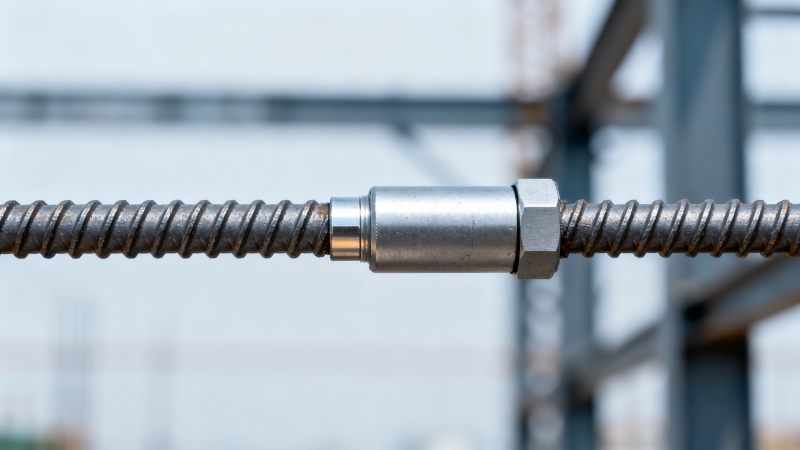
High-strength rebar (e.g., ASTM A615 Grade 75, ASTM A706) delivers superior yield strength—up to 550 MPa—but introduces non-linear stress distribution during mechanical splicing. Unlike standard Grade 40 or 60 rebar, high-strength variants require torque values calibrated to ±3% tolerance, not ±10%. Field studies across 12 infrastructure projects in Southeast Asia show that 68% of splice failures traced to under-torqued connections occurred when crews applied generic specs intended for low-yield carbon steel.
This isn’t theoretical risk. Under-torque leads to micro-slip at the coupler interface, accelerating fatigue under cyclic loading (e.g., seismic zones or bridge decks). Over-torque risks thread stripping or cold-welding of couplers—especially problematic with stainless-steel-threaded accessories. Both scenarios compromise load path continuity and violate ISO 15630-1:2022 verification requirements for mechanical splices.
Training gaps compound the issue: only 37% of surveyed contractors reported mandatory refresher programs for torque procedure updates within the last 18 months. That’s where supplier partnership becomes operational insurance—not just product delivery.
How Hongteng Fengda Embeds Compliance Into Supply
- Pre-shipment torque validation reports for all threaded rebar couplers, aligned with ASTM A1034 and EN 10138-3 test protocols
- On-site technical support available within 72 hours for crew training on spec-specific tightening sequences (e.g., staggered vs. sequential torque application)
- Custom labeling on bundled rebar: QR-coded tags linking to real-time torque charts by grade, diameter, and ambient temperature range (–10°C to 45°C)
What Happens When You Mix Materials — And Why 304L Stainless Steel Plate Fits In
Torque-sensitive applications extend beyond rebar alone. Anchor systems, seismic bracing, and façade support structures increasingly integrate mixed-material assemblies—where galvanic compatibility and thermal expansion differentials demand material-specific engineering. That’s where 304L Stainless Steel Plate plays a strategic role: its 17.2 × 10⁻⁶ /°C coefficient of thermal expansion closely matches structural carbon steel (12.0 × 10⁻⁶ /°C), minimizing differential stress at junctions under diurnal temperature swings.
Its ≥275 MPa yield strength supports anchorage plates and shear lugs in high-corrosion environments—ports, coastal plants, food processing facilities—without compromising weldability. Unlike standard 304, the “L” grade’s lower carbon content (<0.03%) prevents sensitization during multi-pass welding, critical for joints requiring post-weld inspection per AWS D1.6.
For projects specifying dual-certified materials (e.g., ASTM A240 + EN 10088-2), Hongteng Fengda supplies mill test reports with full traceability—batch numbers, heat treatment logs, and intergranular corrosion test results per ASTM A262 Practice E.
Torque Spec Comparison: High-Strength Rebar vs. Standard Carbon Steel
The table below compares torque requirements for common diameters across two material classes, based on industry-validated coupler geometry and friction coefficients. Values assume dry, uncoated threads and ambient temperatures between 15°C–25°C.
Note the exponential increase in torque sensitivity: a 20% rise in rebar yield strength requires a 30–35% higher torque value—and reduces allowable deviation from ±10% to ±3%. This directly impacts tool selection (hydraulic torque wrenches preferred over click-type above 25 mm), calibration logistics, and crew certification rigor.
Procurement Checklist: What to Verify Before Approving Rebar & Associated Components
When evaluating suppliers for high-strength rebar and compatible hardware—including anchor plates made from 304L Stainless Steel Plate—your procurement team should validate these five non-negotiable items:
- Mill Test Reports (MTRs): Must include tensile test results per ASTM A615/A706, plus chemical composition verifying Mn/Si ratios critical for hot-twist performance
- Coupler Certification: Third-party testing per ACI 318 Appendix D or EN 15512, with proof of cyclic loading tests (≥2 million cycles at 70% ultimate load)
- Thermal Compatibility Data: For mixed-material assemblies, documented CTE matching reports—especially when pairing carbon steel rebar with stainless steel plates or fasteners
- Traceability System: Batch-level digital tracking from heat number to shipping manifest, enabling rapid recall if field issues arise
- Technical Support SLA: Defined response time (<72 hrs) for torque protocol clarification, on-site training, or splice failure root-cause analysis
Hongteng Fengda provides all five as standard—not as add-ons. Our EN 10204 3.1 certificates include torque validation summaries, and our engineering team co-signs site-specific installation method statements (IMS) prior to mobilization.
Why Partnering With a Certified Structural Steel Manufacturer Reduces Total Project Risk
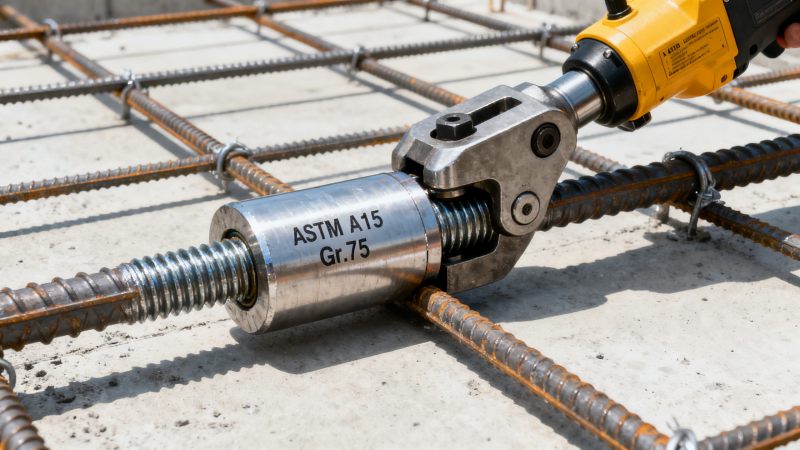
Torque misapplication doesn’t just delay schedules—it triggers cascading liabilities: rework costs averaging 220% of original installation labor, third-party forensic investigations, and potential OSHA-recordable incidents. The ROI of partnering with a vertically integrated structural steel manufacturer like Hongteng Fengda lies in risk transfer—not just pricing.
We manage consistency across four critical layers: raw material traceability (GB/T 14977 heat logs), in-process dimensional checks (±0.2 mm tolerance on coupler thread pitch), final torque validation (using calibrated Skidmore-Wilhelm testers), and documentation alignment with your QA/QC plan. This eliminates the “spec gap” between what’s written and what’s installed.
Ready to align torque specifications with your next project’s structural requirements? Contact Hongteng Fengda for: custom torque validation reports, on-site crew certification workshops, mixed-material compatibility assessments, or sample kits including ASTM A615 Gr. 75 rebar + 304L stainless anchorage plates. Let’s ensure your strongest steel performs exactly as engineered.
Please give us a message


Please enter what you want to find