Even small structural steel bending errors can weaken the final frame, causing poor fit-up, stress concentration, and costly rework during installation. For operators and fabrication teams, understanding where these mistakes start is essential to maintaining strength, accuracy, and project efficiency. This article explains the most common bending problems, their impact on structural performance, and how to avoid them in daily production.
Why structural steel bending errors deserve a checklist
Structural steel bending affects geometry, load transfer, bolt alignment, welding quality, and final erection speed. A small angle deviation can spread through the frame and create larger assembly errors.
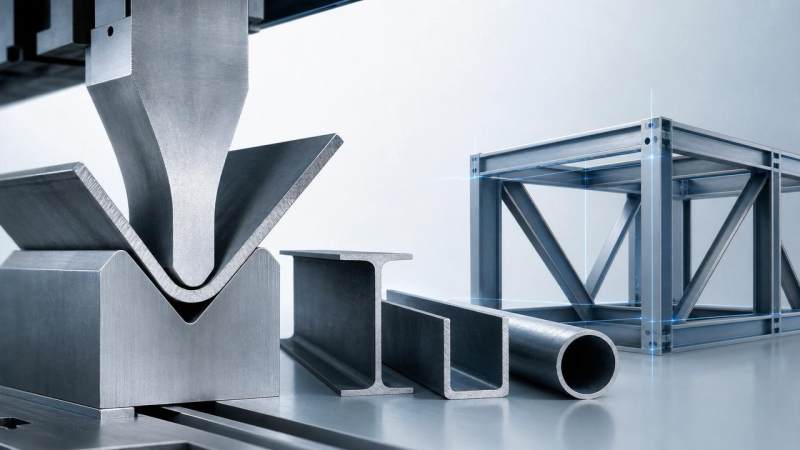
A checklist reduces variation before it reaches the jobsite. It helps confirm material condition, machine setup, bend allowance, springback control, and inspection points in a repeatable sequence.
This approach is especially useful in steel beams, channels, angle steel, cold formed profiles, and custom structural components where multiple bends must match design tolerances and international standards.
Core checklist for preventing structural steel bending mistakes
- Verify grade, thickness, and heat condition before bending. Different carbon steel and low-alloy steels react differently under force and can produce unexpected springback or edge cracking.
- Check the drawing revision, bend direction, inside radius, and reference points. Many structural steel bending errors begin with outdated shop drawings or unclear orientation marks.
- Measure actual material thickness instead of assuming nominal size. Thickness variation changes tonnage, neutral axis position, and final bend angle, especially on heavy structural sections.
- Inspect the die, punch, rollers, and support surfaces for wear. Tooling damage can mark the steel, distort the bend line, and reduce angle accuracy across a batch.
- Set bend allowance and springback compensation from tested values. Using generic settings often causes underbending or overbending when steel chemistry or section geometry changes.
- Align the workpiece squarely and support long lengths during forming. Poor support allows twist, camber shift, and uneven force distribution that weakens final frame alignment.
- Control bend speed and pressure consistently. Sudden force spikes can create surface damage, local thinning, and residual stress concentration around the bent zone.
- Inspect the first piece completely before full production. Confirm angle, radius, leg length, hole position, and straightness to stop repeated structural steel bending defects early.
- Record machine settings, operator notes, and inspection data. Repeatable documentation makes corrective action faster and improves consistency on future export or OEM orders.
The most common bending errors and how they weaken the frame
Wrong bend angle
Incorrect angle is the most visible structural steel bending problem. Even a small deviation can shift connection plates, bolt holes, and member alignment during installation.
This creates forced assembly, added welding, shim packing, or thermal correction. Each fix adds cost and may introduce residual stress into the final frame.
Excessive springback
Springback is common in high-strength and low-alloy sections. If compensation is not tested for the actual grade, the part opens after pressure release and misses the target angle.
In structural assemblies, repeated springback error across multiple parts compounds fit-up problems and can affect dimensional stability of the whole steel frame.
Cracking at the bend line
Cracks usually come from too small a bend radius, poor material condition, damaged tooling, or bending across unfavorable grain direction. Surface cracks may look minor but reduce fatigue resistance.
In load-bearing steel members, crack initiation points can grow under cyclic stress, vibration, or thermal movement, threatening long-term structural reliability.
Twist and distortion
Long channels, angles, and asymmetric profiles often twist when support is poor. Distortion changes seating surfaces and makes field alignment difficult during bolting or welding.
The result is not only cosmetic. Distorted members can carry load unevenly and transfer stress into connections not designed for that geometry.
Application notes for different steel fabrication scenarios
Building frames and connection members
In columns, bracing parts, clips, and support members, structural steel bending accuracy directly affects bolt-up speed. If one bend shifts a hole pattern, installation delays can spread across the sequence.
Checking reference edges, hole-to-bend distance, and squareness before mass production is more effective than correcting assembled steel later.
Pipes and formed components
Bending control also matters in pipes used for structure, fluid handling, and industrial systems. Wall thinning, ovality, and end deformation can reduce performance after welding or pressure service.
For projects that combine structural parts with pipe fabrication, products such as Carbon Steel Pipe Supplier options are relevant when bending, cutting, punching, or welding must stay within strict tolerances.
Available grades include Q345B, Q345e, and ASTM A106 Gr.B, with thickness from 2.0mm to 80mm and tolerance of ±1%. Common forms include Round, API Pipe, EMT Pipe, and Thick Wall Pipe, supporting construction, machinery, municipal works, boiler pipe, hydraulic pipe, gas pipe, oil pipe, and structure pipe applications.
When selecting a Carbon Steel Pipe Supplier, it helps to review ASTM, API, JIS, GS, and ISO9001 compliance, plus whether the material offers good bending performance, stable welding behavior, and cost-effective mechanical properties.
Cold formed profiles and export fabrication
Cold formed sections are more sensitive to tooling precision and springback variation. Structural steel bending errors in these profiles often show up as inconsistent flange angles or dimensional mismatch.
For export projects, consistency matters as much as strength. Reliable process control, stable production capacity, and inspection against ASTM, EN, JIS, or GB requirements reduce sourcing and installation risk.
Often ignored risks that lead to repeat defects
- Ignoring surface scale, oil condition, or edge damage. These factors change friction and contact behavior, which affects bend consistency and finish quality.
- Skipping first-article approval under schedule pressure. One unverified setup can produce an entire batch of unusable structural members.
- Using the same tooling setup for different grades. Similar thickness does not guarantee the same structural steel bending response.
- Measuring only angle and ignoring straightness or twist. A part can meet angle tolerance but still fail during assembly.
- Overlooking post-bend inspection after punching or welding. Secondary operations can pull the part out of tolerance and hide the original root cause.
Practical execution steps for daily production
- Create a bend setup sheet with material grade, thickness, tooling code, target angle, compensation value, and inspection dimensions.
- Run one sample piece per setup change, then verify angle, radius, twist, and hole position before releasing the batch.
- Support long members with proper infeed and outfeed handling to prevent sagging and torsion during forming.
- Use calibrated measuring tools and record actual values, not visual estimates, especially on structural steel bending for critical load paths.
- Review defect trends weekly to separate operator error, tooling wear, material variation, and drawing issues.
Conclusion and next action
Structural steel bending quality is not controlled by force alone. It depends on material verification, tooling condition, tested compensation, stable handling, and disciplined inspection.
A simple checklist helps catch the errors that weaken the final frame before they become installation delays or structural risks. Start with first-piece approval, document every setup, and treat each bend as a structural dimension, not just a forming step.
For steel projects that require dependable manufacturing, customized structural components, and compliance with major international standards, strong process control remains the fastest path to better quality and lower total cost.
Please give us a message


Please enter what you want to find