Choosing the right pipe for pressure service affects safety, durability, and cost. If you are wondering whether 2 stainless steel pipe is suitable for pressure applications, the answer depends on factors like pressure rating, wall thickness, temperature, and corrosion resistance. This guide explains what operators and buyers should know before selecting the right stainless steel pipe for reliable industrial performance.
When is 2 stainless steel pipe a good choice for pressure applications?
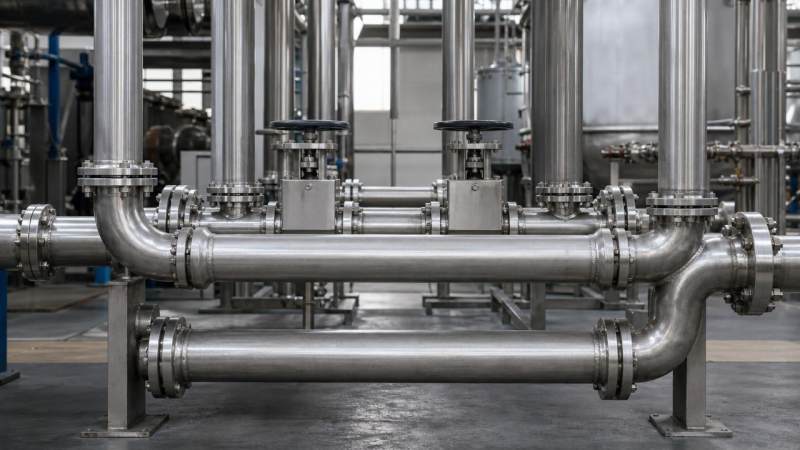
In many industrial systems, 2 stainless steel pipe is a practical option for conveying water, steam, chemicals, compressed air, and process fluids under pressure. It is widely used because stainless steel combines strength, corrosion resistance, and stable performance across a broad temperature range.
However, operators should not assume that every 2 inch stainless pipe performs the same way. Pressure suitability depends on grade, schedule, manufacturing standard, welding quality, and end-use conditions. A pipe that works well in a low-corrosion water line may not be suitable for hot chloride media or cyclic pressure duty.
For users in steel-related construction, fabrication, and industrial projects, the key question is not simply whether 2 stainless steel pipe can handle pressure. The real question is whether the selected specification matches the design pressure, service temperature, flow medium, and maintenance expectations of the system.
- Use it when corrosion resistance is important and carbon steel would need frequent coating or replacement.
- Use it when cleanliness matters, such as food, water treatment, or certain process lines.
- Use it when the operating environment includes moisture, outdoor exposure, or moderate chemical contact.
- Avoid making a decision based only on outside diameter; wall thickness and standard are critical.
Why operators often prefer stainless steel in pressure service
Compared with ordinary carbon steel, stainless steel pipe offers better resistance to rust, scaling, and many corrosive media. That can reduce downtime, lower maintenance frequency, and improve long-term line reliability. For plants where leakage or contamination creates safety or quality risks, this advantage matters.
At the same time, stainless steel is not automatically the lowest-cost answer. Material price is higher, and some grades require more careful welding and fabrication. That is why practical selection must balance pressure, corrosion, installation method, and full-life cost.
What determines the pressure rating of 2 stainless steel pipe?
Pressure capacity is controlled by more than pipe size. For 2 stainless steel pipe, the most important factors are wall thickness, steel grade, temperature, and manufacturing standard. In real projects, buyers often focus on nominal size first, but engineers and operators know that schedule and service condition decide performance.
The table below summarizes the main factors that affect whether 2 stainless steel pipe can be safely used in pressure applications.
This comparison shows why a simple material description is never enough. A 2 stainless steel pipe for pressure applications must be evaluated as a complete specification, not just as a nominal product name.
Does schedule matter more than diameter?
For pressure service, schedule often matters more than the fact that the pipe is 2 inch. Two pipes with the same diameter can have very different pressure capabilities if one is Schedule 10 and the other is Schedule 80. Thicker wall sections offer greater resistance to internal pressure and mechanical damage.
That said, thicker is not always better. Heavier pipe increases cost, weight, and fabrication difficulty. The best choice is the schedule that safely meets design conditions without unnecessary overspecification.
Which grades and standards are commonly used?
In pressure piping, common stainless grades include 304, 304L, 316, and 316L. Grade selection depends on the medium and environment. For example, 304 may be suitable for many general-purpose services, while 316 or 316L is often chosen when chloride exposure or stronger corrosion resistance is needed.
Standards also matter. Buyers should align pipe selection with the applicable ASTM, EN, JIS, or GB requirement used by the project. A reliable supplier helps confirm not only size and thickness, but also chemical composition, mechanical properties, dimensional tolerance, and inspection documents.
- 304 or 304L: often selected for general industrial use, water service, and moderate corrosion environments.
- 316 or 316L: commonly preferred for coastal, chloride-containing, or more aggressive chemical conditions.
- Low-carbon L grades: useful when welding is involved and reduced sensitization risk is desired.
How a structural steel supplier adds value beyond raw material
Pressure projects often involve more than one steel component. While pipe may be the pressure-carrying element, the total system also needs structural supports, equipment frames, brackets, and secondary steel members. Working with a supplier that understands both piping-related requirements and structural steel integration can reduce coordination risk.
Hongteng Fengda supports global industrial and construction buyers with structural steel products, OEM processing, and specification-based supply aligned with ASTM, EN, JIS, and GB standards. This is especially useful when a project includes both pressure line support systems and steel building components under one procurement plan.
For example, in workshops, utility buildings, and manufacturing facilities, support framing may use Metal C Beam for purlins, wall beams, lightweight trusses, brackets, and light industrial structural members. Available materials include Q195, Q235, Q345, A36, SS400, and s235jr, with galvanized coated surfaces, perforated options, thickness from 1mm to 12.mm, and processing services such as bending, welding, punching, decoiling, and cutting.
This kind of insertive product support is valuable for buyers who need coordinated delivery of pipe-adjacent steel items. Instead of sourcing line supports, wall beams, and light structural members separately, they can simplify procurement and reduce schedule pressure.
How does 2 stainless steel pipe compare with other pipe options?
Operators often compare stainless steel with carbon steel, galvanized steel, or alloy alternatives. The right choice depends on fluid, pressure, expected service life, and maintenance tolerance. The table below gives a practical comparison for industrial decision-making.
This comparison helps explain why 2 stainless steel pipe is often selected when long-term corrosion performance and stable pressure operation are more important than the lowest initial material cost.
What about seamless vs welded pipe?
Both seamless and welded stainless pipes can be used in pressure service if they meet the required standard and inspection criteria. Some projects specify seamless for higher pressure, cyclic loading, or conservative engineering preference. Others accept welded pipe for cost efficiency and broad availability.
The critical point is not to generalize. Always check project code, design requirement, and documentation expectations before purchasing.
How should buyers select 2 stainless steel pipe for real operating conditions?
A good procurement decision starts with the service condition, not the catalog. Operators and buyers should define pressure, temperature, fluid type, installation environment, and joining method first. This reduces the risk of buying pipe that meets the size requirement but fails in actual service.
The following table offers a practical selection checklist for 2 stainless steel pipe in pressure applications.
For many buyers, the biggest mistake is purchasing on price alone. A lower-cost pipe can become a higher-cost problem if it causes corrosion, leakage, downtime, or rework.
A simple decision process for operators and purchasers
- Define the medium, pressure range, and design temperature.
- Choose the stainless grade based on corrosion risk and fabrication needs.
- Confirm the required schedule, pipe standard, and inspection level.
- Review installation conditions, including support, vibration, and outdoor exposure.
- Request documentation and delivery details before finalizing the order.
What mistakes make 2 stainless steel pipe fail in pressure systems?
Most failures do not come from the words “stainless steel” on the purchase order. They come from mismatch between pipe specification and operating reality. This is especially common in fast-track projects where procurement teams receive incomplete technical input.
- Selecting the wrong grade for chloride-containing water, washdown environments, or coastal service.
- Using an insufficient wall thickness because only nominal size was reviewed.
- Ignoring temperature effects on allowable pressure and material performance.
- Poor welding practice, contamination during fabrication, or inadequate passivation.
- Assuming stainless steel cannot corrode under any condition.
For operators, early warning signs include surface staining, pitting near welds, leakage at connections, vibration damage, or repeated maintenance in one service area. These signs usually point to a specification or installation issue that should be corrected before wider failure occurs.
FAQ about 2 stainless steel pipe for pressure applications
Can 2 stainless steel pipe handle high pressure?
Yes, it can handle high pressure when the correct grade, schedule, and standard are selected. The exact limit depends on wall thickness, temperature, and code requirements. Always verify the design data instead of assuming all 2 inch stainless pipes have the same pressure capacity.
Is 304 or 316 better for pressure service?
Pressure itself does not automatically make 316 better than 304. The better choice depends on corrosion conditions. If the system contains chlorides or operates in a more aggressive environment, 316 or 316L is often preferred. For many general services, 304 or 304L may be sufficient.
Should I choose seamless or welded 2 stainless steel pipe?
Choose based on project specification, inspection requirements, and budget. Seamless pipe is often selected for conservative or higher-demand pressure systems. Welded pipe can also be acceptable when it meets the relevant standard and quality requirements.
What should I ask a supplier before ordering?
Ask about grade, schedule, standard, dimensional tolerance, documentation, testing availability, and lead time. If the project also requires structural supports or fabricated steel items, ask whether the supplier can coordinate those components within the same delivery plan.
Why choose us for steel supply and project support?
If you are evaluating 2 stainless steel pipe for pressure applications, you also need a supplier who understands how steel products perform in real industrial and construction environments. Hongteng Fengda serves global buyers with structural steel products, customized processing, and specification-based supply support for projects that demand reliable quality and stable lead times.
Our strength is practical coordination. We help customers confirm applicable standards, review material options, support OEM and customized structural components, and align supply with project schedules across North America, Europe, the Middle East, and Southeast Asia. For buyers managing both pressure systems and related steel structures, this reduces sourcing complexity and procurement risk.
You can contact us for parameter confirmation, steel product selection, delivery cycle discussion, customized support components, processing services, certification-related requirements, sample support, and quotation communication. If your project includes pressure line supports, workshop framing, purlins, wall beams, or light structural members, we can help you combine technical practicality with efficient sourcing.
Please give us a message


Please enter what you want to find