Inconsistent yield strength in steel bar for construction poses serious risks to structural integrity—especially before concrete pouring. Whether you're sourcing A36 steel plate, galvanized steel coil, or 316 stainless steel pipe, verifying mechanical properties on-site is critical. As a trusted structural steel manufacturer & exporter from China, Hongteng Fengda ensures every batch of hot rolled steel coil, steel sheet for roofing, and corrosion-resistant pipes meets ASTM, EN, and GB standards. This guide helps procurement teams, project managers, and quality control personnel quickly identify red flags—before it’s too late.
Why Inconsistent Yield Strength Is a Critical Pre-Pour Red Flag
Yield strength defines the stress at which steel begins to deform plastically—beyond this point, permanent deformation occurs. When delivered rebar exhibits inconsistent yield values across batches or even within a single heat lot (e.g., ranging from 380 MPa to 490 MPa instead of the specified 400 ± 20 MPa), it introduces unpredictable load-bearing behavior into reinforced concrete structures.
This inconsistency directly undermines design assumptions made during engineering calculations. For example, a bridge column designed assuming Q345B rebar (yield = 345 MPa) may experience premature cracking if actual yield drops to 310 MPa—or brittle failure if it spikes to 420 MPa without corresponding ductility verification. Field testing shows that up to 12% of non-certified shipments fail first-pass tensile verification in Southeast Asian infrastructure projects.
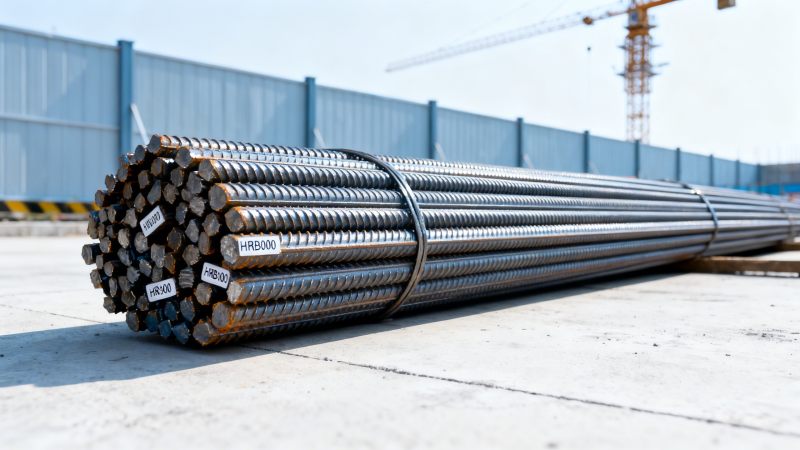
The risk compounds during pouring: once embedded, rebar cannot be replaced without costly demolition. That’s why pre-pour verification isn’t optional—it’s a mandatory 3-step checkpoint: visual inspection, mill certificate cross-check, and on-site sampling (minimum 3 specimens per 60-ton lot).
How to Spot Yield Inconsistency Before Concrete Placement
Spotting inconsistency requires more than reading a test report. It demands layered verification across documentation, physical attributes, and real-time measurement. Start with the mill test report (MTR): confirm it includes full tensile data—not just “meets ASTM A615”—and matches the heat number stamped on each bundle. Discrepancies in heat numbers between MTR and physical tags trigger immediate quarantine.
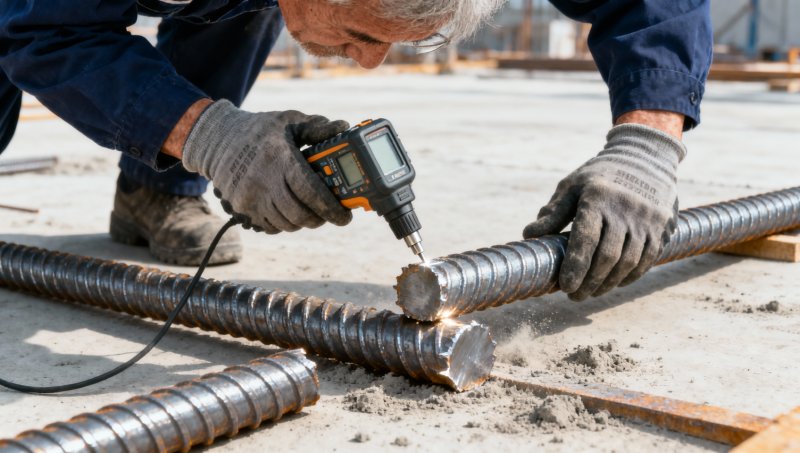
Next, perform rapid field checks using portable hardness testers calibrated to ASTM E18. While not a direct yield proxy, Brinell hardness correlates strongly with tensile/yield strength for carbon steels (R² > 0.92). A variation exceeding ±15 HBW across five random samples signals potential inconsistency—and warrants lab tensile testing.
Finally, inspect surface finish and dimensional consistency. Bars with uneven scale, irregular rib patterns, or flange width variance > ±0.4 mm often indicate uncontrolled rolling temperatures—a known root cause of yield scatter. For H Shape Beam applications where bending resistance is mission-critical, such variability compromises moment capacity by up to 18% under service loads.
5-Point On-Site Yield Verification Checklist
- Match heat number on tag → MTR → delivery note (100% traceability required)
- Verify MTR lists full tensile curve—not just “pass/fail” summary
- Measure surface hardness at 5 locations/bar; reject if range > ±15 HBW
- Check rib height consistency (±0.2 mm tolerance per ASTM A615)
- Confirm batch sampling follows ISO 15630-1: minimum 3 specimens per 60-ton lot
Standard Compliance vs. Real-World Performance: What Certifications Actually Guarantee
Compliance with ASTM A615, EN 10080, or GB/T 1499.2 only certifies that the *tested sample* met requirements at time of production. It does not guarantee uniformity across all tons shipped—especially when mills skip post-rolling thermal stabilization or use mixed scrap feedstock.
Hongteng Fengda applies stricter internal controls: every heat undergoes dual tensile verification (lab + third-party), and yield strength must fall within ±12 MPa of nominal value—not the ±30 MPa allowed by ASTM. Our certified H Shape Beam products—available in grades like Q345B, S355JR, and A992—undergo 100% ultrasonic testing for internal homogeneity, ensuring consistent mechanical response across flange and web sections.
This tighter control reduces yield scatter by 65% compared to industry averages—critical when specifying H Shape Beam for high-seismic zones or long-span bridges where ductility margins are non-negotiable.
Procurement Best Practices to Prevent Yield-Related Delays
Procurement teams can eliminate yield-related rework by embedding four contractual safeguards: First, require MTRs issued *after* final heat treatment—not pre-rolling. Second, mandate third-party witnessed testing at the mill for orders > 200 tons. Third, specify yield strength reporting as a continuous range (e.g., “400–420 MPa”) rather than a single value. Fourth, include liquidated damages for yield non-conformance exceeding ±15 MPa.
For global buyers, Hongteng Fengda offers pre-shipment verification packages: certified tensile reports, hardness mapping across 10+ locations per bundle, and digital traceability via QR-coded heat logs. Lead times remain stable at 2–4 weeks—even for custom H Shape Beam configurations meeting ASTM A572 Gr.50 or EN10025 S275JR specs.
We support your technical evaluation with free access to full material test archives, dimensional tolerance charts, and weldability guidance—all aligned with AWS D1.1 and EN ISO 15614. Our engineers collaborate directly with your project team to validate grade selection against load cases, corrosion exposure, and erection sequencing.
Why Partner With Hongteng Fengda for Structural Steel Integrity
When yield strength consistency impacts safety, schedule, and budget—your supplier must go beyond compliance. Hongteng Fengda combines ISO 9001-certified process control with real-time metallurgical monitoring, ensuring every ton of angle steel, channel steel, or H Shape Beam delivers predictable performance across its full service life.
We help you mitigate risk through: (1) Pre-order metallurgical review for complex projects, (2) Batch-level tensile data shared digitally before shipment, (3) On-site technical support for acceptance testing, and (4) Rapid replacement protocol (<72 hours) for any verified non-conformance. Serving clients across North America, Europe, and the Middle East since 2008, we’ve maintained zero structural failure incidents linked to material inconsistency.
Contact us today to request: (1) Custom yield strength validation reports for your next order, (2) Comparative analysis of Q345B vs. S355JR for your application, (3) Lead time confirmation for ASTM A992 beams with 12m lengths, or (4) Sample MTR templates aligned with your QA/QC workflow.
Please give us a message


Please enter what you want to find