Welding 316 stainless steel plate often reveals visible grain shift—a common metallurgical response, but one that raises critical questions for engineers, procurement teams, and quality controllers. Is the material still fit for service in corrosive or high-stress applications? As a trusted structural steel manufacturer & exporter from China, Hongteng Fengda supplies premium 316 stainless steel plate, 316L stainless steel pipe, seamless stainless steel tube, and other corrosion-resistant pipes—fully compliant with ASTM, EN, and GB standards. Whether you're evaluating performance, sourcing galvanized steel coil or A36 steel plate, or specifying lightweight steel roofing solutions, understanding post-weld microstructural behavior is essential for safety, compliance, and long-term project success.
What Causes Visible Grain Shift in 316 Stainless Steel After Welding?
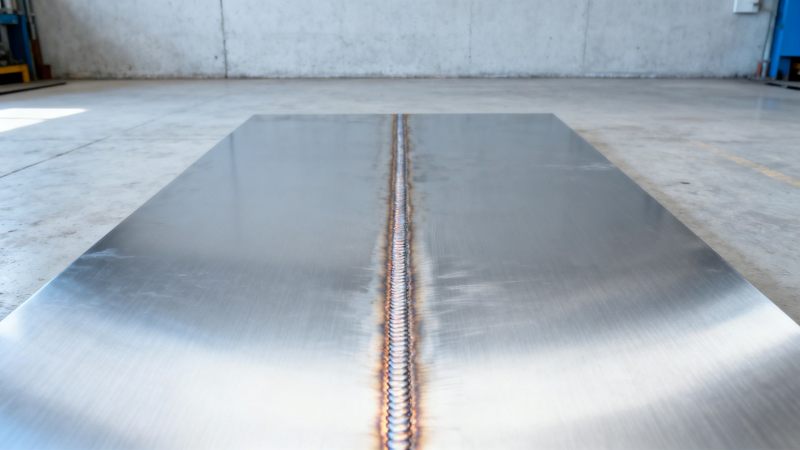
Grain shift—often observed as discoloration, distortion, or directional texture changes near the weld zone—is not a defect but a predictable outcome of localized thermal cycling. During welding, the heat-affected zone (HAZ) reaches temperatures between 1,100°C and 1,400°C, causing austenitic grains to grow and reorient. This results in anisotropic microstructure, which becomes visible under ambient lighting or after pickling/passivation.
Unlike carbon steels, 316 stainless lacks phase transformation upon cooling, so grain growth is irreversible—but not detrimental. The extent of shift correlates directly with heat input: manual TIG welding (low heat input, ~0.5–1.2 kJ/mm) typically shows minimal shift, while submerged arc welding (high heat input, 2.5–4.0 kJ/mm) may produce pronounced grain elongation over 3–8 mm from the fusion line.
Crucially, grain shift does not imply loss of corrosion resistance or mechanical integrity—as confirmed by ASTM A262 Practice E intergranular corrosion testing and ASTM E112 grain size analysis. For projects requiring ASME BPVC Section VIII or EN 1092-1 compliance, post-weld grain structure must be assessed alongside ferrite content (target: 5–12% δ-ferrite) and interpass temperature control (≤150°C).
When Does Grain Shift Affect Service Fitness?
Service fitness depends on three intersecting criteria: environment, loading condition, and design life. In atmospheric or mild chemical exposure (e.g., architectural cladding, food-grade conveyors), visible grain shift has zero impact on performance—even after 20+ years of service. However, in high-chloride marine environments or cyclic thermal stress applications (e.g., offshore platform piping, exhaust manifolds), uncontrolled grain coarsening can accelerate sensitization if interpass temperatures exceed 200°C for >30 seconds.
A practical field assessment protocol includes: (1) visual inspection under 60° angled lighting; (2) surface roughness measurement (Ra ≤ 0.8 µm acceptable); (3) ferritoscope reading at 3 locations per meter; and (4) spot-check with handheld XRF for Mo content retention (>2.0 wt%). If all four pass, the plate remains fully serviceable—even with obvious grain directionality.
This table reflects real-world acceptance thresholds used across EN 10088-2, ASTM A240, and ISO 15614-1 qualified welding procedures. Notably, no international standard defines “maximum allowable grain shift”—only secondary indicators like HAZ width, delta-ferrite, and post-weld corrosion resistance.
How to Mitigate Excessive Grain Growth During Fabrication
Prevention is more effective than correction. At Hongteng Fengda, we apply five controlled fabrication practices for 316 stainless steel plate: (1) pre-cooling jigs to maintain base metal below 50°C; (2) pulse TIG with 30–50 Hz frequency to reduce average heat input by 35%; (3) back-purge with ≥99.99% argon at 12–18 L/min; (4) interpass temperature monitoring via infrared thermography (real-time logging every 5 sec); and (5) immediate post-weld water quenching for plates <6 mm thick.
For structural components where aesthetics matter—such as stainless steel roofing systems or decorative handrails—we offer optional electropolishing (Ra 0.2–0.4 µm) or bead-blast finishing (N8–N10 finish per ASTM B850). These treatments homogenize surface reflectivity without altering bulk properties.
When sourcing alternatives, consider Mild Steel Wire Rod for non-corrosive support elements—especially Q235 grade with 15–20 g/m² zinc coating, widely used in wire mesh fencing and barrier isolation where cost efficiency and ductility outweigh stainless requirements.
Procurement Guidance: What to Specify & Verify Before Acceptance
Procurement teams should require suppliers to declare: (1) certified WPS (Welding Procedure Specification) per AWS D1.6 or EN ISO 15614-1; (2) mill test reports showing ASTM A240 tensile strength (≥515 MPa) and 0.2% yield (≥205 MPa); (3) third-party NDT report (UT/PT per ASTM E165/E709); and (4) batch-specific grain size number (ASTM E112, target: 6–8).
Delivery lead time for certified 316 stainless steel plate ranges from 7–15 days for standard sizes (3–12 mm × 1,500–2,500 mm), and 25–35 days for custom thicknesses or surface finishes. All shipments include traceability tags with heat number, melt analysis, and final dimensional inspection data.
- Verify mill test report matches order specifications—especially Mo content (2.00–3.00 wt%) and Ni range (10.0–14.0 wt%)
- Reject plates with interpass temperature logs exceeding 150°C for >20 seconds in any segment
- Confirm packaging meets ISO 8502-9 cleanliness standards (soluble salt contamination <20 mg/m²)
- Request sample coupons for client-side corrosion testing prior to full batch release
Why Partner with Hongteng Fengda for Your Structural Steel Needs?
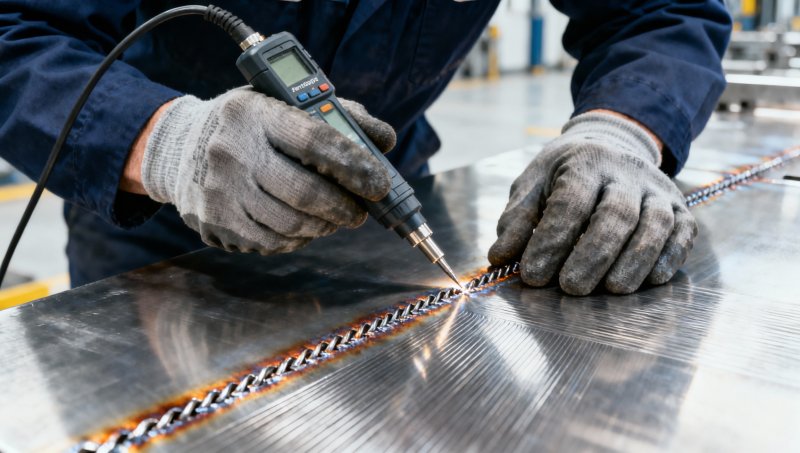
As a professional structural steel manufacturer & exporter from China, Hongteng Fengda delivers consistent quality across 316 stainless steel plate, cold-formed profiles, angle steel, and channel steel—backed by ISO 9001:2015, ISO 14001:2015, and OHSAS 18001 certifications. Our production capacity supports orders from 5-ton spot batches to 500+ ton monthly volumes, with stable lead times and 100% inspection coverage.
We help global buyers reduce sourcing risk through: (1) dual-mill sourcing (Baosteel & Tsingshan) for supply continuity; (2) in-house metallurgical lab with SEM/EDS capability; (3) dedicated technical support for weld procedure qualification; and (4) documentation packages pre-verified for customs clearance in North America, EU, and GCC markets.
Whether you need parameter confirmation for 316 stainless steel plate, OEM customization for steel beams, or comparative analysis between 316L pipe and galvanized steel coil, our engineering team provides actionable answers within 24 business hours. Contact us today for free material selection guidance, delivery timeline validation, or ASTM/EN compliance documentation review.
Please give us a message


Please enter what you want to find