Choosing the right steel rebar for construction affects structural safety, durability, compliance, and project cost. Grade selection mistakes often begin with incomplete specifications, weak standard matching, or poor understanding of service conditions.
When steel rebar for construction is selected only by price, the result may include underperformance, overdesign, delivery delays, or failed inspections. Reliable decisions require attention to strength class, ductility, welding behavior, corrosion exposure, and code requirements.
Understanding steel rebar grades and what they really mean
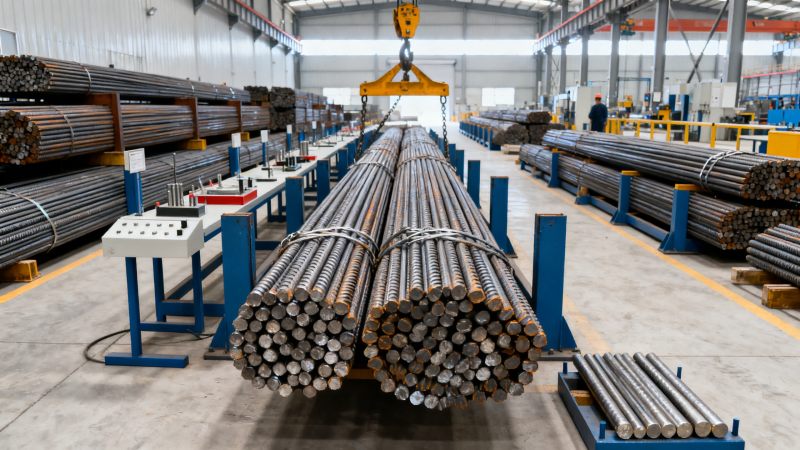
Steel rebar for construction is not a single universal product. Grades differ by yield strength, tensile performance, elongation, chemical composition, and suitability for forming or welding.
Different markets use different standards. Common references include ASTM, EN, JIS, and GB. A grade number alone is never enough without the governing specification.
For example, two rebars with similar nominal strength may behave differently under seismic loading. One may provide better ductility, while another may have stricter chemical limits for weldability.
This is why steel rebar for construction should be evaluated through both mechanical data and project context. Strength is important, but compatibility with design intent matters just as much.
Core grade factors to review
- Yield strength and tensile strength
- Elongation and ductility
- Bend and rebend performance
- Carbon content and weldability
- Surface type and bond behavior with concrete
- Applicable construction code and inspection rules
Why grade selection mistakes are common in current steel projects
Global sourcing has expanded supply options, but it has also increased comparison complexity. Steel rebar for construction may be offered under local grade names that appear equivalent but are not directly interchangeable.
Another common issue is specification copying. A rebar grade used in one region or project gets repeated in another project without checking loading conditions, detailing practice, or local compliance needs.
Lead time pressure also causes shortcuts. Teams may approve available stock instead of the correct grade. This can create hidden risk, especially in foundations, seismic structures, and industrial facilities.
The business impact of wrong steel rebar for construction
Using incorrect steel rebar for construction does not only affect engineering performance. It also changes procurement efficiency, fabrication workflow, and total installed cost.
If the grade is higher than needed, material cost rises and bending may become more difficult. If the grade is lower than needed, section capacity and durability targets may not be achieved.
Documentation problems create another cost center. Missing mill test reports, unclear heat numbers, or incomplete standard references can delay customs clearance, site acceptance, and payment cycles.
Reliable steel suppliers reduce these risks by aligning products with international standards, consistent quality control, and project-specific technical support. This matters across commercial buildings, infrastructure, and industrial fabrication.
In reinforcement work, supporting materials also influence efficiency. For binding, mesh making, packaging, and barrier isolation, Metal Coil Wire can support site and workshop operations.
Made from low carbon steel in Q195 and Q235, it offers wire diameters from 0.25 mm to 5.0 mm, tensile strength of 350 to 550 Mpa, and good ductility for practical handling.
Its bright surface, corrosion resistance, and flexible coil packaging make it useful where efficient tying, wire mesh production, or general steel processing support is required.
Typical grade selection mistakes in different project scenarios
Steel rebar for construction should match the structural system, exposure level, and execution method. The most frequent mistakes appear in a few recurring scenarios.
1. Seismic structures
A high-strength grade is chosen without confirming ductility requirements. In seismic zones, controlled deformation capacity is essential. Strength alone is not enough.
2. Marine or humid environments
Standard carbon steel rebar is selected without evaluating corrosion risk. Protective systems, coating choices, or alternative reinforcement strategies may be necessary.
3. Heavy industrial foundations
The specified steel rebar for construction is copied from light building designs. Industrial loads, vibration, and anchor interactions may demand different performance margins.
4. Fast-track commercial projects
Available inventory is substituted without engineering review. This may affect bending schedules, lap lengths, welding procedures, or inspection acceptance.
Practical steps to select steel rebar for construction correctly
A disciplined review process helps avoid costly errors. Steel rebar for construction should be verified through technical, commercial, and execution filters before ordering.
- Identify the governing code and standard for the project location.
- Match required strength with ductility and bend performance.
- Check whether welding is involved and confirm chemistry limits.
- Review environmental exposure, including moisture, chlorides, and chemicals.
- Verify mill test certificates and traceability details before shipment.
- Confirm dimensional tolerance, rib pattern, and bundling requirements.
- Avoid substitutions unless written technical approval is completed.
Questions worth asking before confirmation
- Is the grade equivalent by standard, not only by nominal strength?
- Does the project require special seismic or corrosion performance?
- Will fabrication involve bending, rebending, or welding?
- Are delivery documents complete for inspection and customs clearance?
Moving from grade confusion to reliable supply decisions
Steel rebar for construction should be selected as a performance-based material, not a simple commodity. Correct grade decisions improve safety, reduce claims, and support stable project execution.
Working with an experienced structural steel manufacturer helps connect standards, material quality, and real application needs. This is especially valuable for international projects with strict documentation requirements.
Hongteng Fengda, a structural steel manufacturer and exporter from China, supplies standard and customized steel solutions for global construction and industrial use, supported by modern production and strict quality control.
If current specifications involve uncertain grade matching, cross-standard review, or supporting steel product selection, the next practical step is a technical comparison before placing the final order.
Please give us a message


Please enter what you want to find