Many homeowners ask whether galvanized pipe for water supply is still a safe and durable choice for modern plumbing. While it was once widely used for its corrosion resistance and strength, its long-term performance depends on water quality, pipe age, and maintenance conditions. Understanding the pros, risks, and lifespan of galvanized pipes can help you make a smarter decision for your home water system.
What does galvanized pipe for water supply really mean for homeowners?
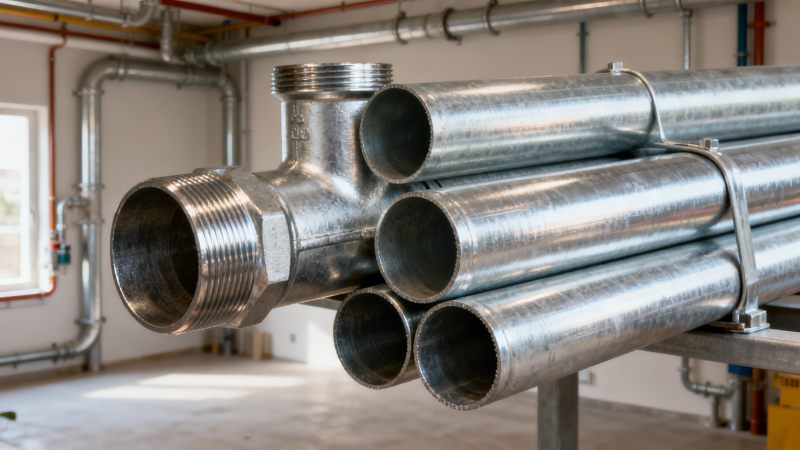
Galvanized pipe for water supply usually refers to steel pipe coated with zinc to slow rusting on the pipe surface. For many decades, this material was common in residential plumbing because steel offered mechanical strength and the zinc layer provided a practical barrier against moisture and oxygen.
The key issue is age. In older homes, galvanized water lines may have been in service for 30 to 70 years. Over time, the zinc coating wears down, internal scaling builds up, and corrosion can start from the inside. That means a pipe may still look solid outside while water flow and water quality are already declining inside.
For end users, the question is not only whether galvanized pipe for water supply was safe when installed. The more useful question is whether the existing pipe condition still matches your pressure, hygiene, and lifespan expectations today.
- Zinc coating helps delay atmospheric and surface corrosion.
- Steel structure gives good impact resistance and mechanical strength.
- Long service life is possible, but it depends heavily on water chemistry and maintenance.
- Internal rust and mineral buildup are the main aging risks in domestic plumbing.
Is galvanized pipe for water supply safe today or should it be replaced?
When it can still be considered reasonably safe
If the piping is not too old, the internal diameter is still open, and water tests show no concerning contamination from corrosion products, galvanized pipe for water supply may continue to function acceptably for a period of time. This is more likely in systems with balanced pH, low chloride exposure, and stable maintenance conditions.
When replacement becomes the wiser choice
Replacement is often recommended when there is brown water, frequent leaks, low flow at fixtures, visible rust at joints, or major renovation work already underway. In these cases, keeping old galvanized lines may only delay a larger repair bill and increase the risk of water interruption.
Homeowners should also know that safety is not only about structural failure. It is also about consistent flow, predictable maintenance, and the chance of corrosion particles affecting water clarity or taste.
How does galvanized pipe compare with other water supply materials?
Before choosing repairs or a full upgrade, it helps to compare galvanized pipe for water supply with common alternatives used in homes. The table below focuses on practical decision points rather than generic claims.
This comparison shows why galvanized pipe for water supply is no longer the automatic first choice in many homes. Yet steel remains highly relevant in broader building systems, especially where strength, fabrication control, and corrosion-protected components matter.
What affects durability most in a galvanized water system?
Water chemistry and internal corrosion
Low or high pH, dissolved oxygen, chlorides, and mineral content can all influence zinc coating loss and steel exposure. Once the protective layer degrades, rust can form and reduce the effective inside diameter of the pipe.
Pipe age and wall condition
Older systems naturally face more risk. Threaded joints may weaken first, and areas with stagnant flow can trap sediment. A pipe installed decades ago under acceptable conditions may still need replacement because age alone changes the reliability equation.
Installation quality and maintenance history
Durability improves when pipe sizing is correct, joints are properly made, and pressure fluctuations are controlled. Homes with repeated repairs, inconsistent water treatment, or poor drainage around service lines usually see faster deterioration.
- Check for pressure drop between fixtures.
- Look for discolored water after periods of non-use.
- Inspect exposed joints for rust staining or seepage.
- Request a basic water quality review during renovation planning.
What should homeowners check before buying steel-based building products?
Even if you decide not to use galvanized pipe for water supply in new plumbing, galvanized steel products still play a major role in residential and light commercial construction. Roofing, ducting, framing supports, coverings, equipment housings, and customized fabricated parts often require protected steel with reliable coating consistency.
In these situations, material control matters. For example, Steel Plate Galvanized can be selected for construction and industrial uses where resistance to atmospheric corrosion, good processing performance, and standard-based supply are important. Available grades may include DX51D, DX52D, DX53D, SGCC, S220GD, S250GD, S350GD, and others, with thickness from 0.12mm to 6.00mm, width from 600mm to 1500mm, and zinc coating ranges such as 60-275g/m² for hot galvanizing.
For homeowners, this matters because many visible or hidden metal parts around a house depend on the same corrosion-control logic that once made galvanized pipe for water supply attractive. The difference is that modern selection should be application-specific rather than one-material-fits-all.
How to evaluate product specifications and standards without overbuying
When comparing galvanized steel materials for home-related projects, buyers should focus on measurable factors. The table below can help connect technical data with practical decisions.
This approach prevents a common mistake: paying for a grade, thickness, or coating that your application does not truly need. It also helps you avoid the opposite problem, which is buying under-specified material that corrodes too quickly or complicates fabrication.
What are the most practical signs that galvanized pipe for water supply is failing?
Homeowners often discover problems gradually rather than through a dramatic burst pipe. Warning signs usually appear in water flow, appearance, and maintenance frequency before full system failure happens.
- Water pressure drops in showers, sinks, or upper floors because mineral scale narrows the pipe bore.
- Rust-colored water appears, especially after the system has been idle for several hours.
- Leaks begin at threaded fittings or at areas where moisture remains trapped.
- Repeated small plumbing repairs start costing more than a planned replacement strategy.
- Home renovation reveals heavily corroded cut sections or flaking internal deposits.
If two or more of these issues are already present, keeping galvanized pipe for water supply may no longer be the most economical option. A staged replacement plan often reduces disruption while giving better long-term control of costs.
Cost, replacement timing, and decision strategy for homeowners
The cheapest immediate decision is not always the lowest total cost. For older galvanized pipe for water supply, patch repairs can look affordable at first but become expensive when labor, wall opening, repeated visits, and water damage risk are added together.
A better strategy is to divide the decision into three levels:
- Keep and monitor if the system is stable, flow is acceptable, and inspection shows limited aging.
- Partially replace if one branch or floor has severe corrosion while the rest remains serviceable for the short term.
- Fully replace if the home is old, renovation is planned, or performance problems are recurring across the system.
This framework helps homeowners align plumbing choices with budget timing. It also applies to other steel components in a building, where replacement can be prioritized based on corrosion exposure, fabrication complexity, and expected service life.
FAQ: common questions about galvanized pipe for water supply
How long does galvanized pipe for water supply usually last?
Service life varies widely. In some homes it may perform for several decades, while in others water quality and maintenance conditions shorten its life. Age alone is not enough for a final judgment, but systems beyond mid-life should be inspected more carefully for internal restriction and corrosion.
Is rusty water always a sign that replacement is necessary?
Not always, but it should never be ignored. Temporary discoloration may come from localized corrosion or sediment disturbance, yet recurring brown or yellow water often signals internal pipe deterioration. A plumber or inspector can help verify whether cleaning, targeted repair, or full replacement makes more sense.
Can galvanized pipe still be used in modern construction?
Galvanized steel remains useful in many building applications, but not every application should use the same product. Structural members, formed steel components, covers, brackets, panels, and outdoor metalwork can all benefit from galvanized materials when standards, coating mass, and environmental exposure are matched correctly.
What should I ask a supplier when buying galvanized steel products?
Ask about grade, coating type, zinc layer range, thickness tolerance, fabrication suitability, applicable standards, and delivery lead time. If the material supports a home project, also confirm whether custom cutting, OEM processing, or specification matching is available before ordering.
Why informed sourcing matters beyond plumbing
For homeowners, the lesson from galvanized pipe for water supply is simple: material choice should always follow service conditions, not habit. A steel product that performs well in one application may be less suitable in another if corrosion exposure, fabrication method, or life-cycle expectations are different.
That is where a capable structural steel manufacturer adds value. Hongteng Fengda supplies structural steel products and customized solutions for construction, industrial, and manufacturing projects, with production control aligned to common international standards such as ASTM, EN, JIS, and GB. This helps buyers compare options more clearly, reduce sourcing uncertainty, and choose specifications that fit the project rather than overspend on unnecessary material.
Why choose us for steel product consultation and supply planning
If you are evaluating galvanized pipe for water supply, replacing aging metal systems, or selecting galvanized steel for residential or light industrial use, practical guidance matters as much as price. Hongteng Fengda can support buyers with product selection logic rooted in manufacturing experience, standard-based supply, and customization capability.
- Confirm suitable steel grades and coating ranges for your environment and application.
- Review thickness, width, length, and processing requirements before order placement.
- Discuss delivery schedules, export supply arrangements, and project timing.
- Request support for customized structural steel components or OEM solutions.
- Verify standard references, sample needs, and quotation details based on your actual use case.
If you want to compare galvanized materials, clarify technical parameters, or plan a cost-conscious replacement and sourcing strategy, contact us with your drawings, size requirements, application scenario, and target standard. That makes it easier to receive a focused recommendation, realistic lead-time guidance, and a quotation that matches your project needs.
Please give us a message


Please enter what you want to find