Indoor wiring standards are raising the bar for electroplated steel conduit
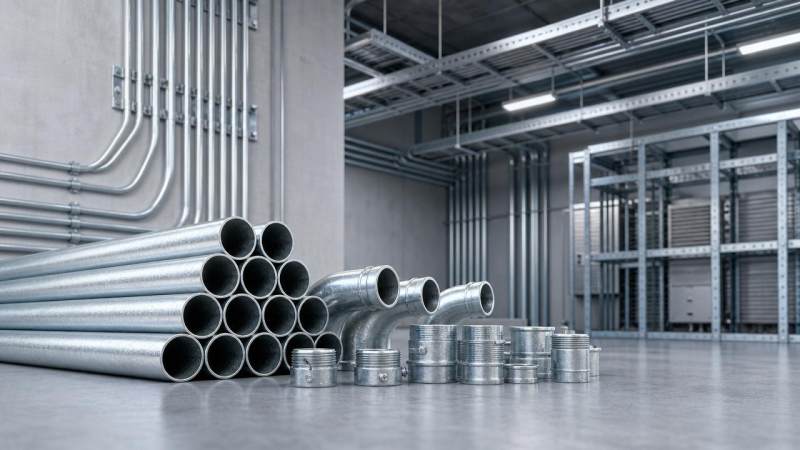
Electroplated steel conduit is widely chosen for indoor cable protection in commercial, industrial, and utility buildings.
Its smooth zinc-coated surface supports clean installation, practical corrosion resistance, and a professional finished appearance.
At the same time, indoor electrical environments are changing.
Projects now demand faster installation, longer service life, better safety control, and stronger compliance with international construction standards.
Because of that shift, electroplated steel conduit is no longer selected only for basic protection.
It is evaluated by finish quality, indoor corrosion behavior, grounding continuity, bend performance, and compatibility with fittings.
This indoor use guide explains where electroplated steel conduit performs best, what limits matter, and how to use it effectively.
A clear trend is emerging: indoor projects prefer cleaner and easier steel conduit systems
Modern indoor installations increasingly favor conduit systems that balance protection, speed, and appearance.
In many dry interior spaces, electroplated steel conduit fits that direction well.
It offers a bright finish, stable dimensional control, and convenient threading or bending for common routing tasks.
This trend is visible in office buildings, shopping centers, warehouses, workshops, schools, and equipment rooms.
Design teams also pay closer attention to exposed indoor systems.
When conduit remains visible, the surface condition of electroplated steel conduit becomes part of the installation quality standard.
However, the same trend creates stricter selection discipline.
Users must separate dry indoor use from damp, corrosive, or chemically active environments.
Why this shift is happening
Performance advantages matter most in dry and controlled indoor environments
Electroplated steel conduit performs best where moisture, salt, and aggressive chemicals are limited.
Typical indoor areas include ceilings, partition walls, utility shafts, retail interiors, machine rooms, and protected factory spaces.
Its steel body provides mechanical protection against impact and cable compression.
The electroplated zinc layer adds moderate corrosion resistance for indoor exposure.
Another practical benefit is installation consistency.
A uniform surface helps fittings seat correctly and supports smoother conduit runs.
For many interior projects, electroplated steel conduit also supports reliable grounding continuity when installed to code.
Best indoor use cases
- Office and commercial branch circuit routing
- Indoor lighting systems and switch circuits
- Equipment room cable protection
- Warehouse power distribution in dry zones
- Exposed indoor runs requiring neat visual presentation
The main limit is not strength but environmental exposure
A common mistake is treating electroplated steel conduit as universal for all conditions.
That assumption can shorten service life and increase maintenance risk.
The plated layer is suitable for general indoor protection, but not for every corrosive setting.
Damp basements, washdown spaces, chemical rooms, coastal facilities, and outdoor transitions often require stronger protection systems.
Scratches, poor storage, or rough cutting can also damage the coating.
Once the surface is compromised, localized rust may develop faster.
Conditions that require caution
- Persistent condensation or dripping water
- Acidic, alkaline, or solvent-rich air
- Food or process areas with frequent washdown
- Outdoor sections connected directly to indoor runs
- Areas with abrasive dust and repeated surface contact
Material coordination across steel systems is becoming more important
Indoor electrical protection does not exist separately from the wider steel supply chain.
Projects increasingly coordinate conduit, support steel, brackets, and reinforcement materials for quality and scheduling control.
That is why integrated steel sourcing is gaining attention.
For example, some projects also require Wire Rod for building material and industrial fabrication support.
This carbon steel product is available in standards such as ASTM, GB, EN, DIN, and JIS.
Common grades include GB1499.2 HRB400, HRB500, HRB400E, HRB500E, and ASTM A615 Grade 60.
With round shape options, 1-12m length, and excellent formability and weldability, it supports broad structural and manufacturing applications.
This kind of coordinated supply approach can reduce delivery gaps between electrical routing work and steel structure progress.
Installation quality now has greater influence on conduit service life
Even in suitable indoor spaces, poor installation can undermine electroplated steel conduit performance.
Handling and assembly practices should protect both the steel body and the plated finish.
Bending should follow the correct radius to avoid flattening or cracking.
Cut ends should be reamed cleanly to prevent cable damage.
Support spacing should be consistent so conduit runs stay aligned and mechanically stable.
Compatible couplings, locknuts, bushings, and boxes are equally important.
Key points to watch during installation
- Store conduit indoors and off wet floors
- Avoid dragging bundles across rough concrete
- Protect threads and coating during cutting
- Verify grounding continuity at joints
- Separate dry indoor runs from damp transition zones
- Inspect scratches, dents, and loose fittings before energizing
Selection decisions should be based on environment, code, and lifecycle expectations
Choosing electroplated steel conduit should start with a realistic site assessment.
The right question is not only price or availability.
The better question is whether the conduit matches the actual indoor exposure level and maintenance expectation.
The next practical step is better evaluation before installation begins
Indoor electrical projects benefit when conduit decisions are made early and based on actual conditions.
Electroplated steel conduit remains a dependable solution for many dry indoor applications.
Its value is strongest when appearance, moderate corrosion resistance, mechanical protection, and installation efficiency all matter.
The key is disciplined use.
Check environmental exposure, confirm code requirements, protect the coating during handling, and choose compatible fittings.
When these points are controlled, electroplated steel conduit can deliver safe, neat, and durable indoor wiring performance.
If a project also requires coordinated structural steel supply, stable production capacity and standard-compliant materials can simplify execution and reduce sourcing risk.
Please give us a message


Please enter what you want to find