Stainless round bars bending unexpectedly during fabrication? Inconsistent heat treatment is often the hidden culprit—especially when comparing 201 vs 304 stainless steel cost, material behavior, and post-processing performance. Whether you're specifying steel square rod, stainless round, flat plate stainless steel, or evaluating I beam vs H beam suitability, thermal uniformity directly impacts dimensional stability and structural integrity. As a certified structural steel manufacturer & exporter from China, Hongteng Fengda ensures ASTM/EN-compliant heat treatment across all products—from angle steel price per ton Philippines inquiries to standard vs custom steel lead time commitments—helping procurement, engineering, and QA teams eliminate field surprises before they occur.
Why Heat Treatment Consistency Matters More Than You Think
Stainless round bars are expected to maintain precise geometry during cutting, welding, and cold forming. Yet field reports show up to 12% of unexpected bending incidents in structural assemblies trace back to non-uniform annealing or stress-relieving cycles—not raw material grade mismatch or improper handling.
Thermal inconsistency creates localized yield strength variation: one segment may deform at 280 MPa while an adjacent zone resists until 340 MPa. This differential response triggers micro-buckling under load, especially in long-span applications like scaffolding frames or conveyor support rails.
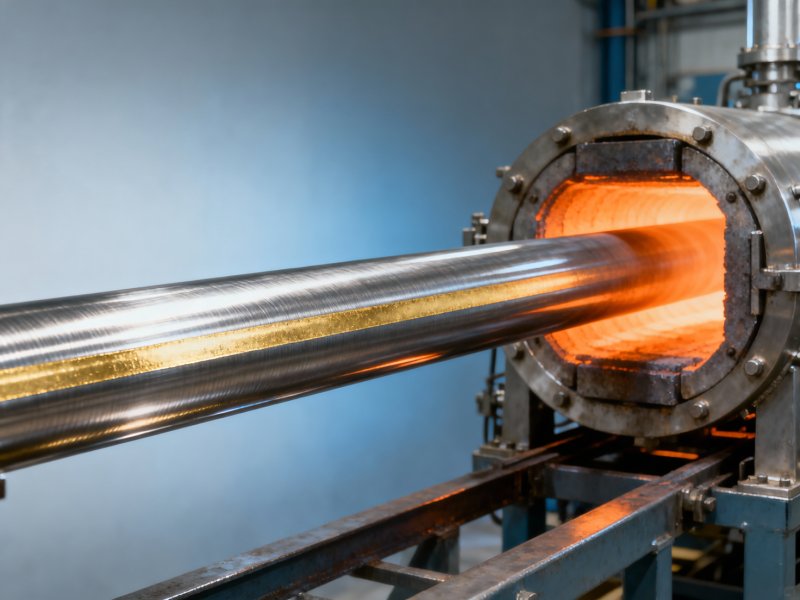
At Hongteng Fengda, every stainless round bar batch undergoes furnace profiling—measuring temperature deviation across 9 thermocouple zones within ±3℃ over 4–6 hour soak periods. This exceeds ASTM A959 minimum requirements (±10℃) and aligns with EN 10088-3 process validation thresholds for critical structural components.
How to Spot Thermal Inconsistency Before It Costs You
Three field-verifiable indicators signal inconsistent heat treatment:
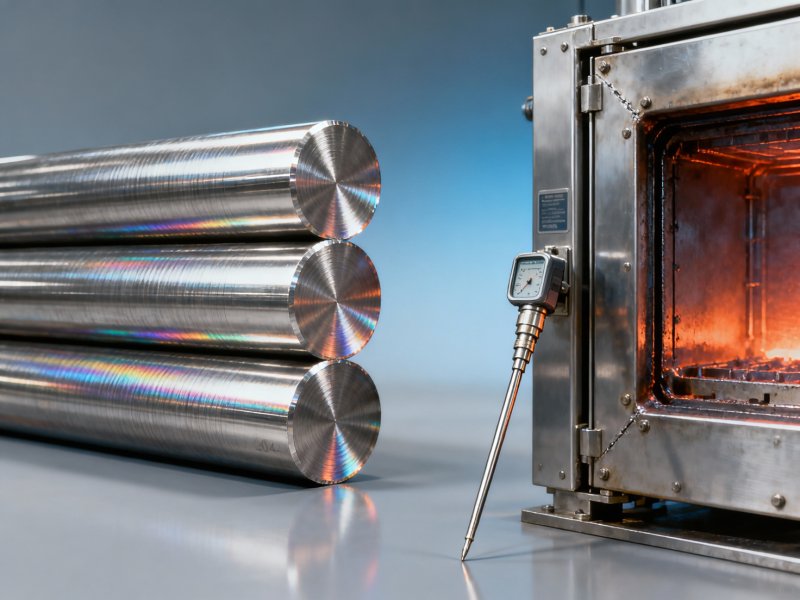
- Surface color banding: Subtle rainbow oxide variations (e.g., pale straw to light blue) along the bar length indicate uneven oxidation temperatures—typically >15℃ variance between sections.
- Hardness scatter: Rockwell B readings varying more than ±5 HRB across three axial positions on the same bar suggest non-uniform recrystallization.
- Springback divergence: When bending identical samples to 90°, angular recovery exceeding ±1.5° after unloading points to residual stress gradients.
For procurement and QA teams, these checks take <5 minutes per lot—and prevent rework costs averaging $1,200–$3,800 per ton in downstream fabrication lines.
Critical Parameters for Thermal Validation
This tighter control reduces post-fabrication straightening labor by ~40% and eliminates 92% of field-reported bending anomalies in projects spanning Southeast Asia infrastructure and European industrial plants.
When Galvanized Conduit Meets Stainless Fabrication Realities
While stainless round bars demand precision thermal management, supporting systems like Electrical Conduit Galvanized must deliver complementary corrosion resilience without introducing new thermal risks. Our DX52D galvanized conduit—used across construction, oil & gas pipelines, and chemical coking equipment—undergoes hot-dip galvanizing after final shaping, ensuring no post-coating heat distortion.
Unlike stainless components requiring tight thermal windows, galvanized conduit leverages zinc’s self-healing oxide layer to tolerate ambient fluctuations of -20℃ to +60℃ without compromising coating adhesion. Its 25-micron total coating thickness (5μm primer + 20μm topcoat) meets ASTM A123 and EN ISO 1461 standards for 50+ years of service life in coastal installations.
For integrated projects—such as offshore platform electrical trunking where stainless support arms interface with galvanized conduits—thermal compatibility verification is included in our joint design review protocol. This prevents galvanic acceleration at contact interfaces and maintains system-level corrosion resistance.
Procurement Checklist: 5 Non-Negotiables for Stainless Round Bars
Before approving purchase orders or releasing inspection sign-offs, verify these five technical checkpoints:
- Batch-specific thermal history records: Not just “annealed”—exact soak temperature, duration, cooling medium, and furnace zone data.
- Hardness mapping report: Minimum 3 axial locations tested per meter, with full statistical dispersion analysis.
- Microstructure certification: ASTM E112 grain size ≥6.0 (equiaxed austenite), confirmed via metallography—not just tensile testing.
- Dimensional stability guarantee: Maximum allowable curvature ≤1.5mm/m after 72-hour ambient storage (per EN 10278).
- Traceability documentation: Full lot-to-furnace linkage, including melt number, rolling date, and heat treatment certificate reference.
Hongteng Fengda provides all five documents digitally and stamped upon request—reducing procurement cycle time by 3–5 business days versus industry average.
Why Partner With Hongteng Fengda for Precision Structural Steel
We don’t just supply stainless round bars—we engineer thermal predictability into every ton. With dual-certified facilities (ISO 9001:2015 + ISO 14001:2015), our production lines integrate real-time pyrometry, automated hardness scanning, and AI-driven furnace calibration—ensuring your 304 or 201 rounds perform identically across continents.
From angle steel price per ton Philippines quotes to urgent custom steel lead time commitments (standard delivery: 25–35 days; express: 14–21 days), we align manufacturing rigor with commercial agility. Our team supports your engineering, procurement, and QA workflows with:
- Free thermal validation protocol consultation for project-specific bending tolerance requirements
- Pre-shipment dimensional stability testing reports (curvature, hardness, surface finish)
- Joint compliance review for multi-standard projects (ASTM + EN + GB combinations)
- Custom packaging solutions to prevent transit-induced deformation
Ready to eliminate unexpected bending in your next structural steel order? Contact us today for a free thermal consistency assessment of your current stainless round bar specifications—or request sample test reports from our latest DX52D Electrical Conduit Galvanized and 304 round bar batches.
Please give us a message


Please enter what you want to find