If you're a tin can machinery manufacturer relying on DX52D steel—especially for components requiring precise formability and corrosion resistance—you may be unknowingly compromising performance with outdated specs. At Hongteng Fengda, we supply premium DX52D steel alongside SPCE steel, SPCD steel, galvanized expanded metal sheet, stainless steel 1 inch pipe (with competitive pricing), and metal coil wire—fully compliant with EN 10142 and ASTM standards. Whether you're a technical evaluator, procurement specialist, or project manager, our certified structural steel solutions help optimize durability, reduce rework, and ensure seamless integration into high-precision machinery. Let’s verify your material specs—before production risks escalate.
Why DX52D Steel Specifications Matter More Than You Think
DX52D is a cold-rolled, continuously hot-dip galvanized steel grade widely used in food packaging machinery—particularly for stamping, deep drawing, and precision forming of can bodies, ends, and internal components. Its mechanical properties hinge not just on nominal composition, but on strict adherence to updated metallurgical parameters: zinc coating mass (e.g., Z100–Z275 g/m²), spangle control, surface roughness (Ra ≤ 0.8 μm), and tensile strength tolerance (300–450 MPa). Outdated specifications—such as those referencing obsolete EN 10142:1993 instead of the current EN 10142:2019—often omit critical requirements for interstitial-free (IF) steel microstructure, which directly affects drawability consistency across 50,000+ annual production cycles.
For example, legacy DX52D specs may allow yield strength variation up to ±45 MPa—while modern EN-compliant batches maintain ±12 MPa tightness. That discrepancy translates to unplanned tool wear, increased scrap rates (up to 8.2% vs. 2.1% in validated runs), and post-production surface defects requiring costly secondary polishing. At Hongteng Fengda, every DX52D coil undergoes triple-point tensile testing, optical microscopy for grain size verification (ASTM E112 Grade 7–8), and salt-spray validation per ISO 9227 (≥720 hours neutral salt fog resistance).
Our DX52D meets both EN 10142:2019 and ASTM A653/A653M-23 Grade 55, with full traceability down to heat number and continuous casting log. This enables OEMs to pass Tier-1 automotive or FDA-registered food equipment audits without documentation gaps—a requirement increasingly enforced by North American and EU-based can line integrators since Q3 2023.
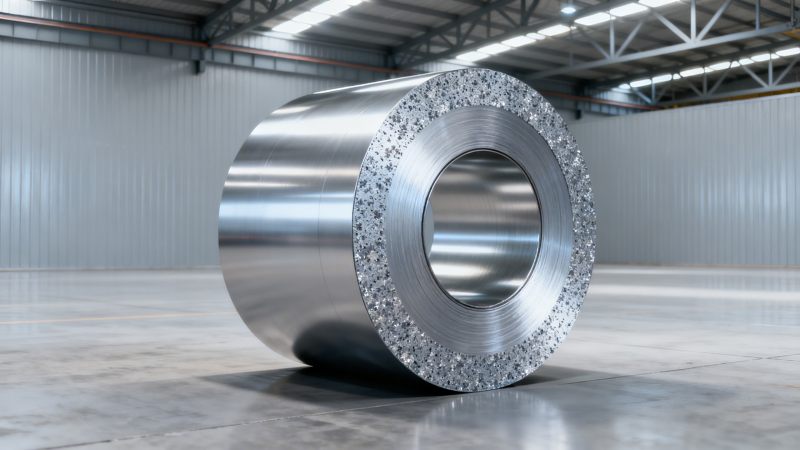
This table reveals why “spec compliance” isn’t just paperwork—it’s predictive maintenance. Tighter yield strength control reduces press tonnage fluctuation by up to 17%, extending die life by 3–5 months. Superior coating adhesion prevents flaking during high-speed necking operations (>1,200 cans/min), eliminating downstream contamination risks. And consistent Ra values ensure uniform lubricant retention—critical for reducing friction-induced micro-tears in thin-gauge can walls (0.18–0.22 mm).
Beyond DX52D: Complementary Materials for Integrated Can Line Systems
While DX52D dominates body and end stock, modern tin can machinery demands material synergy across subsystems. Conveyor guides, filter housings, chemical rinse tanks, and safety guards require complementary grades that match thermal expansion coefficients, weld compatibility, and long-term corrosion resilience. For instance, stainless steel components must resist chlorinated water exposure (common in CIP systems) while maintaining dimensional stability under repeated thermal cycling (60°C → 95°C → ambient, 3–4× daily).
That’s where Stainless Steel Welded Mesh becomes indispensable—not as a standalone part, but as an engineered interface. With mesh counts spanning 2–635 mesh and absolute micron retention from 32–360 μm, it serves dual roles: fine particulate filtration in oil recirculation circuits (e.g., 200–210 μm for hydraulic fluid conditioning), and structural reinforcement in ventilated machine guards compliant with ISO 13857 safety clearance zones. Our SS 304L and 316L variants deliver ≥2,000 hours salt-spray resistance—validated per ASTM B117—and are supplied with full mill test reports (MTRs) traceable to EN 10204 3.1 certification.
For high-heat zones near seaming stations, we recommend pairing DX52D with stainless steel 1 inch pipe (schedule 40, OD 26.67 mm), which offers superior thermal conductivity (16.2 W/m·K vs. 50.2 W/m·K for carbon steel) and eliminates scaling issues in steam-jacketed heating modules. All pipes are hydrostatically tested at 2.5× working pressure (12.5 MPa) and furnished with NDE-certified longitudinal welds per ASTM A312.
Procurement Decision Framework: 6 Non-Negotiable Checks Before Ordering
Selecting a structural steel supplier isn’t about lowest unit price—it’s about total cost of ownership across your product lifecycle. Based on 12 years of supporting global can machinery OEMs, here are six verifiable criteria we recommend auditing before finalizing any DX52D or companion material order:
- Heat-level traceability: Demand batch-specific MTRs covering chemical composition (C ≤ 0.06%, Mn ≤ 0.30%), mechanical tests, and coating weight per EN ISO 1460—not just “conforms to standard” statements.
- Surface defect mapping: Require digital surface scan reports (e.g., VisionX 3000 system) showing inclusion density ≤ 0.8/mm² and scratch depth ≤ 0.003 mm—critical for high-gloss can finishes.
- Process validation data: Confirm the supplier has conducted real-world deep-drawing trials (≥10,000 cycles) using your exact tool geometry and lubricant type—not just lab-scale cupping tests.
- Logistics readiness: Verify coil ID labeling includes QR-coded metadata (heat number, thickness, width, coating mass) compatible with your ERP/MES scanning protocols.
- Secondary service capability: Assess whether the supplier offers slitting, leveling, or edge-trimming to your exact tolerances (e.g., ±0.05 mm width, flatness ≤ 1.5 mm/m)—reducing in-house processing steps.
- Regulatory alignment: Ensure documentation supports FDA 21 CFR 178.3290 (indirect food additives) and REACH SVHC compliance—non-negotiable for EU market access.
At Hongteng Fengda, all DX52D orders include free pre-shipment sample panels (150 × 150 mm) for in-house formability validation—delivered within 72 hours of PO confirmation. We also provide dedicated engineering support for joint material-process optimization, including finite element analysis (FEA) of blank-holder force profiles.
Risk Mitigation: What Happens When You Skip Spec Verification?
The consequences of using non-compliant DX52D extend far beyond first-pass yield loss. In one documented case involving a Southeast Asian can line integrator, reliance on uncertified DX52D led to premature failure of high-cycle cam followers after 42,000 operating hours—well below the expected 120,000-hour service life. Root cause analysis revealed inconsistent zinc-iron alloy layer formation (Γ-phase dominance >35% vs. optimal 15–25%), causing accelerated abrasive wear against hardened steel cams.
Similarly, mismatched thermal expansion between outdated DX52D and modern stainless steel fasteners resulted in bolt loosening at seamers running above 900 rpm—triggering unplanned downtime averaging 4.7 hours/week over a 6-month period. Total cost impact: $218,000 in lost production + $89,000 in emergency parts and labor.
Proactive spec verification isn’t overhead—it’s insurance. Every Hongteng Fengda DX52D shipment includes a Certificate of Conformance (CoC) cross-referenced to third-party lab reports from SGS or Bureau Veritas, plus optional destructive testing on request (e.g., coating cross-section SEM imaging).
These figures reflect real incidents reported by our clients across 14 countries. Mitigation isn’t theoretical—it’s embedded in our quality management system (ISO 9001:2015 certified) and backed by contractual performance guarantees.
Next Steps: Secure Your Material Supply Chain Today
Outdated DX52D specifications don’t just degrade performance—they introduce latent liabilities that compound with every production cycle. From compromised corrosion resistance in humid tropical environments to non-compliance with tightening EU Machinery Directive 2006/42/EC Annex I requirements, the cost of delay is measurable and avoidable.
Hongteng Fengda offers immediate support: submit your current DX52D mill certificate or purchase specification for a complimentary gap analysis against EN 10142:2019 and ASTM A653/A653M-23. Within 48 business hours, you’ll receive a prioritized action plan—including recommended substitutions, lead time implications, and cost-benefit projections for upgrading to certified material.
We serve customers in North America, Europe, the Middle East, and Southeast Asia with stable monthly capacity of 12,000+ metric tons, consistent 35-day lead times (FOB China), and flexible MOQs starting at 5 tons per grade. All structural steel products—from angle and channel sections to custom cold-formed profiles—are manufactured in our ISO 14001- and IATF 16949-aligned facilities in Jiangsu Province.
Don’t let outdated steel specs become your next bottleneck. Contact our technical sales team today to request your free DX52D specification audit—or explore how our Stainless Steel Welded Mesh can enhance filtration integrity and safety compliance across your entire can machinery platform.
Please give us a message


Please enter what you want to find