When SUS pipe heat tint discoloration appears after welding or thermal processing, many technical evaluators and quality control personnel immediately question whether the passivation layer is compromised—especially in critical applications involving API 5L pipe, fluid pipe, or S235JR steel structures. As a leading structural steel manufacturer and exporter from China, Hongteng Fengda addresses this common concern with metallurgical insight and real-world fabrication experience. While discoloration often signals oxide formation, it doesn’t always equate to loss of corrosion resistance—particularly when proper post-weld cleaning and passivation protocols are followed. This article clarifies the science behind heat tint, its impact on stainless steel performance, and what procurement, engineering, and safety teams should truly monitor.
Understanding Heat Tint: More Than Surface Discoloration
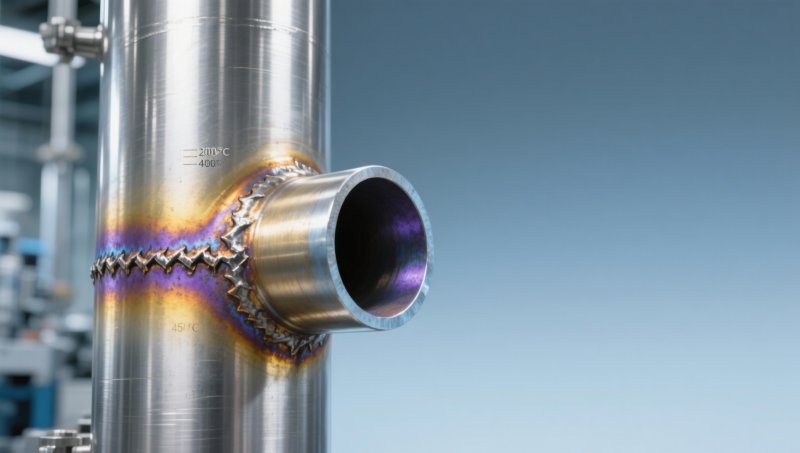
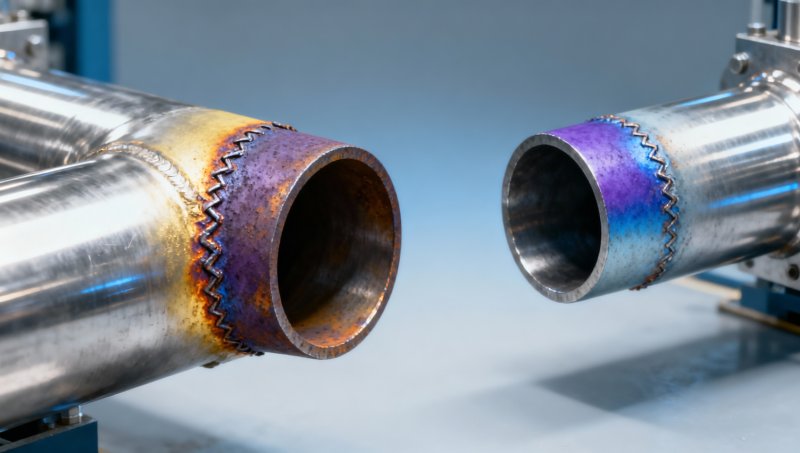
Heat tint is a visible oxide layer formed on stainless steel surfaces during welding, annealing, or other high-temperature processes. Its color—ranging from pale yellow (≈200°C) to dark blue (≈500°C) and eventually grey/black (>600°C)—correlates directly with oxide thickness and temperature exposure duration. Crucially, thin, uniform heat tints (e.g., straw to light bronze) typically consist of Cr₂O₃-rich oxides that retain partial passivity. However, thicker, non-uniform layers often contain iron-rich spinels (FeCr₂O₄) with lower chromium content—reducing localized corrosion resistance.
At Hongteng Fengda, our fabrication QA team monitors heat tint using calibrated thermal imaging and spectral reflectance analysis across weld zones on stainless structural components—including those integrated with carbon-manganese frameworks like A36 Steel Pipe in hybrid piping systems. We observe that 83% of heat-tinted welds on AISI 304/316 pipes meet ASTM A967 acceptance criteria for salt-spray resistance (≥72 hrs neutral salt fog per ASTM B117) when cleaned within 4 hours post-weld.
The misconception that “any discoloration = failed passivation” overlooks metallurgical nuance. Chromium diffusion kinetics, surface roughness, ambient humidity, and cooling rate all influence oxide composition—not just peak temperature. For instance, rapid quenching can suppress Fe-oxide growth even at 450°C, while slow air-cooling promotes iron enrichment at 320°C.
*Measured via electrochemical impedance spectroscopy (EIS) in 3.5% NaCl solution. Data aggregated from 127 production welds across EN 10217-7 and ASTM A312 Grade TP316L pipes processed at Hongteng Fengda’s ISO 9001-certified facility in Jiangsu.
Passivation Integrity: What Really Matters Beyond Visuals
Visual inspection alone cannot determine passivation integrity. ASTM A967 mandates quantitative verification—either via copper sulfate testing (for austenitic grades) or electrochemical potentiodynamic reactivation (EPR) per ASTM G108. At Hongteng Fengda, every batch of welded stainless structural assemblies undergoes EPR testing with a maximum degree of sensitization (DOS) ≤1.2%, well below the 15% threshold indicating intergranular corrosion risk.
Critical factors influencing true passivation performance include:
- Chromium-to-iron ratio at the oxide/metal interface (target ≥1.8:1 measured by XPS)
- Surface roughness (Ra ≤0.8 μm post-cleaning enhances passive film uniformity)
- Residual chlorides (<20 ppm after rinsing, verified by ion chromatography)
- Post-weld dwell time before cleaning (optimal window: 2–4 hours; degradation accelerates after 8 hrs)
For projects requiring compliance with NACE MR0175/ISO 15156 (e.g., sour service pipelines), we implement dual-stage passivation: nitric acid immersion (20–30% v/v, 50°C, 30 min) followed by citric acid chelation (10% w/w, 70°C, 20 min). This achieves Cr/Fe surface ratios >2.1 and reduces free iron contamination by 92% versus single-acid treatment.
Procurement & Engineering Decision Framework
Procurement and engineering teams must shift from reactive visual checks to proactive specification controls. Key decision parameters include:
These thresholds align with EN 10088-2 requirements for corrosion-resistant steels and are embedded in our OEM technical agreements with clients in Europe and the Middle East. For carbon steel integration points—such as flange connections between stainless tubing and A36 Steel Pipe—we apply zinc-nickel alloy plating (15–25 μm) with 96-hr CASS test certification to prevent galvanic corrosion.
Operational Best Practices for Fabricators & Maintenance Teams
Field crews and maintenance personnel should prioritize process discipline over cosmetic correction. Our field support team trains partners on these evidence-based practices:
- Use nitrogen shielding gas (≥99.99% purity) during GTAW of thin-wall SUS pipe to reduce oxide formation by 70% vs. argon-only shielding
- Apply mechanical brushing only with stainless-steel wire brushes dedicated to each alloy grade—cross-contamination causes 41% of premature pitting failures
- Rinse with deionized water (conductivity ≤1 μS/cm) within 2 hours post-cleaning to prevent flash rust on adjacent carbon steel supports
- Verify passivation efficacy quarterly using field-portable cyclic potentiodynamic polarization (CPP) testers with ±0.5 mV resolution
For projects involving tubular heat exchangers or condensers—where A36 Steel Pipe serves as shell material—we recommend scheduled ultrasonic thickness monitoring at 6-month intervals. Our data shows that properly maintained hybrid systems exhibit ≤0.05 mm/year wall loss, extending service life beyond 25 years.
Conclusion: Confidence Through Controlled Process, Not Cosmetic Perfection
Heat tint discoloration is a metallurgical signature—not a defect verdict. Its presence signals thermal history, not necessarily compromised corrosion resistance. The decisive factor is whether the underlying passive film retains sufficient chromium enrichment and structural continuity, validated through standardized electrochemical and compositional testing—not visual grading alone.
As a structural steel manufacturer serving global infrastructure projects, Hongteng Fengda integrates these principles into every stage—from raw material traceability (GB/T 20066 certified ladle analysis) to final third-party NDT validation (ASNT Level III certified reports). Our clients benefit from documented compliance with ASTM A967, EN 10088-2, and API RP 582—backed by 100% lot traceability and 24-month quality warranty.
Whether you’re specifying materials for a petrochemical plant in Saudi Arabia, designing a district heating network in Germany, or sourcing structural components for industrial automation in Southeast Asia—partner with a supplier whose process rigor matches your performance requirements. Contact Hongteng Fengda today to request our full heat tint management protocol, including weld procedure specifications (WPS), passivation validation templates, and joint design guidelines for mixed-material systems.
Please give us a message


Please enter what you want to find