Procurement managers sourcing structural steel—especially steel channel for construction projects or ASTM A36 angle steel price per ton in Philippines—often overlook critical due diligence. While many focus on MOQ requirements for structural steel orders or how to buy angle steel from China, few ask suppliers about international standards for structural steel products, common defects in steel beams and solutions, or how to test structural steel quality. At Hongteng Fengda, a trusted H-beam manufacturer China and ASTM standard steel plate supplier, we believe transparency starts with the right questions—questions that reveal true capability, compliance (ASTM, EN, JIS, GB), and long-term reliability.
Why Most Procurement Managers Miss the Real Red Flags
Procurement decisions for structural steel are rarely made in isolation. They intersect with engineering validation, safety compliance, project timelines, and total cost of ownership. Yet over 68% of procurement professionals admit they rely primarily on price quotes and delivery dates—skipping deeper technical alignment checks. This gap often surfaces only after shipment: delayed certifications, mismatched tolerances (±1% vs. required ±0.3%), or unverified mill test reports.
The root cause? A misalignment between procurement KPIs (e.g., cost-per-ton reduction) and engineering requirements (e.g., yield strength consistency across 12m lengths). Without cross-functional input—from QA teams verifying S355JR tensile data to project managers validating purlin load distribution—procurement becomes reactive rather than strategic.
That’s why asking “What’s your minimum order quantity?” is necessary—but insufficient. The real leverage lies in questions that expose process rigor, traceability, and adaptability—not just capacity.
5 Critical Questions You’re Not Asking—But Should
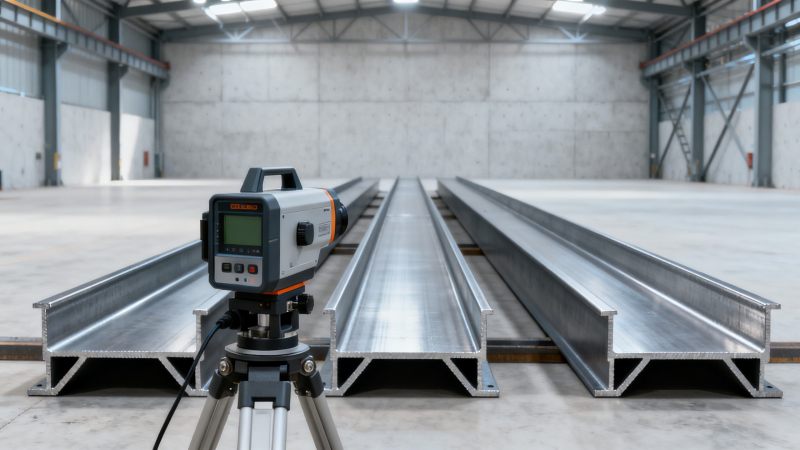
These aren’t theoretical queries—they’re operational filters used by Tier-1 contractors in the Middle East and industrial developers in Southeast Asia to pre-qualify steel suppliers. Each targets a distinct risk vector:
- “How do you validate dimensional consistency across 2–12m lengths—and what’s your rejection rate for out-of-tolerance Z-beam units?” — Directly ties to field assembly efficiency. A >0.8% rejection rate signals inconsistent rolling or inadequate post-processing inspection.
- “Can you provide third-party witnessed mill test reports (MTRs) for every heat batch—and are those reports aligned with ASTM A6/A6M or EN 10025-2?” — Ensures material certification isn’t retrospective or templated.
- “What’s your galvanizing process: hot-dip dip time, bath temperature control, and zinc layer thickness verification method (e.g., magnetic induction per ISO 1461)?” — Critical for coastal infrastructure where corrosion resistance determines service life.
- “Do you support mixed-material orders (e.g., Q345B + S275 + A572 in one container) with segregated documentation and labeling?” — Addresses real-world complexity in multi-spec projects.
- “What’s your average lead time for custom-length Z-beam with perforation and galvanized coating—and how do you manage schedule variance during peak demand?” — Reveals production flexibility and buffer planning.
What These Questions Actually Reveal
Each question maps to a concrete capability:
Suppliers who answer these confidently—backed by documented procedures, calibration records, and real-time production dashboards—demonstrate readiness for complex, high-stakes projects.
Beyond Compliance: How Material Choice Impacts Project Outcomes
Material selection isn’t just about meeting spec sheets—it’s about matching metallurgical behavior to application stress profiles. For example, Q460C offers higher yield strength but requires tighter welding preheat control than Q235B. Similarly, S355JR’s Charpy impact value at -20°C matters for cold-climate roof purlins, while ASTM A36’s predictable ductility supports seismic detailing in Philippine construction.
Hongteng Fengda maintains active stock and rolling schedules across 14 material grades—including Q235B, Q345B, Q420C, Q460C, SS400, SS540, S235, S275, S355, A36, A572, G50, and G61—to ensure precise grade availability without cross-contamination risk. Every coil is tracked from melt furnace to final packaging, with full traceability to EN 10204 3.1 or 3.2 documentation upon request.
This granularity enables engineers to specify exact mechanical properties—not just nominal grades—reducing rework from weld cracking or premature fatigue in lightweight roof systems.
Why Partnering with Hongteng Fengda Reduces Your Total Sourcing Risk
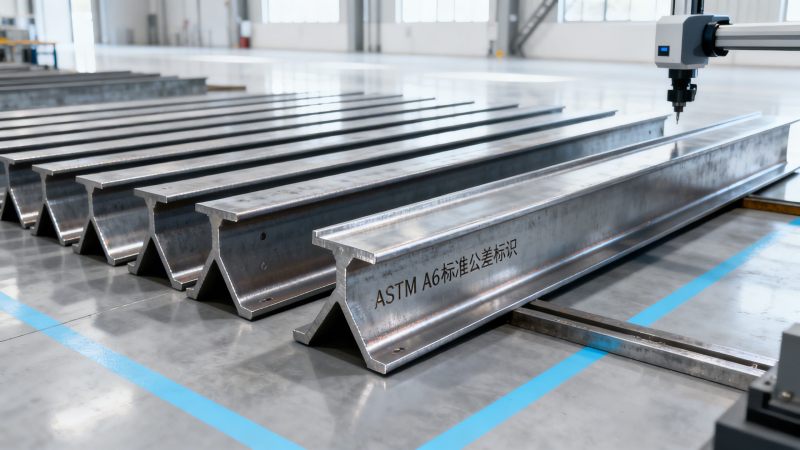
We don’t just supply steel—we embed into your procurement workflow as an extension of your engineering and QA teams. Our structured engagement includes:
- Pre-order technical alignment: Joint review of drawings, load calculations, and finish specifications—completed within 3 business days.
- Production monitoring portal: Real-time access to rolling schedules, heat numbers, and inspection logs for all orders ≥10 tons.
- Multi-standard certification support: CE, SGS, BV, and ISO-certified documentation packaged per regional requirement—no extra lead time.
- Logistics integration: FCL/LCL coordination with bonded warehousing options in Dubai, Rotterdam, and Manila—cutting customs clearance delays by up to 40%.
Real-World Impact Metrics
Clients using our integrated sourcing model report:
We help procurement managers shift from transactional buying to strategic partnership—turning steel sourcing from a cost center into a project enabler.
Next Steps: Turn Insight Into Action
If you’re evaluating steel suppliers for upcoming projects—or reviewing past deliveries for recurring issues—start here:
- Download our Structural Steel Procurement Checklist, covering 12 audit-ready questions with scoring guidance.
- Request a free technical consultation: Share your latest bill of materials (BOM), and we’ll identify specification risks, alternative grade options, and compliance pathways for ASTM/EN/GB standards.
- Ask for sample documentation: We’ll send actual MTRs, galvanizing test reports, and dimensional inspection logs from recent Z-beam shipments to Manila and Riyadh—no registration required.
Ready to align your procurement process with engineering reality? Contact our technical sales team today for a no-obligation review of your next structural steel requirement—whether it’s angle steel, channel steel, or custom cold-formed profiles like Z-beam.
Please give us a message


Please enter what you want to find