Why ss pipe for water supply now faces higher performance expectations
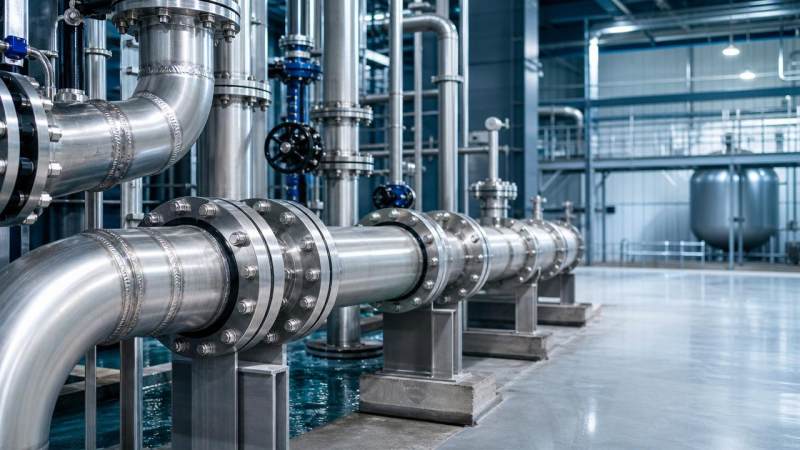
For after-sales maintenance teams, choosing and servicing ss pipe for water supply is critical to preventing corrosion, leakage, and costly downtime.
In demanding water systems, material quality, installation accuracy, and routine inspection all affect long-term performance.
This guide explains the key risks, practical prevention methods, and maintenance tips that help keep stainless steel piping reliable, safe, and efficient.
Today, ss pipe for water supply is used in more complex environments than before.
Water chemistry varies widely, operating pressure is often less stable, and shutdown tolerance is much lower.
These changes mean stainless steel pipe systems need more than basic material selection.
They require lifecycle thinking, from specification and welding to inspection and repair planning.
The latest risk signals show corrosion and leakage are becoming more system-driven
A common assumption is that stainless steel automatically solves water piping corrosion.
In practice, ss pipe for water supply can still fail when system conditions are poorly controlled.
Recent maintenance cases show that failures often come from combined factors, not one isolated defect.
- Higher chloride content can weaken passive protection on stainless surfaces.
- Improper welding may create heat-affected zones with lower corrosion resistance.
- Mixed-metal connections can trigger galvanic attack near joints and supports.
- Water hammer and vibration can accelerate crack initiation and seal failure.
- Poor drainage around insulation may trap moisture and hide external corrosion.
This trend matters because leakage is no longer only a pipe wall issue.
It increasingly reflects design compatibility, field workmanship, and inspection discipline across the full steel system.
The main drivers behind ss pipe for water supply failures are now easier to identify
Maintenance quality improves when teams classify failure drivers clearly.
The table below summarizes the most important causes affecting ss pipe for water supply performance.
In many facilities, piping reliability also depends on adjacent steel components.
For enclosures, covers, drain protection, and water-exposed structural details, corrosion control should be coordinated with compatible steel products.
A practical option is Galv Sheeting, used across construction, energy, transportation, and light industry.
It is available in grades such as DX51D+Z, SGCC, and S350GD+Z, with thickness from 0.12mm to 6.00mm.
With zinc coating options from 60 to 275g/m² and compliance with ASTM, EN, JIS, and GB, it supports durable surrounding steel protection.
Material selection is shifting from generic stainless use to condition-based decisions
One major shift is moving away from broad stainless assumptions.
The better approach is choosing ss pipe for water supply according to actual water chemistry and operating stress.
What should be checked before confirming the pipe grade
- Chloride concentration in the full operating range
- Water temperature during steady and peak conditions
- Flow velocity, stagnation zones, and dead legs
- Required service life and shutdown cost impact
- Compatibility with fittings, valves, and support materials
For low-chloride, controlled systems, common stainless grades may perform well.
For aggressive water, upgraded alloy selection is often more economical than repeated repairs.
This is especially true where hidden leakage can damage steel structures, finishes, and electrical equipment nearby.
Installation quality now has as much influence as pipe grade
Even premium ss pipe for water supply will underperform if installation introduces stress or contamination.
Field experience shows leakage often starts at transitions, threads, welds, or support points.
Critical installation controls
- Keep stainless surfaces clean during storage and cutting.
- Avoid carbon steel contamination from shared tools and benches.
- Use proper joint preparation and qualified welding procedures.
- Control flange alignment to prevent sealing face distortion.
- Install enough supports to limit vibration and sagging.
- Provide drainage and avoid moisture traps beneath insulation.
Passivation and post-weld cleaning are often overlooked, but they strongly affect corrosion resistance.
Removing heat tint and restoring the passive film can significantly extend service life.
Inspection programs are moving from reactive repair to early leakage prevention
The most effective maintenance strategy for ss pipe for water supply is early detection.
Small warning signs often appear long before major leakage develops.
Early indicators that deserve attention
- Localized discoloration near welds or clamps
- Unexpected moisture around insulated sections
- Pressure loss without obvious external leakage
- Recurring seal replacement at the same connection
- Noise, vibration, or repeated water hammer events
Routine inspection should combine visual checks with thickness testing, weld assessment, and water quality review.
Maintenance records should track location, defect type, repair date, and likely root cause.
Over time, this creates a failure map that helps prioritize high-risk zones.
The biggest impact falls on cost control, uptime, and surrounding steel assets
When ss pipe for water supply leaks, the damage spreads beyond pipe replacement costs.
Water intrusion can affect supports, steel frames, wall cladding, insulation, and nearby equipment.
This makes corrosion prevention part of wider asset protection, not only a piping issue.
The next step is building a prevention plan around the full service cycle
A strong ss pipe for water supply strategy should connect design, installation, operation, and maintenance.
The following priorities support better long-term results.
- Review water chemistry before selecting stainless grade.
- Control welding, passivation, and cleanliness during installation.
- Reduce galvanic risk at mixed-metal connections.
- Inspect hidden areas, not only exposed pipe runs.
- Protect surrounding steel components from moisture exposure.
- Use repair history to update maintenance intervals.
Hongteng Fengda supports global projects with reliable steel products, custom solutions, and production aligned with ASTM, EN, JIS, and GB standards.
For water-related steel applications, combining sound pipe maintenance with dependable structural steel supply helps reduce sourcing risk and improve lifecycle value.
If the goal is fewer leaks, lower corrosion risk, and more predictable uptime, start by auditing the full ss pipe for water supply system rather than isolated failures.
That approach delivers the most practical path to safer operation and longer-lasting steel performance.
Please give us a message


Please enter what you want to find