When working with ss coil tube, bend radius limits directly affect flow performance, wall integrity, and installation safety. For operators and end users, understanding these limits helps prevent flattening, cracking, and costly rework. This article explains why proper bend radius matters, what factors influence it, and how the right material and manufacturing support can improve reliability in demanding steel applications.
What does bend radius mean for ss coil tube?
Bend radius is the inside curve size formed when ss coil tube is bent during fabrication or installation.
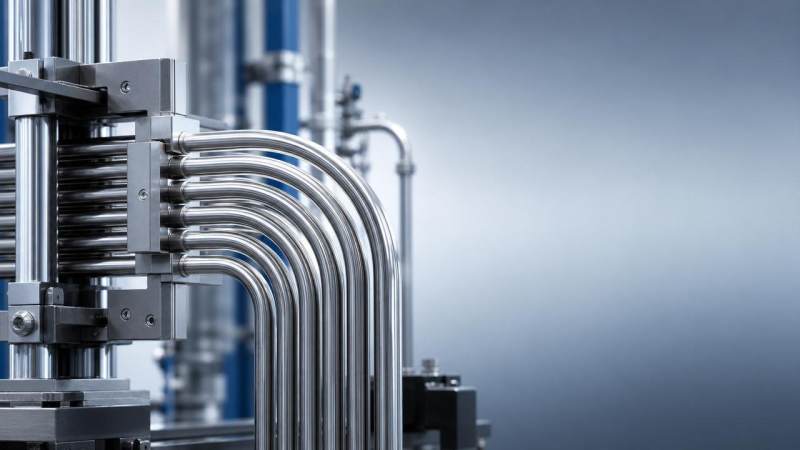
A smaller radius creates a tighter turn. A larger radius produces a smoother directional change and lower forming stress.
In steel systems, this value is not just geometric. It influences mechanical stability, internal flow, fatigue life, and sealing performance.
For ss coil tube used in process lines, heat exchange circuits, or compact assemblies, the bend radius often determines whether installation succeeds without damage.
If the bend is too tight, the tube wall may thin on the outer side and compress on the inner side.
That deformation can reduce pressure capability. It may also create local weakness, especially under vibration, temperature cycling, or corrosive service.
Most design teams therefore treat bend radius as a control parameter, not a secondary detail.
Why are bend radius limits so important in real steel applications?
Bend radius limits matter because ss coil tube must keep its round shape and wall balance after bending.
When the radius falls below a safe range, several failures become more likely:
- Ovality or flattening that restricts flow
- Wall thinning that lowers burst resistance
- Surface cracking at the tension side
- Wrinkling on the compression side
- Unexpected springback that changes final dimensions
These issues affect more than appearance. They can increase pumping energy, complicate fittings, and shorten service life.
In stainless and structural steel projects, rework is expensive because tube assemblies often sit inside larger welded or modular systems.
Tighter bends also raise inspection demands. Nonuniform geometry may require extra measurement, pressure testing, or replacement before shipment.
That is why bend radius limits directly connect to production cost, installation speed, and long-term performance.
Which factors determine the safe bend radius of ss coil tube?
No single number fits every ss coil tube application. Safe radius depends on material, dimensions, tooling, and service conditions.
1. Tube material grade
Different stainless grades respond differently to forming. Austenitic grades often allow tighter bends than harder or less ductile materials.
Duplex grades usually offer higher strength, but they may need more careful bending control to avoid localized stress concentration.
2. Wall thickness
Thicker walls generally resist collapse better. Thin-wall ss coil tube is more prone to flattening and wrinkling during tight bends.
3. Outside diameter
Larger diameter tubes usually need larger bend radii. As size increases, controlling shape retention becomes harder.
4. Bending method
Mandrel bending, rotary draw bending, and roll bending produce different results. Tooling support strongly affects final geometry.
5. Surface condition and weld quality
Any inconsistency can become a weak point during bending. Clean surfaces and stable weld quality improve forming reliability.
6. End-use environment
Systems exposed to pressure pulses, thermal cycling, or corrosive media need more conservative bend choices.
How can you tell if a bend radius is too tight?
There are several warning signs that a bend radius is too aggressive for ss coil tube.
- Visible flattening across the bend
- Microcracks or roughness on the outer arc
- Inner wall buckling or ripples
- Poor fit with clamps, ferrules, or connectors
- Flow reduction after installation
Measurement also matters. Check ovality, wall reduction, angle accuracy, and repeatability across multiple parts.
If the same tool setup gives unstable dimensions, the selected radius may be outside the material’s practical forming window.
Testing should match service needs. A decorative bend and a pressure-bearing bend cannot be judged by the same acceptance standard.
What mistakes often cause ss coil tube bending problems?
Many failures come from assumptions rather than material limits. The most common mistake is copying bend rules from another alloy or tube size.
Another mistake is choosing the smallest possible radius to save space, without checking pressure, vibration, and installation tolerance.
Poor tooling alignment is also a major issue. Even quality ss coil tube can deform if support components are worn or mismatched.
Some projects ignore the wider steel framework around the tube assembly. Support members, brackets, and channels influence routing and stress distribution.
For example, structural layouts often combine tube lines with support sections sourced from a Channel Steel Supplier.
In those systems, available space, fixing points, and corrosion exposure should be reviewed together, not separately.
Another frequent oversight is skipping trial bends. A short qualification run can reveal springback, ovality, and tool marks before full production.
How should bend radius be selected for performance and cost balance?
The best approach is to balance compact design with forming safety. A slightly larger radius often reduces hidden costs.
Those savings may include fewer rejected bends, lower inspection time, easier installation, and longer service life.
Use this decision path when evaluating ss coil tube bend radius:
- Confirm grade, diameter, wall thickness, and required bend angle.
- Review service pressure, medium, temperature, and vibration level.
- Check whether routing space truly requires a tight bend.
- Match tooling and support method to the target geometry.
- Perform sample bending and inspect deformation results.
- Adjust radius before mass fabrication if consistency is weak.
Integrated steel supply can also improve efficiency. Structural supports and corrosion-resistant sections should align with tube routing requirements.
In broader construction and industrial projects, support framing may include U channel steel with thickness from 1.5mm to 25mm and heights from 80mm to 160mm.
Options such as Q195, Q235B, Q345B, 304, 316, and Duplex help coordinate strength, weldability, and corrosion resistance across the steel package.
Where corrosive conditions are severe, galvanized or stainless support components can reduce maintenance and improve assembly durability.
FAQ: common questions about ss coil tube bend radius
Reliable ss coil tube performance depends on choosing a bend radius that fits both fabrication reality and service demands.
Ignoring radius limits can lead to cracking, flattening, leakage risk, and unnecessary production delays.
A better result comes from reviewing material grade, wall thickness, tooling, and structural support together.
For steel projects requiring coordinated supply, stable quality, and export-ready support, a consistent material partner reduces risk from design through delivery.
If your application involves ss coil tube routing alongside structural components, verify bend requirements early and align them with the full steel system layout.
Please give us a message


Please enter what you want to find