Why coated steel wire needs closer corrosion checks
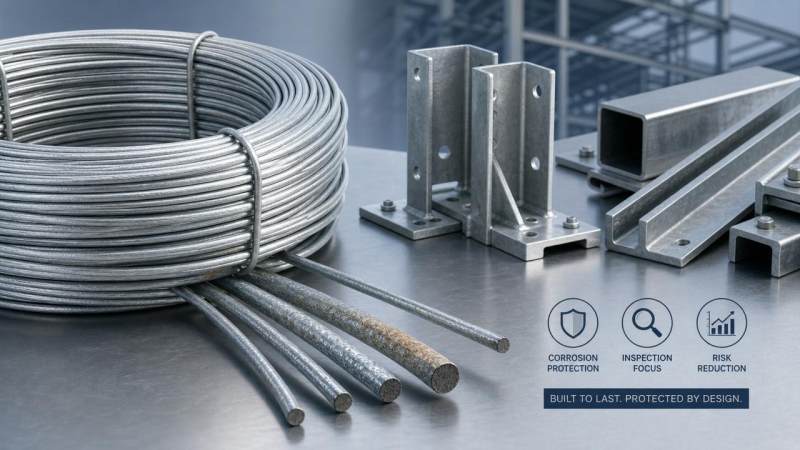
For after-sales maintenance teams, coated steel wire may look durable on the surface, but hidden corrosion can still shorten service life and raise repair costs.
Understanding the early warning signs, coating failures, and environmental risks is essential for preventing unexpected performance issues.
This guide explores the corrosion risks to watch and how proper inspection can help maintain long-term reliability.
In steel applications, corrosion rarely starts as a dramatic failure. It often begins with tiny coating defects, trapped moisture, or chemical exposure.
If these small issues go unnoticed, coated steel wire can lose tensile performance, surface protection, and dimensional stability much earlier than expected.
Why a structured inspection approach matters
A clear inspection routine reduces guesswork. It helps identify whether coated steel wire is facing cosmetic staining, active corrosion, or deeper substrate damage.
A structured approach also improves maintenance timing. Early action usually costs less than replacing failed wire assemblies or repairing connected steel components.
For projects involving structural steel systems, corrosion checks should never be isolated. Adjacent members, fixings, drainage, and coatings affect wire performance.
Core inspection points for coated steel wire
- Check for coating cracks, scratches, or peeling, especially near bends, cut ends, tied points, and contact areas where protective layers often fail first.
- Look for white rust, red rust, dark spots, or blistering, because each surface change may indicate different moisture exposure or coating breakdown stages.
- Inspect low points, overlaps, and enclosed spaces where water, dust, salts, or industrial residue can stay trapped and accelerate corrosion.
- Assess whether the coated steel wire is exposed to marine air, fertilizers, cleaning chemicals, or high humidity that can overwhelm standard protection.
- Review tensioned sections carefully, since coating damage under stress can spread faster and expose the steel core to localized corrosion.
- Verify compatibility with nearby metals, because galvanic contact with dissimilar materials may increase corrosion rates in wet service conditions.
- Measure visible diameter loss or uneven surface roughness, as these signs may reveal advanced corrosion beneath an apparently intact coating.
- Confirm storage and installation history, because poor handling, ground contact, or damaged packaging often starts corrosion before service begins.
Early warning signs that should not be ignored
Not all corrosion looks the same. On galvanized coated steel wire, white oxidation can appear before red rust becomes visible.
That means the coating is reacting, even if the steel core still seems protected. Delaying inspection at this stage can shorten the remaining service life.
Pay extra attention to rough texture, dull patches, bubbling, or streak marks. These often suggest water movement, coating separation, or contamination.
At mid-span or loaded points, even small defects deserve review. Stress and moisture together can turn a superficial issue into a structural concern.
How surrounding steel components affect risk
Corrosion control is stronger when the full steel system is considered. Drainage paths, framing geometry, and surface treatment all influence moisture retention.
In many buildings, coated steel wire works near cold formed profiles, purlins, or support members. If these parts trap water, wire deterioration may accelerate.
For related support applications, C Sections Steel is often used in purlins, wall beams, roof trusses, brackets, and light industrial frames.
Options include Q195, Q235, Q345, A36, SS400, and s235jr, with galvanized coated surfaces, 1mm-12.mm thickness, and CE, SGS, BV, ISO certifications.
Where steel profiles and wire assemblies share the same environment, maintenance records should compare both. Similar coating failures often reveal a common cause.
Risk differences by application environment
Outdoor structural exposure
Outdoor coated steel wire faces rain, UV, temperature swings, and airborne pollutants. Corrosion usually starts at exposed edges, joints, and damaged handling points.
Inspection should focus on drainage quality, standing water, and debris buildup. If nearby steel members remain damp, wire protection may also be compromised.
Marine and coastal conditions
Salt-laden air greatly increases corrosion pressure on coated steel wire. Even a good coating can degrade faster when salt deposits remain on the surface.
Frequent cleaning and shorter inspection intervals are important. Areas hidden from rain washing can corrode faster than fully exposed surfaces.
Industrial and chemical exposure
Factories, warehouses, and process areas may expose coated steel wire to fumes, alkalis, acids, or cleaning agents that attack protective layers.
Review nearby operations, not just the wire itself. Unexpected chemical drift often explains localized corrosion where general weathering seems mild.
Agricultural and humid storage areas
Fertilizers, animal waste, and constant humidity create aggressive corrosion conditions. Coated steel wire in these settings often fails from persistent deposits.
Cleaning routines and ventilation matter. Surfaces that stay dirty and damp for long periods usually show earlier coating breakdown.
Commonly overlooked corrosion risks
Cut ends are often missed. The protective layer can be weaker there, allowing corrosion to begin and spread under the surrounding coating.
Wire contact with concrete residue is another risk. Alkaline contamination can damage coatings, especially when moisture stays trapped against the surface.
Packaging damage during transport also matters. Coated steel wire may arrive with minor abrasions that remain hidden until corrosion appears in service.
Overtight bundling can create abrasion points. Friction between wire surfaces may remove protective material before installation even starts.
Mixed-metal fasteners deserve attention too. When moisture bridges different metals, galvanic corrosion can target the less protected area.
Practical steps to improve long-term reliability
- Set inspection intervals based on environment, not only age. Coastal, chemical, and humid sites need more frequent reviews than dry indoor locations.
- Document coating condition with photos and notes. Track whether stains, rust spots, or peeling are stable, expanding, or linked to a specific source.
- Clean deposits using methods suitable for the coating type. Avoid aggressive tools that may remove protective layers while trying to remove corrosion.
- Repair small damaged areas promptly when approved systems are available. Local protection is more effective before widespread underfilm corrosion develops.
- Improve drainage, ventilation, and separation from chemical splash zones. Environmental correction usually provides longer benefits than repeated surface touch-ups.
- Review connected steel members, including supports and profiles, because corrosion patterns across the assembly often reveal the main root cause.
FAQ about coated steel wire corrosion
Does white rust mean failure?
Not always. White rust shows coating reaction, often on zinc surfaces, but it should trigger cleaning, inspection, and cause analysis.
Can coated steel wire corrode under an intact surface?
Yes. Moisture can enter through tiny defects and spread under the coating, causing blistering, lifting, or hidden substrate attack.
When should replacement be considered?
Consider replacement when corrosion causes diameter loss, repeated coating failure, reduced strength confidence, or widespread damage across critical areas.
Final action steps for better corrosion control
Coated steel wire performs well when inspection is timely, environmental risks are understood, and small defects are corrected early.
Use a repeatable review process covering coating condition, moisture exposure, contact materials, and surrounding steel details.
For steel systems exposed to demanding service conditions, combine wire checks with broader structural component inspections and documented maintenance records.
That approach helps extend service life, reduce avoidable repairs, and keep coated steel wire reliable across construction and industrial applications.
Please give us a message


Please enter what you want to find