Rebar for concrete slab is one of the most critical factors in preventing early cracking, especially around load points, joints, and weak support areas. Whether comparing rebar for beam, rebar for column, or rebar for retaining wall applications, choosing the right steel reinforcement helps improve slab strength, durability, and long-term construction performance.
For contractors, engineers, procurement teams, and project owners, slab cracking is rarely a cosmetic issue alone. In industrial floors, warehouses, residential foundations, and equipment platforms, early cracks can lead to water ingress, edge breakdown, reduced service life, and avoidable repair costs within the first 6–24 months. The root cause often begins in reinforcement design, bar placement, support conditions, or steel quality.
In the steel supply chain, understanding how reinforcement works across slabs, beams, columns, and retaining structures also helps buyers make better sourcing decisions. A reliable structural steel manufacturer can support not only material compliance with ASTM, EN, JIS, and GB standards, but also dimensional consistency, stable delivery, and customized solutions for different construction environments.
Why Concrete Slabs Crack First at Weak Points
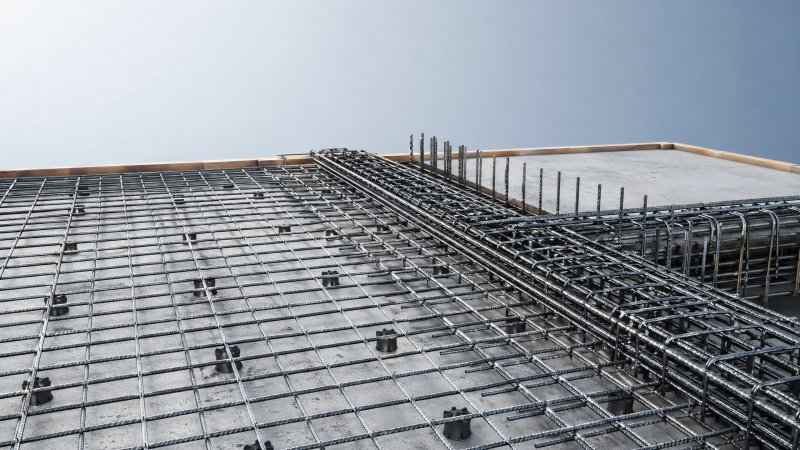
Concrete is strong in compression but comparatively weak in tension. When a slab is loaded, restrained, or exposed to drying shrinkage, tensile stress forms first near re-entrant corners, around openings, along joints, and above poorly supported subgrade areas. If rebar for concrete slab is undersized, spaced too widely, or positioned incorrectly, those stress zones can crack early, sometimes within the first 7–28 days after pouring.
The most common weak points are not random. They usually appear at four locations: load concentration areas, slab-to-beam transitions, construction joints, and unsupported edges. In heavy-duty floors, point loads from racks or machines can create localized tension. In residential or light commercial slabs, shrinkage and temperature movement may dominate. In both cases, reinforcement must control crack width rather than merely add steel quantity.
Another frequent issue is rebar depth. If bars sink too low during concrete placement, they lose effectiveness in the tension zone. For many slab designs, reinforcement is placed in the upper or mid-depth range depending on loading and crack-control intent. Even a placement error of 20–30 mm can reduce performance noticeably, especially in thinner slabs of 100–150 mm.
Typical causes behind early slab cracking
Cracking usually results from a combination of design, material, and site execution factors. It is rarely caused by only one mistake. For technical evaluators and quality managers, identifying the chain of causes is more useful than focusing on a single visible crack.
- Insufficient bar diameter or excessive spacing, such as using large gaps where tighter crack control is needed.
- Weak or uneven subgrade support, leading to differential settlement under slab panels.
- Poor curing during the first 3–7 days, causing rapid moisture loss and shrinkage stress.
- Improper joint layout, especially when panel dimensions exceed practical shrinkage-control limits.
- Low-quality or non-compliant reinforcement with inconsistent mechanical properties.
For international buyers, steel consistency matters because bar yield strength, rib geometry, and dimensional tolerance affect bond performance and crack distribution. A dependable supplier with modern production control can reduce variation from batch to batch and improve downstream construction reliability.
How Rebar Selection Changes Slab Performance
Selecting rebar for concrete slab should start with service conditions rather than only price per ton. A lightly loaded residential slab, a forklift traffic floor, and a water-exposed foundation slab do not require the same reinforcement strategy. In practice, the right solution depends on slab thickness, span behavior, support condition, crack-width limits, environmental exposure, and the load cycle over 10–30 years of use.
Compared with rebar for beam or rebar for column, slab reinforcement often focuses more on distribution and crack control across a larger area. Beams usually resist concentrated bending along a line, while columns carry axial and combined loads in vertical elements. Slabs spread stress in two dimensions, so spacing, cover, lap length, and mesh arrangement become especially important for durable performance.
Procurement teams should also check whether the steel supplier can provide standard grades and custom processing. For global projects, compliance with ASTM, EN, JIS, or GB may be specified by designers, consultants, or local code reviewers. In many cases, consistent lead times of 2–6 weeks and clear mill documentation are as important as the nominal steel grade itself.
Rebar comparison by structural application
The table below shows how reinforcement priorities differ across common concrete elements. This helps project managers and buyers avoid applying beam or column logic directly to slab design, which is a common source of underperformance.
The key takeaway is that slab reinforcement should not be judged only by total steel weight. In many projects, better bar placement and spacing control outperform simply increasing tonnage. That is especially relevant where budgets are tight and long-term maintenance costs must be controlled from the design stage.
Basic selection checkpoints
- Confirm design load category: residential, commercial, warehouse, or industrial heavy-duty use.
- Check slab thickness and support condition, including compacted subbase quality and moisture control layers.
- Match steel grade and bar size to code requirements and crack-width objectives.
- Verify cover, spacing, lap lengths, and on-site fixing method before concrete placement.
For B2B buyers sourcing from China, manufacturers that support standard specifications and OEM processing can reduce rework and simplify coordination with fabricators, distributors, or EPC contractors. This is particularly valuable when multiple steel categories are ordered in one project package.
Design Coordination Beyond Slabs: When Retaining Structures Matter
In many civil and infrastructure projects, slab cracking is not an isolated issue. It may be linked to adjacent retaining walls, excavation support, drainage conditions, or foundation movement. When soil pressure, groundwater, or temporary excavation stability affects the slab edge, engineers often need to coordinate reinforcement design with retaining solutions instead of treating the floor slab as a separate element.
This is where integrated steel sourcing becomes practical. For example, projects involving basements, port works, utility corridors, or water-control structures may require both slab reinforcement and steel sheet pile systems. A continuous retaining wall can reduce edge instability, minimize soil loss, and improve the long-term performance of nearby concrete members exposed to movement or water pressure.
A useful example is Hot Rolled Steel Sheet Pile, which is applied in retaining wall and water retaining wall scenarios. Available in U Sheet Pile models and carbon steel grades such as S275, S355, S390, S430, SY295, SY390, and ASTM A690, it can be produced under EN10248, EN10249, JIS5528, JIS5523, and ASTM standards. Interlock options include Larssen locks, cold rolled interlock, and hot rolled interlock.
Why this matters for slab crack prevention
Where slab edges are close to excavations or water-retaining zones, poor lateral support can contribute to settlement and cracking. In such cases, retaining elements and slab reinforcement should be reviewed together. Single lengths can exceed 80 m, and dimensions can be customized by width, height, and thickness, which gives project teams flexibility in sequencing and site layout.
The product is designed to form a continuous and tight retaining wall or water retaining wall and can be freely combined based on site conditions. For procurement and commercial evaluation teams, the practical value lies in reduced construction complexity, easier customization, and potentially lower total installed cost when compared with fragmented supply arrangements.
For quality and compliance review, buyers should look for certification and factory management consistency. Typical certifications in this category include ISO9001, ISO14001, ISO18001, and CE FPC. While these do not replace project-specific engineering checks, they help verify that manufacturing and quality control processes are aligned with recognized industry practice.
Key Technical Checks Before Ordering Rebar for Concrete Slab
Before placing a purchase order, technical teams should translate design intent into practical inspection points. Many slab issues originate not in engineering calculations, but in the gap between drawings and what arrives on site. A robust procurement checklist should cover steel grade, bar diameter tolerance, cut length accuracy, rib pattern consistency, bundle identification, and traceable mill documentation.
For slab applications, dimensional discipline is especially important because reinforcement is distributed across large areas. If bar lengths vary too much or mesh geometry is inconsistent, site crews may adjust spacing informally, which changes crack-control performance. Even small irregularities can become significant when repeated over 500–2,000 square meters of slab area.
Suppliers serving export markets should also be able to coordinate packing, marking, and lead-time planning. In many international projects, the target is not simply low steel price, but predictable delivery within 15–45 days, supported by clear documentation for inspection, customs, and contractor acceptance.
Procurement and quality control checklist
The following table can be used by purchasing departments, QC teams, and project managers to align technical and commercial decisions before shipment.
This checklist helps both technical and financial approvers. It reduces the risk of hidden downstream costs such as slab repair, delay claims, or material replacement. In many cases, a slightly better-controlled steel supply package can save far more than the initial difference in unit price.
Common buying mistakes to avoid
- Choosing rebar only by price per ton without checking grade compatibility and tolerances.
- Ignoring logistics timing, resulting in interrupted pours or partial reinforcement placement.
- Assuming slab, beam, and retaining wall steel can be sourced under the same specification without review.
- Skipping pre-shipment confirmation of bar lists, tags, and traceability documents.
A supplier with stable production capacity, standard and customized structural steel capabilities, and experience in export documentation can reduce these risks significantly, especially for distributors, EPC contractors, and multi-site project buyers.
Installation Practice, Crack Control, and Field FAQs
Even when the right rebar for concrete slab is specified and delivered, field practice determines whether the design actually works. Contractors should pay attention to spacer density, tie stability, concrete cover, and pour sequencing. On many sites, reinforcement displacement during foot traffic or pump hose movement is a more immediate threat than the steel specification itself.
Curing is the second major control point. For many slab types, the first 72 hours are critical, and curing should usually continue for at least 7 days unless the design and cement system specify otherwise. Poor curing can create shrinkage cracks even when reinforcement is adequate. Project managers should therefore treat steel selection and curing planning as one integrated quality process.
The final step is inspection and documentation. A practical acceptance routine often includes 4 checks before pouring: bar spacing, support/chair placement, lap and anchorage review, and cover verification. Taking this approach helps QC personnel, safety managers, and owners reduce rework and improve accountability across the supply and construction chain.
FAQ: How do professionals reduce slab cracking risk?
How far apart should slab rebar typically be?
Spacing depends on slab thickness, loading, and code requirements, but practical crack-control layouts often use closer spacing rather than larger bars placed far apart. The design engineer should confirm the final arrangement, especially in slabs carrying dynamic or concentrated loads.
Is more steel always the best way to prevent cracks?
No. More steel does not automatically mean better crack control. Correct placement, support quality, joint planning, and curing often have equal or greater influence. In some projects, optimizing spacing and cover delivers better results than increasing tonnage.
When should retaining wall coordination be reviewed?
Coordination is important when slabs are near basements, excavations, waterfront structures, utility trenches, or water-retaining areas. If edge support or groundwater movement can affect the slab, retaining elements and reinforcement should be reviewed together during design and procurement.
What should import buyers ask a steel supplier first?
Start with 5 points: applicable standards, available grades, production capacity, documentation package, and delivery schedule. After that, confirm whether the supplier can support customized cutting, bundled project supply, and consistent quality across multiple product categories.
Preventing cracks in concrete slabs begins with correct reinforcement thinking: understand where tension starts, match rebar selection to the actual service environment, and coordinate slab design with surrounding structural conditions when needed. For buyers and project teams, the best results come from combining compliant steel products, disciplined quality control, and practical site execution.
Hongteng Fengda supports global construction and industrial projects with structural steel manufacturing, export experience, customized solutions, and quality control aligned with major international standards. If you need support with rebar-related sourcing, structural steel components, or retaining steel solutions for complex job sites, contact us now to get tailored specifications, product details, and a practical supply proposal for your project.
Please give us a message


Please enter what you want to find