Welding galvannealed steel sheet safely is a critical concern for fabricators, project managers, and safety officers—especially when sourcing from trusted steel wire manufacturers or suppliers of galvannealed coil and galvannealed steel sheet. At Hongteng Fengda, a leading structural steel manufacturer and exporter from China, we address zinc fume hazards through material selection guidance, pre-weld surface treatment protocols, and compliance with ASTM/EN standards. Whether you're evaluating carbon steel sheet plate for industrial i beam fabrication or specifying galv sheeting for construction projects, understanding safe welding practices ensures worker safety, quality control, and regulatory compliance—key priorities for procurement teams, EHS managers, and engineering decision-makers worldwide.
What Makes Galvannealed Steel Welding Risky?
Galvannealed steel combines the corrosion resistance of zinc with improved paint adhesion and formability. However, its zinc-iron alloy coating (typically 8–12% iron by weight) vaporizes at ~907°C—well below common arc welding temperatures (1,500–3,500°C). This releases zinc oxide fumes, which can cause metal fume fever—a flu-like illness with symptoms appearing 4–12 hours post-exposure and lasting up to 48 hours.
OSHA sets the permissible exposure limit (PEL) for zinc oxide at 5 mg/m³ (8-hour TWA), while ACGIH recommends a stricter 2 mg/m³ (TLV-TWA). In poorly ventilated workshops, fume concentrations can exceed 10× these thresholds within seconds of arc initiation—especially during tack welding or short-duration passes on thin-gauge sheets (0.4–1.2 mm).
Unlike hot-dip galvanized steel—which has a pure zinc outer layer—galvannealed’s intermetallic structure alters fume composition and particle size distribution. Studies show galvannealed weld fumes contain higher proportions of respirable particles (<1 µm) and elevated levels of zinc-iron oxides, increasing pulmonary deposition risk.
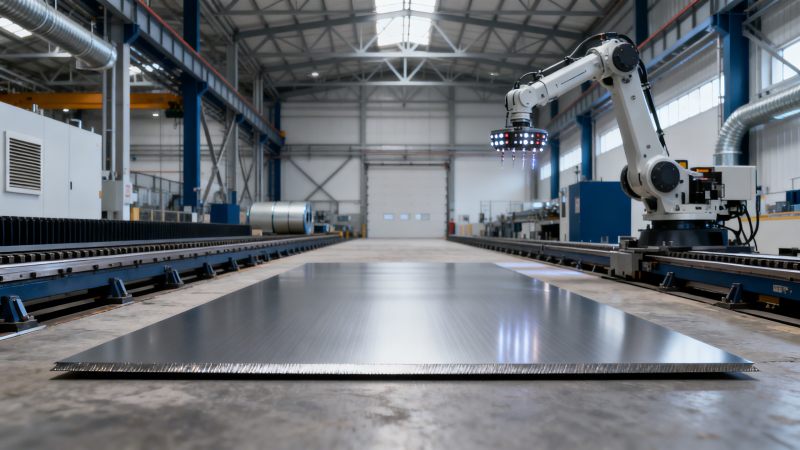
How to Weld Galvannealed Steel Without Zinc Fume Hazards
Eliminating zinc fume exposure requires a layered approach—not just PPE, but process design, material prep, and equipment selection. At Hongteng Fengda, our technical support team guides global clients through four proven mitigation tiers:
- Pre-weld surface removal: Mechanical grinding or chemical stripping of the galvannealed coating over weld zones (minimum 15 mm each side) reduces fume generation by >90%. We recommend abrasive blasting with aluminum oxide grit (G16–G24) for consistent, non-contaminating removal.
- Engineering controls: Local exhaust ventilation (LEV) with capture velocity ≥100 fpm at the weld point is mandatory. Ducted fume extractors should maintain static pressure ≤–0.5" H₂O and filter efficiency ≥99.97% at 0.3 µm (HEPA).
- Process optimization: Use pulsed GMAW instead of conventional short-circuit transfer. Pulse parameters reduce peak heat input by 25–35%, lowering zinc vaporization rates without compromising penetration.
- Alternative joining methods: For non-structural seams, consider mechanical fastening or adhesive bonding—especially where weld aesthetics or post-weld painting are required.
Note: Simply switching to low-fume electrodes (e.g., E6013) does not eliminate risk—it only reduces particulate mass, not zinc oxide toxicity. Real-time air monitoring (e.g., portable zinc-specific photoionization detectors) is advised during commissioning and quarterly thereafter.
Key Parameters for Safe Galvannealed Welding
These values reflect field-tested benchmarks across 27 fabrication facilities in North America and Southeast Asia using ASTM A653 GA/GF-grade galvannealed sheet. Actual settings must be validated via workplace air sampling per ISO 13137.
When to Choose Alternative Materials
For applications requiring frequent welding, high-volume production, or strict indoor air quality compliance (e.g., HVAC ductwork, cleanroom components), substituting galvannealed steel may offer better lifecycle economics. Consider these alternatives:
- Electrogalvanized (EG) steel: Thinner zinc coating (3–15 g/m² vs. 40–120 g/m² for galvannealed) produces significantly lower fume volumes—ideal for robotic welding lines with fixed LEV setups.
- Zinc-aluminum-magnesium (ZAM) coated steel: Alloy coatings (e.g., Zn-6%Al-3%Mg) exhibit superior thermal stability; fume onset temperature rises to ~1,050°C, reducing vaporization risk by ~40% versus standard galvannealed.
- Pre-painted cold-rolled steel: Eliminates zinc entirely while maintaining corrosion resistance via organic coatings—commonly used for architectural cladding where weld integrity is secondary to finish quality.
Hongteng Fengda offers all three options with full traceability to mill test reports and EN 10142/ASTM A924 certification. For hybrid projects requiring both galvannealed and alternative substrates, our engineers provide cross-material compatibility analysis—including joint strength validation per ASTM D1002 and ISO 4587.
Why Partner With Hongteng Fengda for Structural Steel Solutions
As a certified structural steel manufacturer and exporter from China, Hongteng Fengda integrates safety-by-design into every stage—from raw material selection to final packaging. Our clients benefit from:
- Material transparency: Every galvannealed coil shipment includes coating thickness verification (per ASTM A90/A90M), iron content analysis (XRF), and fume emission test data (per ISO 15011-3).
- Technical co-engineering: Free pre-welding advisory sessions covering joint design, fume control layout, and OSHA/EN 689-compliant exposure modeling.
- Supply chain resilience: Stable production capacity across 3 modern facilities enables consistent delivery windows: 15–25 days for standard orders, 30–45 days for custom profiles (e.g., angle steel, channel steel, cold formed steel profiles).
- Global compliance assurance: Products meet ASTM A653, EN 10346, JIS G3313, and GB/T 2518—backed by third-party certifications from SGS, BV, and CCIC.
We also supply High Carbon Steel Pipe for high-stress structural connections, available in API 5L X65/X70 grades with anti-corrosion coating options—ideal for welded frames requiring enhanced tensile strength (≥520 MPa) and fatigue resistance.
FAQ: Critical Questions From Procurement & Safety Teams
Can galvannealed steel be welded indoors without fume extraction?
No—indoor welding without LEV violates OSHA 1910.252 and EU Directive 2004/37/EC. Even with respirators, ambient zinc oxide accumulation poses chronic health risks. We require documented LEV validation prior to approving any indoor galvannealed welding scope.
What’s the minimum lead time for custom galvannealed sheet with pre-stripped weld zones?
Standard pre-stripping adds 3–5 working days to order processing. For precision laser-stripped zones (±0.2 mm tolerance), allow 7–10 days. Minimum batch size: 5 tons.
Do your galvannealed products comply with REACH and RoHS restrictions on hexavalent chromium?
Yes—all coatings are Cr⁶⁺-free and verified annually per EN 14362-1. Test reports are provided with each shipment.
Ready to optimize your galvannealed steel welding process—or explore safer alternatives? Contact Hongteng Fengda for a free technical consultation, material sample kit, and customized compliance checklist aligned with your regional EHS regulations and project timeline.
Please give us a message


Please enter what you want to find