In humid environments, metal h beam structures face higher risks of corrosion, hidden surface damage, and reduced long-term performance. For after-sales maintenance work, moisture exposure is not a minor issue. It directly affects inspection frequency, repair timing, and service life planning.
When humidity stays high, condensation forms on steel surfaces, protective coatings weaken, and small defects grow faster. A metal h beam used in industrial buildings, coastal facilities, warehouses, or wet process areas needs different maintenance judgment than steel in dry climates.
This guide explains practical corrosion risks, scenario-based warning signs, maintenance priorities, and material adaptation ideas. It also reflects the manufacturing perspective of Hongteng Fengda, a China-based structural steel manufacturer and exporter serving global construction and industrial projects.
How Humid Service Conditions Change metal h beam Maintenance Needs
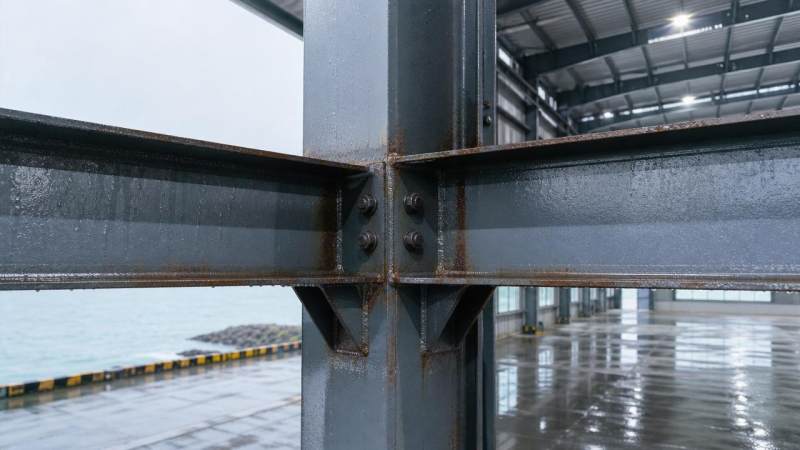
Humidity does not damage every structure in the same way. A metal h beam inside a closed warehouse faces different risks than one near seawater, cooling systems, or process steam.
The key is not only rain exposure. Corrosion often begins where surfaces stay damp, airflow is poor, or temperature shifts create repeated condensation cycles.
Why hidden moisture is more dangerous than visible water
Standing water is easy to notice. Thin moisture films are harder to detect. Yet they can keep oxygen and contaminants in contact with steel for long periods.
This is why a metal h beam may look acceptable outside while corrosion develops in flange edges, bolt areas, joint gaps, and contact surfaces.
Environmental factors that accelerate corrosion
- High relative humidity above critical steel exposure levels
- Salt in coastal air or marine splash zones
- Industrial fumes, acids, alkalis, or chemical dust
- Poor drainage and dirt accumulation
- Temperature differences causing daily condensation
- Coating scratches caused by transport or installation
Typical humid scenarios where metal h beam corrosion starts differently
Different service scenes create different failure patterns. Understanding the scene helps decide where to inspect first and which repairs are urgent.
Coastal buildings and port-side structures
Salt-laden air is highly aggressive. Even when rainfall is moderate, chloride deposits attract moisture and increase corrosion speed on exposed metal h beam surfaces.
Look closely at weld seams, lower flanges, bracing intersections, and connection plates. These points often trap deposits and stay wet longer.
Warehouses with weak ventilation
Indoor steel is not automatically safe. Roof leaks, vapor buildup, and poor airflow can create repeated dew formation on a metal h beam, especially at night.
Corrosion may appear first as coating blistering, edge rust, or staining below joints. These signs are often overlooked until section loss becomes measurable.
Factories with steam, washing, or chemical exposure
Food plants, textile workshops, processing lines, and utility rooms often combine humidity with heat and contaminants. This combination can shorten coating life quickly.
Where enclosure panels or roofing are upgraded, corrosion-resistant coverings can help control moisture around structural zones. In such envelope applications, Color Coated Galvalume Steel Coil PPGL is often selected for weather resistance, heat reflectivity, and clean appearance.
Outdoor projects in tropical or rainy climates
Frequent wet-dry cycles are damaging. A metal h beam may not remain submerged, but repeated surface wetting can steadily break down coating integrity.
Pay attention to beam ends, drainage-shadowed surfaces, and places where debris blocks water runoff. These are common starting points for localized attack.
What warning signs show a metal h beam needs early intervention
Early detection reduces repair cost. Many failures become expensive only because warning signs were considered cosmetic rather than structural.
Surface signs that deserve immediate inspection
- Rust staining below bolts, splices, or welded areas
- Paint bubbles, peeling, cracking, or soft coating patches
- Discoloration near condensation lines
- Flaking rust at edges and corners
- Water marks showing repeated dampness
Structural signs that suggest deeper corrosion
- Pitting in localized zones
- Visible thinning near supports or joint interfaces
- Expansion around fasteners from corrosion products
- Recurring rust after recent repainting
Scenario differences that affect inspection cycles and repair choices
Inspection planning should match the environment. The same metal h beam profile can require very different maintenance cycles depending on exposure severity.
Practical ways to improve metal h beam durability in humid projects
Good durability comes from design, material selection, coating choice, and maintenance working together. Repair alone is not enough if the moisture source remains.
Maintenance actions that bring the fastest value
- Remove dirt, salt, and wet debris from steel surfaces regularly.
- Repair coating scratches before rust spreads under the film.
- Check roof drainage, flashing, and water leakage routes.
- Inspect concealed connection points during scheduled shutdowns.
- Track rust recurrence to identify persistent moisture sources.
Material and envelope adaptation ideas
Not all humid-site improvements happen on the primary frame. Roofing, wall panels, and enclosures also influence moisture control around a metal h beam system.
For roof, wall, door panel, or equipment enclosure applications, color coated galvalume products can support corrosion management. Options include thickness from 0.13mm to 0.8mm, width from 600mm to 1250mm, custom lengths, and coatings such as PE, SMP, HDP, and PVDF.
These solutions are valued for corrosion resistance, heat resistance, processing performance, and surface appearance. They can be reviewed here: Color Coated Galvalume Steel Coil PPGL.
Common mistakes when judging metal h beam corrosion in wet environments
Several errors lead to delayed intervention. Most are caused by focusing on appearance alone instead of environmental behavior.
- Assuming indoor steel has low corrosion risk
- Ignoring condensation because no leak is visible
- Repainting without removing corrosion products properly
- Checking open surfaces while missing joints and hidden faces
- Using the same inspection interval for all humid locations
Next steps for extending metal h beam service life
A metal h beam in a humid environment should be managed by scenario, not assumption. Start with exposure mapping, identify damp zones, inspect coating condition, and rank defects by moisture intensity.
For new projects, combine reliable structural steel supply with suitable protective systems and compatible building envelope materials. Hongteng Fengda supports global projects with structural steel manufacturing, export experience, international standard compliance, and customized solutions for demanding environments.
When corrosion risks are evaluated early, repair plans become simpler, downtime becomes shorter, and long-term steel performance improves significantly. That is the most practical path to protecting metal h beam assets in humid service conditions.
Please give us a message


Please enter what you want to find