Can h beam channel really replace standard structural members in modern construction and fabrication? The answer depends on load requirements, span, design standards, and project cost goals. For engineers, buyers, and project planners, understanding where this profile works best can improve material selection, reduce sourcing risks, and support more efficient structural steel decisions.
Understanding the Role of H Beam Channel in Structural Steel
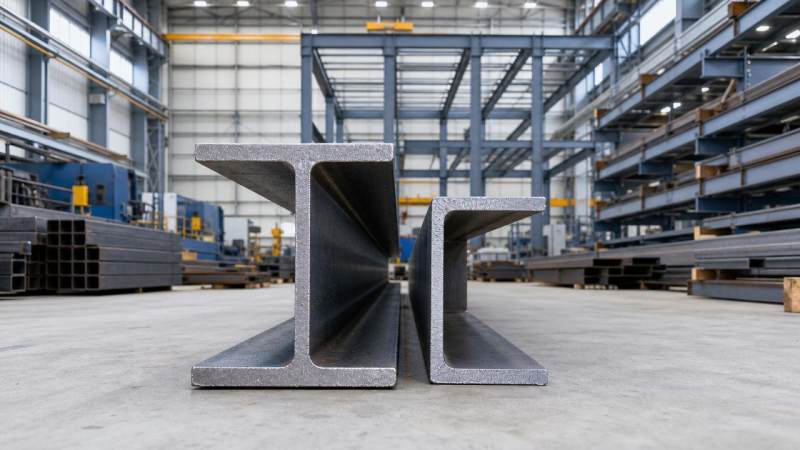
The term h beam channel is often used loosely in market discussions. In practice, H beams and channels are different structural sections.
An H beam has wide flanges and a thick web. A channel section has one web and two flanges on the same side.
Because of this difference, an h beam channel does not behave exactly like every standard structural member. Geometry controls strength, stiffness, and connection behavior.
In steel construction, replacement is rarely a simple shape swap. It requires checking bending resistance, shear capacity, torsional stability, deflection, and local buckling limits.
This is why the h beam channel question matters. It affects fabrication efficiency, steel consumption, transport planning, and long-term structural reliability.
Why the Industry Pays Attention to H Beam Channel Alternatives
Structural steel projects face tighter budgets, shorter schedules, and more diverse design conditions. Section substitution has become a practical engineering topic.
In many regions, stock availability influences design decisions. A readily available h beam channel option may reduce delivery delays and improve procurement flexibility.
At the same time, international projects must match ASTM, EN, JIS, or GB requirements. Equivalent strength alone is not enough for direct substitution.
- Material price volatility pushes closer section comparison.
- Fabrication shops prefer shapes with easier cutting and welding.
- Transport limits affect long members and oversized profiles.
- Project risk control requires dependable structural performance.
For these reasons, h beam channel evaluation is common in industrial buildings, platforms, frames, support racks, and equipment structures.
Key Structural Differences That Decide Replacement Feasibility
Whether an h beam channel can replace another member depends first on load path. Axial load, bending direction, and support conditions are critical.
Section symmetry and stability
H beams are doubly symmetrical. They usually offer stronger resistance to bending and reduced torsional rotation under typical beam loading.
Channels are unsymmetrical. They can twist more easily when loads are eccentric or when lateral restraint is limited.
Connection behavior
Connections often decide if substitution is practical. Bolt patterns, flange access, weld length, and plate arrangement vary by section shape.
A profile may pass strength checks but still increase fabrication complexity. That can erase any theoretical material savings.
Deflection and serviceability
Replacement should never focus only on ultimate strength. Deflection limits often control floor beams, secondary framing, and equipment supports.
Where H Beam Channel Can Work Effectively
An h beam channel can be effective in secondary steelwork, shorter spans, braced frames, and support members with well-understood loading.
It may also suit retrofit work where connection space is restricted. In such cases, channel geometry can simplify attachment to existing steel.
For edge members, purlin supports, stair framing, curb frames, and localized equipment supports, a channel-based alternative can be practical.
- Braced wall members with controlled eccentricity.
- Short transfer components with low torsion demand.
- Frames where side-mounted connections save labor.
- Projects requiring quick access to standard stock sizes.
However, effectiveness still depends on verified engineering calculations. A good h beam channel choice is always project-specific, not universal.
Where Standard Structural Members Remain the Better Choice
Primary girders, long-span beams, heavy columns, crane-support members, and dynamically loaded structures usually demand more predictable section behavior.
In these cases, standard wide flange sections or engineered built-up members often deliver superior stiffness and reduced torsional risk.
High seismic zones also require careful attention. Ductility, connection detailing, and code-specific member qualification may limit substitution options.
Marine, retaining, and temporary works create another reminder. Not every steel function should be solved by beam substitution.
For example, deep excavation and waterfront containment often use Steel Sheet Piles rather than beam sections.
These products offer high strength, reusability, strong waterproof performance, and effective cofferdam formation in deep water conditions.
Common grades include S275, S355, S390, S430, SY295, SY390, and ASTM A690, produced under EN10248, EN10249, JIS5528, JIS5523, and ASTM.
Single lengths can exceed 80 meters, with flexible dimensions for demanding foundation and cofferdam applications. That shows function should guide section choice.
Commercial and Technical Value in Material Selection
The h beam channel decision is not only structural. It also affects purchasing efficiency, fabrication hours, coating area, and shipping weight.
A lighter or more available section can reduce project friction. But if extra bracing or connection plates are needed, the savings may disappear.
Reliable structural steel supply helps make these tradeoffs clearer. Consistent production, dimensional control, and standards compliance reduce avoidable project risk.
Hongteng Fengda, as a structural steel manufacturer and exporter from China, supports global construction and industrial projects with stable capacity and OEM solutions.
Its product range includes angle steel, channel steel, steel beams, cold formed profiles, and customized structural components aligned with ASTM, EN, JIS, and GB.
Typical Evaluation Path Before Replacing Standard Members
A practical review process helps determine whether an h beam channel option is truly suitable. The following sequence supports more reliable decisions.
- Confirm the exact load case, span, support type, and load combination.
- Compare section properties, not only nominal size or mass.
- Check deflection, lateral torsional buckling, and local buckling limits.
- Review connection details and erection sequence.
- Verify applicable design standards and project approval requirements.
- Calculate full installed cost, not raw steel price alone.
This method avoids a common mistake: assuming equal weight means equal performance. In structural steel, section behavior is shape-dependent.
Practical Guidance for Better Structural Steel Decisions
The best use of h beam channel comes from disciplined comparison rather than broad substitution claims. Every project has different risk and performance priorities.
When spans are modest and restraint is clear, a channel-based solution may work efficiently. For primary members, conventional beam sections often remain safer.
It is also wise to match section choice with supplier capability. Dimensional consistency, certification, and delivery reliability matter as much as theoretical design values.
If an h beam channel alternative is under consideration, prepare section property comparisons, connection sketches, and standard references before ordering material.
That approach improves communication, shortens approval cycles, and reduces the chance of redesign after fabrication has started.
In summary, h beam channel can replace some standard structural members, but not all. The right answer comes from engineering fit, code compliance, and total project value.
For projects needing dependable structural steel supply, customized profiles, or standards-based section selection, the next step is a technical review with drawings and load data.
Please give us a message


Please enter what you want to find