Visual inspection is often the first line of defense in structural steel inspection—but can it reliably detect critical weld flaws that threaten integrity, safety, and compliance? In structural steel construction and engineering, overlooking subsurface defects like lack of fusion or internal porosity can compromise entire structural steel projects. While structural steel testing methods such as UT, RT, and PT provide deeper validation, many procurement teams, project managers, and quality control personnel still rely heavily on surface-level checks. For global buyers—especially distributors, engineers, and decision-makers sourcing from China—understanding the limits of visual assessment is essential to mitigate risk, ensure ASTM/EN/GB compliance, and uphold structural steel project success.
Why Visual Inspection Alone Falls Short for Critical Weld Integrity
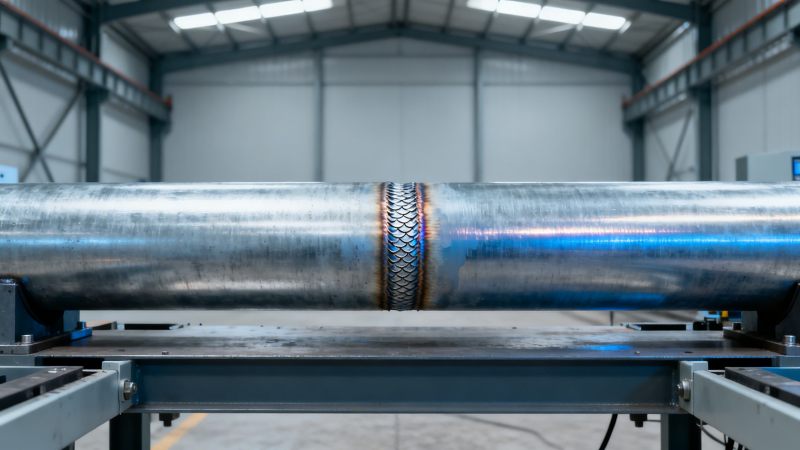
Visual inspection (VT) is fast, low-cost, and requires minimal equipment—making it the default first step in most structural steel quality control workflows. However, VT only evaluates surface discontinuities: cracks, undercut, overlap, or excessive spatter. It cannot identify subsurface flaws that constitute up to 65% of weld-related failures in load-bearing structures.
Lack of fusion, internal porosity, slag inclusions, and micro-cracking remain invisible without supplemental non-destructive testing (NDT). These flaws may not affect appearance but reduce effective throat thickness by up to 30%, significantly lowering fatigue life and ultimate tensile capacity—especially under cyclic loading in bridges, power towers, or high-rise frames.
For international buyers working with Chinese manufacturers, this gap carries real consequences: delayed site acceptance, costly rework, or even structural rejection during third-party audits per ASTM E1417, EN ISO 17637, or GB/T 19869.1. Relying solely on VT increases non-compliance risk by an estimated 4–7× compared to a tiered NDT strategy.
When Do You Need More Than Visual Checks? Key Decision Triggers
Not every weld demands full NDT—but skipping deeper validation in high-risk scenarios invites unacceptable exposure. The following four conditions require mandatory supplementary testing:
- Critical load paths: Welds in tension zones of steel beams, column base plates, or moment connections—where failure could trigger progressive collapse.
- Harsh environmental exposure: Projects in marine, coastal, or industrial atmospheres where hidden corrosion initiation accelerates due to trapped moisture in voids.
- Dynamic or cyclic service: Railway infrastructure, wind turbine towers, or vibration-prone industrial platforms where fatigue cracks initiate below the surface.
- Regulatory or contractual mandates: Projects governed by ASCE 7, AISC 360, or EN 1090-2 require at minimum 10–20% random UT/RT coverage for Execution Class EXC3+ components.
Hongteng Fengda applies this risk-tiered approach across all structural steel shipments—from angle steel used in substation ancillary facilities to cold-formed profiles for communication towers. Our certified weld inspectors document each stage, ensuring traceability from pre-weld joint preparation through post-weld NDT reporting.
How Structural Steel Standards Define Acceptance Criteria
International standards explicitly limit VT’s scope—and define when other methods become mandatory. Below is how major frameworks treat weld inspection depth:
These requirements directly impact procurement decisions—especially for distributors and project managers sourcing structural steel from China. Choosing a supplier with in-house NDT labs and certified Level II/III personnel reduces third-party verification delays by 7–12 business days and eliminates re-inspection penalties.
Where Galvanized Round Steel Fits Into Reliable Structural Systems
Corrosion resistance is non-negotiable in exposed structural applications—from electric power towers to street light poles and marine components. That’s why Galvanized Round Steel plays a strategic role: hot-dip galvanizing provides a metallurgically bonded zinc coating (minimum 610 g/m² per ASTM A123) that delivers 50+ years of service life in rural environments and 20+ years in urban/coastal zones.
Its mechanical performance aligns precisely with structural demand: tensile strength between 570–820 MPa ensures compatibility with common bolted connections and base plate anchoring systems. Diameter options from 16–250 mm support both lightweight lattice tower members and heavy-duty foundation piles—while ISO h8/h9 tolerances guarantee fit-for-purpose dimensional accuracy.
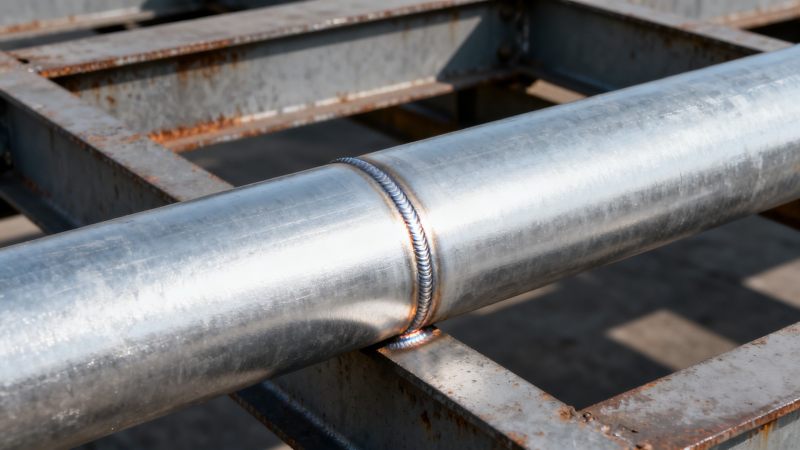
Crucially, galvanizing does not mask weld flaws—it highlights them. Discoloration, bare spots, or uneven zinc buildup around weld zones signal incomplete penetration or post-weld contamination. That’s why Hongteng Fengda performs VT *after* galvanizing—not before—ensuring surface finish and weld integrity are jointly validated.
Why Global Buyers Choose Hongteng Fengda for Structural Steel Assurance
Sourcing structural steel from China involves balancing cost, compliance, and continuity. Hongteng Fengda addresses this triad through integrated quality governance—not just certification badges.
- Pre-shipment NDT transparency: Every order above 5 tons includes UT/RT reports signed by ASNT Level III-certified technicians—with digital access via secure client portal.
- Multi-standard compliance: Products meet ASTM, EN, JIS, and GB simultaneously—not just “equivalent to.” We validate test reports against original standard clauses, not summaries.
- Lead time predictability: Stable production capacity enables 2–4 week standard delivery for hot-rolled sections and 3–5 weeks for cold-formed or galvanized items—even during peak season.
- Risk-mitigated customization: From OEM beam cut-to-length services to custom galvanizing bath parameters for high-tensile round bars, our engineering team co-develops specifications aligned with your project’s QA/QC plan.
Whether you’re a procurement manager validating mill test reports, a safety officer auditing weld procedure specifications, or a distributor building long-term stock programs—we provide documentation, data, and responsiveness that reduce decision latency and sourcing friction.
Ready to review weld inspection protocols for your next structural steel order? Request a free technical consultation—including NDT method recommendations, ASTM/EN compliance mapping, and sample lead time confirmation for Galvanized Round Steel.
Please give us a message


Please enter what you want to find