When planning a secure and visually open animal habitat, many project managers ask: is stainless steel wire rope mesh for zoo enclosure truly safe? With the right material grade, tensile strength, and installation standard, it offers a reliable balance of safety, durability, and aesthetics, making it a practical choice for modern zoo projects that demand long-term performance and controlled maintenance costs.
What makes stainless steel wire rope mesh for zoo enclosure safe?
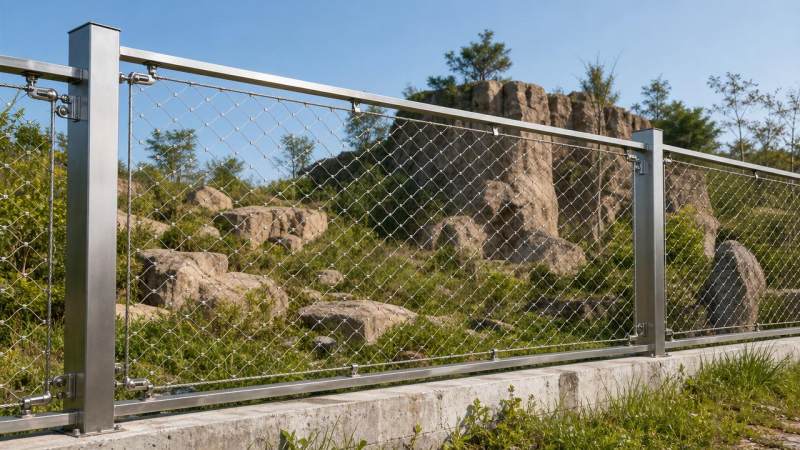
Safety starts with material quality, cable structure, and correct engineering design. Not all mesh systems perform equally under animal impact, weather exposure, or long service cycles.
High-grade stainless steel wire rope mesh for zoo enclosure is usually made from corrosion-resistant stainless steel, often 304 or 316. These grades resist rust, stress, and surface degradation.
The woven or ferrule-type cable pattern also matters. It distributes force across multiple intersections, reducing the chance of localized failure when animals climb, jump, or strike the barrier.
A safe enclosure depends on more than mesh strength alone. Edge cables, anchors, frame steel, and installation tension must work together as one structural barrier system.
Properly specified stainless steel wire rope mesh for zoo enclosure can help contain primates, birds, big cats, and mountain species while preserving visitor visibility and natural light.
Key safety factors to verify
- Wire rope diameter matched to animal force
- Mesh aperture sized for species behavior
- Tensile strength supported by test data
- Corrosion resistance for outdoor exposure
- Secure perimeter fastening and edge treatment
Which animals and enclosure types is it suitable for?
Stainless steel wire rope mesh for zoo enclosure suits many habitats, but the design must fit the species. A mesh that works for aviaries may not suit large carnivore zones.
For birds, the mesh supports wide spans and open views. It creates flight spaces with less visual obstruction than rigid bars or heavy welded panels.
For primates, flexibility can be an advantage. The mesh absorbs movement and impact better than some rigid systems, while allowing climbing behavior in controlled conditions.
For felines and other strong animals, safety depends on stronger cable diameters, tighter openings, reinforced frames, and verified load calculations for peak force events.
Mountain habitats also benefit from this material. Stainless steel wire rope mesh for zoo enclosure can adapt to sloped terrain and irregular geometry more easily than many panel systems.
Typical applications
- Aviaries and walk-through bird exhibits
- Primate islands and climbing habitats
- Big cat outer containment areas
- Bridge-style or overhead animal passages
- Rocky and uneven landscape enclosures
How do you choose the right specification and supporting steel structure?
Selection begins with animal size, behavior, habitat shape, and climate. The right stainless steel wire rope mesh for zoo enclosure is always project-specific, not only appearance-based.
Wire diameter affects impact resistance and long-term deformation control. Larger animals or high-risk zones usually need thicker cables and stronger perimeter support systems.
Mesh opening size influences containment and contact risk. Openings that are too large may allow escape, limb access, or unwanted interaction between animals and visitors.
The supporting steel structure is equally important. Structural frames often use angle steel, channel steel, steel beams, or custom cold formed profiles for stable anchoring.
In humid or coastal environments, protective steel accessories also deserve attention. Surface-treated steel helps preserve brackets, frames, and secondary components around the mesh system.
For related support materials, many projects also evaluate Galvanized Steel Coil Manufacturers when selecting corrosion-resistant steel parts, trims, and fabricated structural accessories.
Galvanized steel coils in grades such as DX51D+Z, SGCC, and S350GD+Z can provide corrosion resistance, moderate protection, and longer service life for non-mesh structural elements.
Specification checkpoints
- Confirm animal species, weight, climbing behavior, and bite force.
- Match cable diameter and mesh aperture to containment needs.
- Review frame material, anchor spacing, and installation tension.
- Check corrosion conditions, especially rain, salt, and cleaning chemicals.
- Request compliance with recognized steel and material standards.
How does it compare with bars, chain link, and welded mesh?
Compared with traditional bars, stainless steel wire rope mesh for zoo enclosure offers better visibility and a more natural presentation. This improves viewing experience without sacrificing structural performance.
Compared with chain link, it usually presents a cleaner architectural appearance. It also handles custom curves and large spans more effectively in premium enclosure designs.
Compared with welded mesh panels, wire rope mesh is more flexible. That flexibility can reduce stress concentration, though it requires precise tensioning and reliable perimeter engineering.
Its biggest advantages are transparency, design freedom, and corrosion resistance. Its main limitations involve higher initial cost and stricter installation requirements than simple fence systems.
What risks or mistakes reduce enclosure safety?
The most common mistake is focusing only on the mesh panel. Real safety failures often begin at the edges, anchors, corners, doors, or supporting steel members.
Another risk is underestimating animal behavior. Clawing, repeated jumping, chewing, and group movement can create cyclic loading that exceeds simple static assumptions.
Improper aperture choice is also dangerous. Even strong stainless steel wire rope mesh for zoo enclosure can become unsafe if spacing allows head, paw, or beak penetration.
Corrosion is less common with stainless steel, but contamination, poor grade selection, and neglected fittings can still damage long-term performance in aggressive environments.
Installation quality matters greatly. Uneven tension, poor alignment, weak anchors, or unprotected cut ends can shorten service life and create avoidable hazard points.
Quick risk checklist
- Wrong stainless steel grade for local environment
- Mesh opening selected by cost, not species safety
- Weak frame or anchor details
- No inspection plan after installation
- Ignoring standards and material traceability
What about cost, maintenance, and long-term value?
Initial pricing is often higher than basic fencing systems. However, stainless steel wire rope mesh for zoo enclosure may lower lifecycle cost through durability, reduced replacement frequency, and lower visual maintenance issues.
Its corrosion resistance is especially valuable in outdoor habitats, humid regions, and projects where enclosure downtime creates operational and safety challenges.
Maintenance usually includes visual inspection, tension checks, fitting review, and cleaning. Planned inspection intervals help detect wear before performance is affected.
Long-term value also includes architectural impact. Open and less intrusive barriers can improve habitat presentation while supporting animal welfare goals and durable steel-based construction.
FAQ summary table
In conclusion, stainless steel wire rope mesh for zoo enclosure is safe when selected and installed as a complete engineered system. Material grade, cable strength, mesh opening, and support steel all matter.
A reliable result comes from combining tested mesh specifications with durable structural steel components, corrosion planning, and practical inspection routines for the enclosure’s full service life.
For projects requiring dependable steel support, customized structural solutions, and internationally compliant materials, Hongteng Fengda provides stable production capacity and professional export support for global applications.
Please give us a message


Please enter what you want to find