If you are wondering whether 1x19 stainless steel aircraft cable 5/32 inch is too stiff, the answer depends on how you plan to use it. This cable is known for high strength, low stretch, and a firm structure, making it suitable for applications where stability matters more than flexibility. Understanding its stiffness helps operators choose the right cable for safe and efficient performance.
What does stiffness really mean in 1x19 stainless steel aircraft cable 5/32 inch?
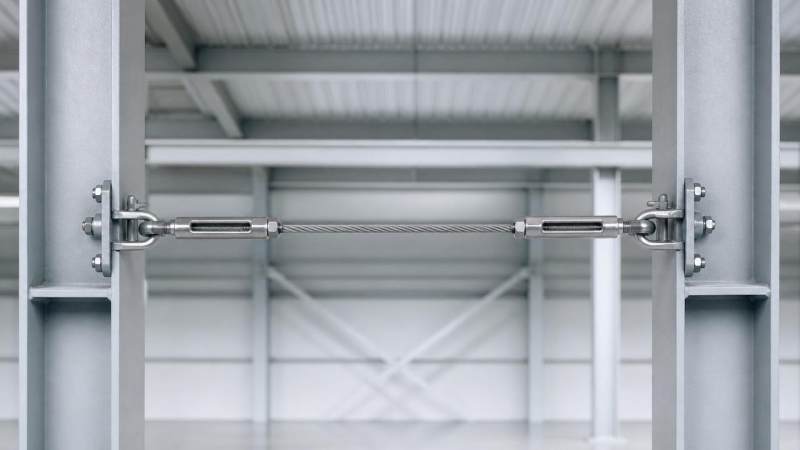
For operators, “too stiff” is not a simple yes-or-no issue. In practical steel and rigging applications, stiffness means how strongly a cable resists bending, looping, and repeated directional changes during installation or operation.
The 1x19 construction contains one strand made of 19 wires. That design gives 1x19 stainless steel aircraft cable 5/32 inch strong linear performance, low elongation, and a cleaner appearance, but it also reduces flexibility compared with 7x7 or 7x19 constructions.
In other words, if your task requires the cable to stay straight, hold tension, and limit stretch, stiffness is often an advantage. If your work requires repeated bending around small pulleys, tight corners, or frequent handling, the same stiffness can become a problem.
- Higher stiffness improves shape retention and stability in straight runs.
- Lower flexibility makes installation harder in confined or curved layouts.
- Reduced stretch helps maintain consistent tension in structural or architectural support systems.
When is 1x19 stainless steel aircraft cable 5/32 inch a good choice?
This cable is commonly selected when users need clean alignment, corrosion resistance, and dependable tensile behavior. In steel-related projects, it often works well in static or semi-static systems where the cable supports, braces, tensions, or stabilizes a load rather than wraps constantly around moving parts.
Common operator-friendly applications
- Architectural railing and balustrade systems that require a straight, neat cable line.
- Bracing and tensioning systems in steel frames where low stretch is more important than repeated bending.
- Industrial support lines exposed to moisture, outdoor weather, or corrosive conditions.
- Structural guidance or restraint systems that need stable geometry and predictable tension response.
Because the steel industry often balances strength, compliance, and long service life, 1x19 stainless steel aircraft cable 5/32 inch is especially valuable where a taut line is essential and movement is limited.
When is it too stiff for the job?
It becomes too stiff when the job requires flexibility as a primary function. Operators often run into problems when they choose a cable by strength alone and ignore bend radius, installation path, and motion cycle.
If a cable must move over sheaves, wind around drums, or be handled manually in frequent cycles, a 1x19 construction may fatigue faster or feel difficult to work with. In those cases, a more flexible wire rope construction can reduce handling effort and improve service life.
Warning signs that stiffness may be excessive
- The cable route includes multiple tight bends or compact fittings.
- The operator must coil, uncoil, or reposition the cable frequently.
- The application involves dynamic movement instead of fixed tension.
- The system uses small pulleys or narrow hardware that increases bending stress.
Comparison: how 1x19 differs from more flexible cable constructions
The table below helps operators compare 1x19 stainless steel aircraft cable 5/32 inch with other common constructions. This is useful when choosing between stiffness, handling ease, and movement performance in steel construction or industrial support projects.
The key takeaway is simple: 1x19 stainless steel aircraft cable 5/32 inch is not too stiff when the system is designed for tension and stability. It is too stiff when the system demands repeated flexing and tight-radius motion.
What technical factors should operators check before choosing it?
Cable selection should never stop at diameter and material. In steel and structural environments, the correct decision also depends on routing, hardware compatibility, corrosion exposure, installation method, and expected service conditions.
Key checks before purchase
- Confirm whether the cable is used in static tension, intermittent movement, or continuous motion.
- Review the minimum practical bend requirements of the hardware and installation path.
- Check fitting compatibility, especially terminals, swages, eye ends, and anchors.
- Assess environmental exposure such as rain, marine air, industrial humidity, or chemical contact.
- Clarify whether appearance, line straightness, and low sag are project priorities.
For operators in construction and fabrication settings, these checks prevent field problems such as difficult tensioning, premature wear, poor fit-up, or replacement caused by wrong cable construction.
How does this connect with structural steel projects?
Many buyers who ask about 1x19 stainless steel aircraft cable 5/32 inch are also working on broader steel systems. Cable choice often interacts with supports, frames, purlins, wall members, brackets, and custom fabricated sections. That is why material coordination matters.
In steel building and light industrial work, matching cable behavior with framing members can improve installation efficiency and long-term stability. For example, a tension line may work alongside cold formed sections or secondary supports that need dimensional consistency and corrosion-resistant surfaces.
A practical example is the use of Metal C Beam in purlins, wall beams, lightweight roof trusses, brackets, and mechanical light industry supports. Available in materials such as Q195, Q235, Q345, A36, SS400, and S235JR, with galvanized coated surfaces and processing services like bending, welding, punching, decoiling, and cutting, this type of section can be coordinated with cable-supported or cable-braced steel assemblies.
When operators source both structural sections and related steel components from one professional supplier, communication is usually faster on tolerances, lengths, coatings, and applicable standards such as ASTM, EN, JIS, and GB. That helps reduce mismatch risk during project execution.
Selection guide: should you use 1x19 stainless steel aircraft cable 5/32 inch?
The table below provides a straightforward selection approach for operators who need a fast judgment before procurement. It focuses on real site conditions rather than generic product descriptions.
This selection logic helps avoid a common mistake in steel-related procurement: choosing the strongest-looking option without checking operational movement and installation geometry.
Common mistakes operators make with stiff cable
Mistake 1: judging by diameter alone
A 5/32 inch diameter does not automatically tell you whether the cable will work well. The strand construction often matters just as much as size, especially where routing and movement are involved.
Mistake 2: ignoring terminal and fitting design
Even when 1x19 stainless steel aircraft cable 5/32 inch is technically suitable, poor fitting selection can create stress concentration, installation frustration, or uneven tension.
Mistake 3: confusing corrosion resistance with universal suitability
Stainless steel offers strong corrosion resistance, but that does not mean every stainless cable construction fits every mechanical task. Flexibility requirements still matter.
Mistake 4: not planning around installation constraints
On-site operators sometimes discover too late that a stiff cable is difficult to thread through existing steel members, brackets, or enclosed channels. Early layout review prevents this issue.
FAQ about 1x19 stainless steel aircraft cable 5/32 inch
Is 1x19 stainless steel aircraft cable 5/32 inch good for railing systems?
Yes, in many cases it is a preferred option for railing because it stays straight, looks clean, and holds tension well. Operators should still verify fitting style, code requirements, and span conditions before ordering.
Can it be used with pulleys or moving equipment?
It can be used only in limited motion scenarios with suitable bend conditions, but it is generally not the first choice for frequent pulley travel. More flexible constructions usually perform better in dynamic systems.
Why does it feel harder to install than other cables?
Because its structure is designed for firmness rather than easy bending. That makes it more resistant to shape change during handling, especially in narrow routes or when working around steel members and hardware.
What should buyers confirm with a supplier before purchase?
Confirm the application type, cable construction, material grade, compatible fittings, required standards, corrosion environment, packaging method, and lead time. For project buyers, it is also useful to coordinate related steel components in the same sourcing discussion.
Why many project buyers work with a professional structural steel supplier
In global construction and industrial projects, cable decisions often connect to wider material planning. Operators and procurement teams benefit when they can discuss not only one component, but also the surrounding steel structure, fabrication tolerances, coating options, and delivery timing.
Hongteng Fengda supports this type of sourcing logic by supplying structural steel products, cold formed profiles, and customized steel solutions for international projects. With modern manufacturing facilities and quality control aligned with common standards such as ASTM, EN, JIS, and GB, the company helps buyers reduce sourcing risk and improve coordination across product categories.
For users and operators, this matters because delays and mismatches usually happen at the connection points between materials, fittings, and site conditions. A supplier with export experience and customization capability can help clarify specifications earlier and avoid costly adjustments later.
Why choose us for steel-related project support
If you are evaluating 1x19 stainless steel aircraft cable 5/32 inch as part of a steel structure, industrial support system, or building component package, you can contact us for practical project coordination rather than generic catalog answers.
- Parameter confirmation for related structural steel members, lengths, thicknesses, and processing requirements.
- Product selection support for steel sections, cold formed profiles, and matching project components.
- Delivery schedule discussion for standard specifications and customized orders.
- Surface treatment and compliance communication for galvanized, coated, or standard-based export needs.
- Quotation support based on drawings, usage scenarios, quantity, and target market requirements.
- Sample and customization discussions for project-specific steel solutions.
If your team needs help deciding whether 1x19 stainless steel aircraft cable 5/32 inch is too stiff for the application, or if you need matching structural steel products for the same project, send your use scenario, dimensions, standards, and delivery expectations. We can help you review selection points, reduce sourcing uncertainty, and build a more efficient procurement plan.
Please give us a message


Please enter what you want to find