Is pre-galvanized steel a practical choice for outdoor use, or does it need extra protection to last? For buyers comparing cost, corrosion resistance, and project requirements, understanding how pre-galvanized steel performs in different environments is essential. This article explains where it works well, where its limits appear, and how to choose the right steel solution for long-term outdoor applications.
Understanding what pre-galvanized steel means
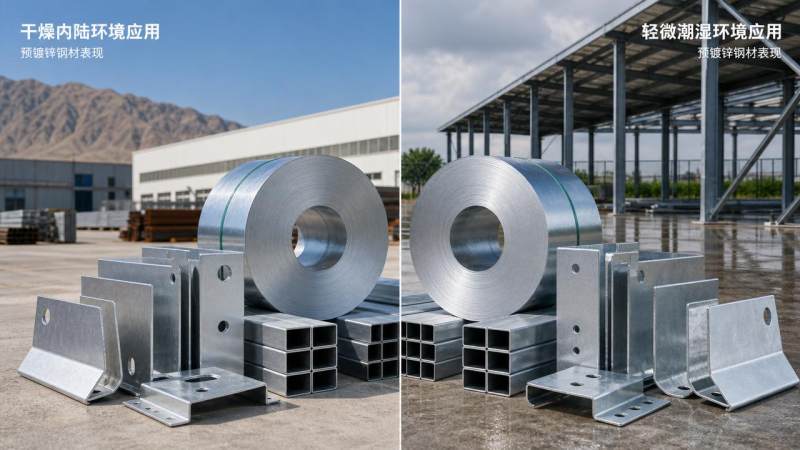
Pre-galvanized steel is steel sheet or coil galvanized before final fabrication. The zinc coating is applied during continuous production, then the material is cut, formed, or welded later.
This process differs from hot-dip galvanized steel. In hot-dip galvanizing, finished parts are immersed in molten zinc after fabrication, covering edges, holes, and weld areas more completely.
Because of this difference, pre-galvanized steel usually has a thinner zinc layer. It offers basic corrosion protection, but outdoor durability depends strongly on weather, pollution, and design details.
In the steel industry, pre-galvanized steel is widely used for light structural sections, framing, cable trays, ducts, panels, and secondary support members where moderate exposure is expected.
Why outdoor performance depends on exposure level
The key question is not simply whether pre-galvanized steel can be used outdoors. The real issue is how aggressive the outdoor environment will be over time.
Zinc protects steel by acting as a barrier and sacrificial layer. However, zinc consumption accelerates in environments with salt, industrial pollutants, standing water, or repeated abrasion.
In dry inland areas, pre-galvanized steel may perform acceptably for non-critical applications. In coastal or chemical environments, the coating can degrade much faster than expected.
Outdoor service life also changes when cut edges remain exposed. Since pre-galvanized steel is processed after coating, unprotected edges may become the first points of corrosion.
Main environmental factors
- Rainfall frequency and drying speed
- Salt spray near marine areas
- Industrial sulfur and chemical vapors
- Humidity trapped inside joints or overlaps
- Mechanical damage during transport or installation
Where pre-galvanized steel works well outdoors
Pre-galvanized steel is often enough for sheltered or mildly exposed installations. It can be a cost-effective option when corrosion risk is moderate and maintenance access is realistic.
Typical examples include canopy framing, light support channels, temporary structures, equipment guards, and exterior components protected from continuous water accumulation.
It also performs better when drainage is good. Surfaces that dry quickly usually experience slower coating loss than enclosed details that trap moisture and dirt.
In fabricated systems, material selection matters too. Consistent base steel quality improves forming, welding, and downstream performance. For example, Rolled Coil in carbon steel grades such as Q235, Q345, St37, and ASTM-compliant options supports stable processing for coated applications.
Suitable outdoor situations
Where its limits become clear
Pre-galvanized steel is usually not the best choice for severe outdoor exposure. Coastal infrastructure, wastewater facilities, agricultural buildings, and chemical plants often demand stronger corrosion protection.
The most common failure points are cut edges, punched holes, weld zones, and contact points where water remains trapped. These details can shorten service life even if flat surfaces still look acceptable.
Appearance requirements also matter. If a project needs long-term visual consistency, white rust, edge staining, or uneven weathering may become unacceptable before structural performance is affected.
For structural members carrying major loads outdoors, designers often prefer hot-dip galvanized steel, weathering steel under suitable conditions, or duplex systems combining zinc and paint.
Higher-risk outdoor conditions
- Locations within marine salt influence
- Areas near exhaust, acid, or fertilizer emissions
- Connections exposed to frequent wet-dry cycles
- Applications with scratched or heavily formed surfaces
- Projects requiring decades of low-maintenance service
Cost, fabrication, and service-life trade-offs
Many projects choose pre-galvanized steel because it is economical, available, and easy to process. It fits production lines that need punching, roll forming, bending, or light welding.
However, low initial cost should be compared with expected maintenance, replacement risk, and downtime. A cheaper coating system can become more expensive if corrosion appears too early.
Processing compatibility is another advantage. Coated carbon steel from continuous production can provide good weldability and cold working properties, supporting forming operations without special post-weld heat treatment in many cases.
For fabricated components, steel supply quality influences final results. Materials produced under standards such as ASTM, JIS, DIN, AiSi, and GB/T 700-2006 help maintain consistency across export projects.
Practical ways to improve outdoor performance
If pre-galvanized steel must be used outdoors, smart detailing can significantly improve durability. Good design often matters as much as the coating itself.
Useful protection measures
- Avoid water traps, tight overlaps, and unventilated cavities.
- Seal or paint cut edges, holes, and weld areas.
- Specify thicker zinc coating where available.
- Use topcoat paint for a duplex protection system.
- Prevent contact with incompatible metals in wet conditions.
- Inspect regularly in polluted or coastal environments.
When the base material must support forming and welding, coated coil quality is still important. In some supply chains, the second mention of Rolled Coil is relevant because carbon steel grades with controlled chemistry can support bending, stamping, forging, and hot rolling processes effectively.
Choosing the right steel solution for the project
The best decision starts with environment classification, service-life target, and fabrication method. Pre-galvanized steel is enough for some outdoor applications, but not for all.
If exposure is mild, maintenance is possible, and cost control is critical, pre-galvanized steel can be a practical option. If corrosion risk is high, a heavier-duty system is usually safer.
For structural steel supply, product consistency, standard compliance, and customization capacity also matter. Reliable production helps ensure stable coating, accurate dimensions, and predictable fabrication results.
Hongteng Fengda provides structural steel products and customized solutions for global construction, industrial, and manufacturing projects, with support for ASTM, EN, JIS, and GB requirements.
Before confirming material selection, review exposure conditions, required lifespan, coating system, and downstream processing needs. A clear technical comparison reduces sourcing risk and improves long-term outdoor performance.
Please give us a message


Please enter what you want to find